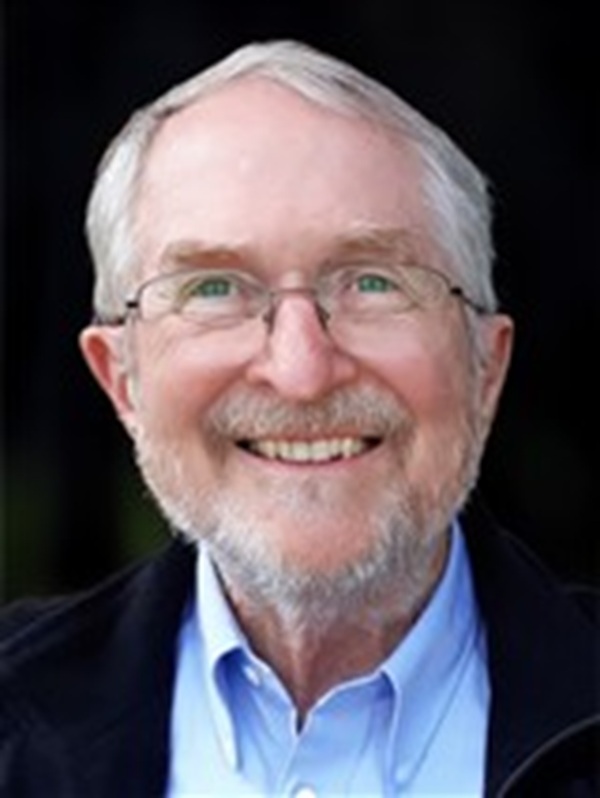

SEATTLE, WA, March 12, 2026 /24-7PressRelease/ -- Dr. Howard Walter Mielke has been featured on the Marquis Masters Podcast. The podcast celebrates leaders and innovators who have shaped industries and inspired generations. Each episode features an intimate conversation with a Marquis honoree, uncovering the personal stories behind their professional success. The show reveals what it truly takes to lead with purpose, resilience, and authenticity.
In this episode of the Marquis Masters podcast, host Ryan Estes interviews Howard Mielke, an adjunct research professor at Tulane University School of Medicine, whose groundbreaking work helped reveal how environmental lead exposure, especially from gasoline, contaminated urban soil and harmed children's health. Ryan opens by framing the conversation around the hidden environmental threat of lead and the scientific persistence required to expose it. Dr. Mielke recounts how his research began with advances in measurement technology, particularly the atomic absorption spectrometer, which enabled him to detect small quantities of lead in soil. While teaching at the University of Maryland, Baltimore County, he involved students in collecting soil samples from gardens across Baltimore. With help from his statistician brother, he discovered a surprising spatial pattern: the highest lead concentrations appeared not in areas with older painted homes, as expected, but in the dense inner city. Replicating the work in Minneapolis and St. Paul produced the same pattern, leading him to conclude that leaded gasoline emissions from vehicles—not just paint—were a major source of urban soil contamination.
As Ryan explores the implications of these findings, Dr. Mielke explains how larger cities with heavier traffic accumulated far more environmental lead. Earlier observations during his time at UCLA, where he studied the massive gasoline consumption in Los Angeles, had already suggested to him that automotive emissions were depositing tons of lead into the environment. Influenced in part by geochemist Clair Patterson's research showing rising lead concentrations in polar ice layers, Dr. Mielke focused on how those emissions accumulated in city soils. His studies later revealed a strong correlation between lead in soil and elevated blood-lead levels in children. He describes how exposure occurred through both inhalation and direct contact, particularly when children played in contaminated soil and inadvertently ingested particles. Complementary research by Herbert Needleman, which linked lead levels in children's teeth to learning and behavioral difficulties, reinforced the growing evidence that environmental lead was impairing childhood development.
Ryan and Dr. Mielke also discuss the challenges of communicating these findings in the face of resistance from powerful industries with financial stakes in leaded gasoline. Dr. Mielke describes how advocacy required not only scientific evidence but also practical solutions, such as projects in New Orleans where clean soil was added to contaminated play areas instead of removing polluted soil at great cost. Experiments at childcare centers demonstrated that children returned indoors with far more lead on their hands after playing outside, clearly illustrating soil exposure. The turning point in policy came when a coalition in Minnesota pushed legislators to petition Congress and the Environmental Protection Agency to remove lead from gasoline. Dr. Mielke testified at a 1984 Senate hearing, drawing on both his research and his personal experience after discovering his own daughter had elevated lead exposure from a contaminated play area. Within two years of those hearings, roughly 90 percent of lead was removed from U.S. gasoline, eventually leading to dramatic declines in blood-lead levels nationwide.
Toward the end of the conversation, Ryan asks Dr. Mielke about the broader lessons of his career. Dr. Mielke emphasizes the responsibility scientists have to pursue and communicate truth, quoting Albert Einstein's assertion that researchers must never conceal what they recognize to be true. He reflects on the importance of persistence, curiosity, and the willingness to follow evidence even when it challenges established assumptions or powerful interests. While celebrating the global impact of removing lead from gasoline, he also warns that modern society continues to introduce environmental substances whose health effects are not fully understood, urging scientists and policymakers to remain vigilant. Ultimately, the interview highlights how careful research, collaboration with students and communities, and personal conviction enabled Dr. Mielke's work to influence public policy and significantly reduce one of the most widespread environmental health threats of the twentieth century.
To follow Marquis Masters, subscribe on Apple Podcasts or Spotify, and watch full video episodes on the Marquis Who's Who YouTube channel. Stay connected to conversations that explore mastery, meaning, and impact.
# # #
YouTube Video
