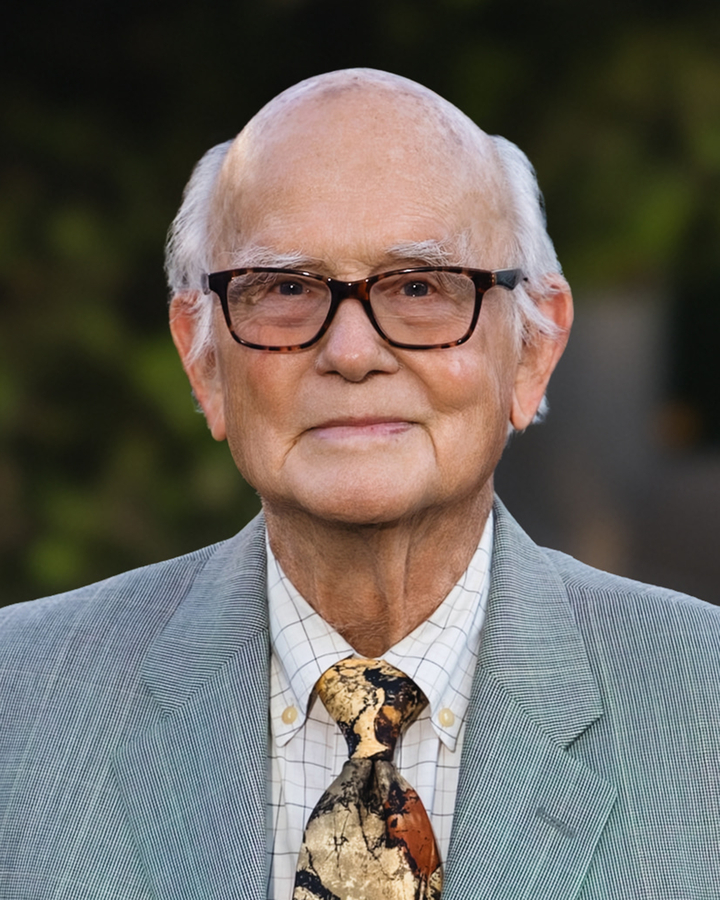

TUCSON, AZ, September 23, 2026 /24-7PressRelease/ -- Mr. Pepper's distinguished career in higher education spans more than 25 years as a Professor of Environmental Studes at the University of California, Santa Cruz, where he played a pivotal role in shaping the nascent program. The program was nationally recognized for its early commitment to recruiting a full-time interdisciplinary faculty, and Mr. Pepper was an ideal fit. As one of two initial junior faculty recruitments, Mr. Pepper's professional education in architecture, landscape architecture and city and regional planning was central to the founding and early development of the academic program.
Mr. Pepper's distinguished career in higher education spans more than 25 years as a Professor of Environmental Studies at the University of California, Santa Cruz, where he played a pivotal role in shaping the nascent program. The program was nationally recognized for its early commitment to recruiting a full-time interdisciplinary faculty, and Mr. Pepper was an ideal fit. As one of two initial junior faculty recruitments, Mr. Pepper's professional education in architecture, landscape architecture and city and regional planning was central to the founding and early development of the academic program.
Throughout his quarter-century of academic tenure, Mr. Pepper was not only a widely respected teacher but was also instrumental in a variety of significant administrative roles. These included authoring the Campus Academic Plan, providing a major ongoing influence on the Campus Long Range Development Plan, Provost of Rachel Carson Collete (formerly College Eight) and serving on key administrative and academic committees as the sole professional representative.
Known as an innovative and challenging teacher, Mr. Pepper frequently utilized undergraduate students in his professional work, often through formal internships concerned with environmental impact assessment. His many contributions to both teaching and practice were characterized by the integration of ecological principles in the planning and management of the built environment.
In the early 1970s Mr. Pepper pioneered the development of impact assessment. As primary author of three Environmental Impact Reports for the University of California at Santa Cruz, he assembled student teams to participate in the assessment of three major projects: a proposed coastal marine laboratory (1976) – (notably the first environmental document prepared by/for the entire UC system), a proposed dark sky observatory (1977), and a proposed research and development center (1985). The university abandoned both the observatory, and the research and development center based on findings of major adverse environmental impacts, underscoring Mr. Pepper's commitment to integrity and respect for rigorous scientific investigation.
Mr. Pepper's pursuit of bringing ecological principles into land use planning was further advanced as a Senior Associate with the Sacramento-based planning firm of J. Laurence Mintier and Associates. There his creative influence was expressed in numerous plans for cities and counties throughout Northern California. This professional collaboration continued for several decades following Mr. Pepper's retirement from UC Santa Cruz in 1995. His work there emphasized science-based solutions to complex environmental planning challenges and further established his reputation as a leader dedicated to real-world outcomes.
Following his retirement from the University of California in 1995, Mr. Pepper was honored by the establishment of the Pepper-Giberson Endowed Chair in Environmental Studies. This endowment, via a gift from the Alan and Margaret Giberson family, focused solely on his teaching and expressed their gratitude for his impact on the intellectual growth of their son, Eric. The Pepper-Giberson Chair is a unique honor within the university system as it bridges the gap between institutional research funding and pedagogical recognition. It also reflects Mr. Pepper's legacy as an exemplary educator.
Mr. Pepper's academic trajectory began with a bachelor's degree in architecture from Montana State College (now Montana State University) in Bozeman in 1959. This rigorous five-year interdisciplinary program launched his professional career. A year later, he found himself at Smith and Williams – Architects and Planners, a distinguished architectural firm in South Pasadena, California where he soon became a junior associate. Smith and Williams contributed significantly to the modernism of the greater Southern California region through a special sensitivity to the refined integration of the building and landscape. This design philosophy greatly influenced Mr. Pepper during this transformative period following undergraduate studies.
Encouraged by colleagues and inspired by the emerging environmental movement of the late 1960s he pursued advanced studies at the University of California at Berkeley, earning a master's degree in both Landscape Architecture and City and Regional Planning. These graduate experiences coincided with landmark developments in land use policy and environmental awareness at the national level. His master's dissertation in City and Regional Planning -- An Approach to Environmental Impact Evaluation of Land Use Plans and Policies: The Tahoe Basin Planning Information System (1971) – is based upon Mr. Pepper's central contribution to the formulation of a "land capability" planning and regulatory system for the Lake Tahoe Region. This pioneering system regulated landscape disturbances based on geomorphic setting and natural features such as soil erosion, vegetation type, etc. -- a land use planning model that has endured legal scrutiny by the U.S. Supreme Court and remains influential today.
Influences from his undergraduate years also played a crucial role in shaping Mr. Pepper's career trajectory. His father, J.H. Pepper, was a PhD biochemist, head of the Department of Zoology and Entomology at Montana State University, as well as the Montana State Entomologist. J.H. clearly sharpened his son's love of nature, as well as encouraging his appreciation for the rigor of scientific inquiry. His mother Ruth, a beloved elementary school teacher, was also deeply influential via her appreciation and encouragement for engaging literature as well as the creative arts. Her encouragement honed his creative instincts and led to his decision to study architecture.
In 1955 J.H. Pepper published a significant research paper reporting on the ecological disruptions caused by chemical spraying by federal agencies in the upper Yellowstone River drainage and the resulting massive fish kills. This research proved an important event in environmental history, serving as a major real-world case study as reported in Rachel Carson's seminal book, Silent Spring (1965). This exposé of the catastrophic non-target dangers of widespread pesticide applications heightened young Mr. Pepper's awareness and knowledge of ecosystems. The publication of Silent Spring galvanized his commitment to environmental stewardship, and he fondly recalls the book as among the family's favorite in the library shelves of his Montana childhood home.
Beyond academia and professional practice, Mr. Pepper has also been recognized for leadership and public service, via engagement in environmental conservation and sustainable resource management through support of local and regional land trusts. He also supports the Border Community Alliance in Southern Arizona, a nonprofit organization dedicated to bridging the border and fostering a positive sense of international community through education, collaboration, cultural exchange, and social investment. As a citizen-activist, from 2006-2015 Mr. Pepper played a central role in the local campaign to stop the Rosemont Mine proposed for the Santa Rita Mountains south of Tucson, a project that threatened contamination of the groundwater basin for the city's domestic water supply.
In 1990 the Santa Cruz Chamber of Commerce named Professor Pepper as Man of the Year in Santa Cruz County California. This award was bestowed in recognition of his pivotal role in recovery efforts following the 1989 Loma Prieta earthquake, which reduced downtown Santa Cruz to rubble. In conjunction with a university undergraduate class, Professor Pepper organized and managed a 10-week public lecture series - "The Idea of Planning: Thoughts of the Rebuilding of Downtown Santa Cruz" that significantly enhanced community understanding and was influential in the rebuilding process. Televised locally and widely viewed, the lecture series brought several distinguished planning and design professionals to the community to explore possibilities. The program received a Gold Medal Award - a National Award for Best Public Service Project in Community Education and Community Relations - from the National Council for Advancement and Support for Education.
In 2024, Mr. Pepper and his wife, Sherry, established the Founders' Scholarship Endowment at the University of California, Santa Cruz, to honor the four key figures who secured the institutional approvals to create the environmental studies program: Founding Chancellor Dean McHenry, Vice Chancellor Grant McConnell, Professor Emeritus (Botany/Ecology) Stanley Cain, and department chair Professor Richard Cooley (Geography). This endowment will help ensure that future generations of undergraduate students can follow the path Professor Pepper helped establish. He and a group of former students recently created an alumni council tasked with establishing an Environmental Studies Alumni Network that will link the five decades of the program's ten thousand graduates as well as the current faculty and students. This network will, in turn, provide opportunities to interact and collaborate to address contemporary and emerging environmental challenges through mentoring, internships, guest lectureships, seminars, research projects, scholarships and related activities.
On a personal level, Mr. Pepper values family deeply. He shares life with Sherry—his loving wife since 1996—whose Montana ranching heritage led him to understand and appreciate the importance of the peace and meditation resulting from a quiet afternoon on horseback, his favored post-retirement pastime. His daughter Amelia continues her important, compassionate work in the San Francisco Bay Area as a registered nurse specializing in caring for individuals with severe disabilities as well as home health. His sister Jill Nuber, a retired military wife and mother, resides in Washington State.
Now entering his 90s, Mr. Pepper hopes that those who knew him will remember not only his words but also how he made them feel; to recognize their individual invaluable contributions to the human conversation, and to renew trust in a more just, compassionate, and sustainable future.
# # #