

Press Releases by Industry
PRESS RELEASES BY INDUSTRY ERROR(S)
- Unfortunately, the press release you are looking for is not available. Please see below for a list of similar stories that may be of interest to you.
News Search
Women's Interest
10000 total news stories found.

"To Protect and to Serve": Patricia Blake's New Podcast Lands a One-Two Punch of Instant Classics, "SEND ME!" Theme Song Set to Debut in May
2024-04-26 | Patricia Blake's new podcast, "To Protect and to Serve," debuts with a pair of engaging episodes, while anticipation builds for the upcoming release of the "SEND ME!" theme song in May, and more songs to follow this year.

PCI Certified Parent Coach® Caitilyn Medeiros Back with Updated Website
2024-04-26 | The Parent Coaching Institute (PCI) proudly announces that PCI Certified Parent Coach® Caitilyn Medeiros returns to provide parent coaching services with updated website.

Shincheonji Church's Chairman Testifies What He Saw and Heard of the Revelation During Assembly in the Philippines
2024-04-26 | Chairman Man-hee Lee of Shincheonji Church of Jesus delivered a powerful message on the fulfillment of the Book of Revelation while on a trip around the world.
Marquis Who's Who Honors Terry Leve for Expertise in Law and Insurance
2024-04-26 | Terry Leve is recognized for his tenure as an attorney specializing in insurance law
Marquis Who's Who Honors P. André Katz for Expertise in Family Law
2024-04-26 | P. André Katz is recognized for over 35 years of expertise as a prominent high profile family law attorney
Dr. Scott Alexander Rose Featured in Marquis Who's Who Millennium Magazine
2024-04-26 | Dr. Scott Alexander Rose earns prominent placement in Millennium Magazine's Fifteenth Edition
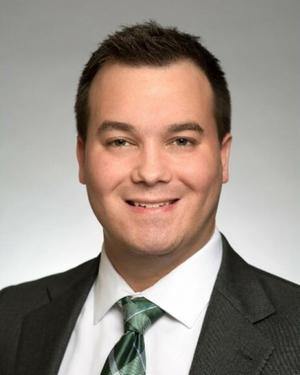
Craig, Kelley & Faultless Partner, Alexander R. Craig to Speak at 36th Annual Indiana Trial Lawyers Association Lifetime Achievement Seminar
2024-04-26 | Craig will present on the topic 'Using Focus Groups on the Front-End.'
Megan Gordie Sills Featured in Marquis Who's Who Millennium Magazine
2024-04-26 | Megan Gordie Sills earns prominent placement in Millennium Magazine's Fifteenth Edition

KTD BIOLABS BeTall Height Growth Maximizer and Height Growth MAX+
2024-04-26 | KTD BIOLABS Launches American Dietary Supplements: BeTall Height Growth Maximizer and Height Growth MAX+
Greg Lindberg Unveils in His Latest Book Lifelong How Hormesis Makes the Human Body Stronger
2024-04-25 | "Hormesis is the natural tendency of all living things to respond to stress and deprivation by growing stronger and more resilient," says Greg Lindberg.
Paul S. Bovarnick Featured in Marquis Who's Who Millennium Magazine
2024-04-25 | Paul S. Bovarnick earns prominent placement in Millennium Magazine's Fifteenth Edition
Marquis Who's Who Selects Jaime Taronji Jr., Esq., for Expertise in Law
2024-04-25 | Mr. Jaime Taronji Jr., Esq., is noted for his success with the Federal Trade Commission as an attorney advisor
Felipe Alexandre, Esq. Celebrated for Dedication to the Field of Law
2024-04-25 | Felipe Alexandre, Esq. specializes in immigration law with Alexandre Law Firm

6th Annual Free Legal Aid & Resource Fair Returns to Troy Community Center
2024-04-25 | Disability Law Group is excited to announce the return of its highly anticipated 6th Annual Free Legal Aid & Resource Fair, happening on May 10th, 2024, from 12-3 pm, at the Troy Community Center, located at 3179 Livernois Road, Troy, Michigan 48083.
Marquis Who's Who Honors Michelle J. Foster for Expertise in Law and Legal Recruitment
2024-04-25 | Michelle J. Foster has been recognized for excellence in legal recruiting and search services
St. Louis Criminal Defense Attorney With a Decade of Legal Experience
2024-04-25 | The founding attorney of The Law Offices of Brian J. Cooke, Brian Cooke, has been defending clients in a wide range of criminal defense matters since 2014.

Florida Bankruptcy Lawyers With Over 17 Years of Legal Experience
2024-04-25 | Stiberman Law, P.A., has been helping clients across Florida achieve financial freedom since 2007.

Introducing WING BRUSH: Revolutionizing Oral Care with Smart Technology
2024-04-24 | 3-sided brush to simultaneously clean teeth, interdental space, and gums! Reduce brushing time & enjoy high-quality dental care at home
Marquis Who's Who Honors Viviane Eisenberg Esq., for Success in Intellectual Property Law
2024-04-24 | Viviane Eisenberg Esq., is noted for her distinguished tenure representing clients in the entertainment sector
Marquis Who's Who Honors Patricia A. Brinkley, Esq., for Success in Probate Law and Estate Planning
2024-04-24 | Patricia A. Brinkley, Esq., is lauded for her expertise as the owner of the Law Office of Patricia A. Brinkley