 +1 888-880-9539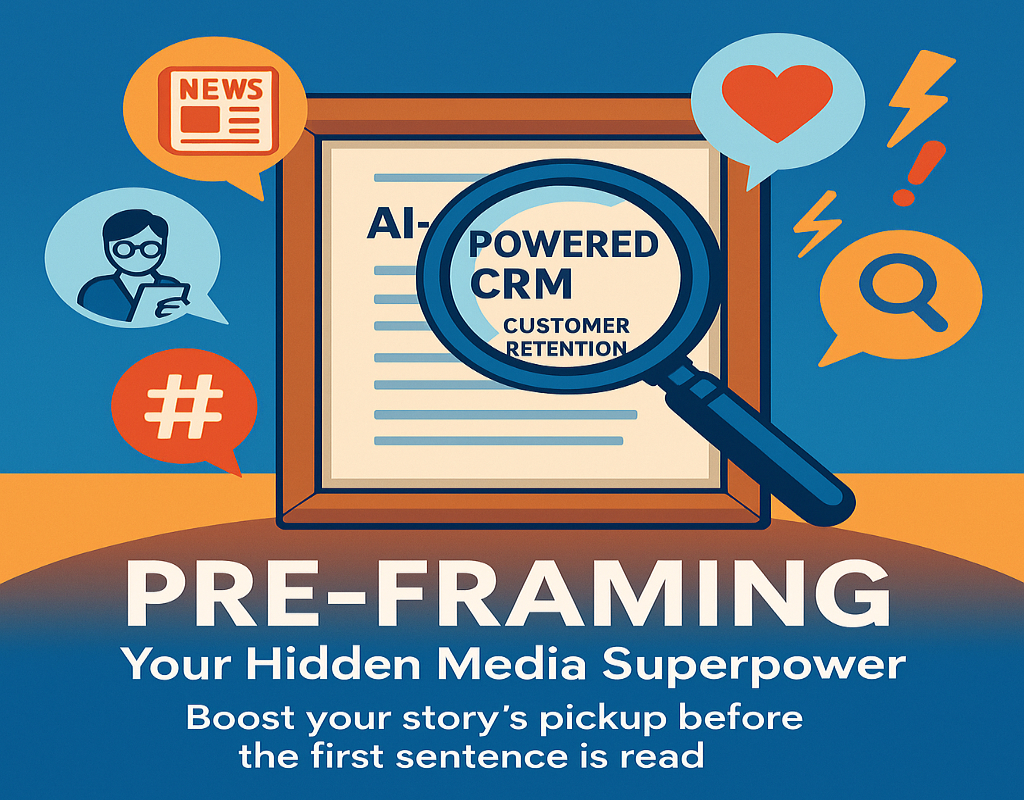
Every business wants its press release to get noticed. Whether you're launching a new product, announcing a partnership, or simply sharing company milestones, the goal is to attract attention from the public, journalists, and editors.
Yet many people overlook a subtle, powerful tool that can dramatically influence whether a press release is ignored, skimmed, or picked up for publication: pre-framing.
In this article, we explore the hidden art of pre-framing—what it is, why it matters, and how you can use it to give your press release a strategic advantage. This article is not another information piece about writing catchy headlines or following a basic template. Instead, we'll look at the psychological layer between your message and the media, and how to tilt it in your favor.
What Is Pre-Framing and Why Should You Care?
Pre-framing is a strategy for shaping how a journalist or editor interprets your news before they've read past the first few lines. It influences perception by:
- Establishing relevance
- Positioning your news within a larger narrative
- Signaling editorial value and credibility
Most people think journalists will "get it" just by reading the press release. But in today's environment—where editorial teams are shrinking and inboxes are overflowing—pre-framing helps your press release cut through the noise.
At 24-7PressRelease.com, we've seen firsthand how press releases that incorporate pre-framing principles consistently outperform those that don't regarding media pickup and reader engagement.
Pre-Framing Starts Before the Press Release Is Even Opened
The pre-framing process begins with your headline. The first impression must answer a silent but crucial editor question:
- "Why should I care—right now?"
- Avoid generic headlines like:
- "XYZ Corp Announces New CRM Tool"
Instead, embed relevance and urgency:
"XYZ Corp Launches AI-Powered CRM to Help SMBs Cut Customer Churn by 42%"
This version tells what's new, why it matters, to whom, and the value it brings.
Tip: Avoid starting your headline with your company name. Media outlets care more about the story than the brand behind it.
Use the First Paragraph to Establish Context, Not Just Facts
Standard press release writing encourages you to hit the 5Ws (who, what, when, where, why) in your lead. That's still important—but here's the twist:
Frame those facts inside a trend, problem, or movement that journalists are already tracking.
Instead of:
"XYZ Corp is pleased to announce the launch of…"
Try:
"With over 60% of SMBs struggling to retain customers post-pandemic, XYZ Corp's new CRM tool offers a timely solution that leverages AI to predict churn and boost loyalty."
Your press release isn't just announcing something—it's joining a conversation. At 24-7 Press Release, we hardly see this (part of why we wrote this article)
Many 24-7 Press Release clients see greater engagement when their first paragraph links their announcement to industry pain points, market shifts, or seasonal relevance.
Quotes: Your Secret Weapon for Editorial Framing
Most press release quotes are flat, safe, and skippable. But they don't have to be.
A well-crafted quote can pre-frame how your audience and the media should feel about your announcement. It adds personality, context, and legitimacy, especially from a senior leader or customer.
Bad quote example:
"We are excited about this new launch," said Jane Smith, CEO.
Better quote example:
"Small business owners tell us they're exhausted by tools that overpromise and underdeliver. We designed this CRM to be simple, smart, and surprisingly affordable," said Jane Smith, CEO of XYZ Corp.
Notice a difference? The second quote does more than fill space—it pre-frames expectations, signals market awareness, and makes the news feel more human.
Think Like a Journalist: What's the Story Angle?
Journalists need an angle that resonates with their readers. A common mistake in press release writing is treating it like an internal memo when it should be a story pitch.
Ask yourself:
- What bigger trend does this news tap into?
- What problem does it solve?
- Why now?
You can even pre-frame potential coverage with phrases like:
- "...as part of a growing trend in remote work tools..."
- "...responding to recent legislation in the fintech space..."
- "...coinciding with National Cybersecurity Awareness Month…"
At 24-7PressRelease.com, our press release distribution service supports journalists seeking these hooks. The more you guide them toward a precise angle, the more likely they will pick it up.
Reinforce Authority in the Boilerplate Section
Often overlooked, your company boilerplate is the final frame in your release. Many businesses phone it in with a vague summary. But a strategic boilerplate can:
- Reinforce trust
- Showcase awards, media coverage, or big-name clients
- Highlight your brand mission or niche expertise
Good boilerplates answer the question:
"Why should I believe this company is credible?"
For example:
"XYZ Corp, a two-time recipient of TechWorld's 'Startup to Watch' award, provides AI-powered solutions to over 2,000 businesses globally. With partnerships in North America, Europe, and Asia, XYZ Corp is a trusted leader in customer retention tools."
This final detail creates credibility and improves journalist confidence when paired with strong pre-framing up top.
Pre-Framing for SEO and Syndication
At 24-7PressRelease.com, our news release service distributes press releases to hundreds of high-authority sites. This distribution includes syndication across business networks and financial portals, among others.
To make the most of this:
- Use keywords early (but naturally) in your title and lead paragraph.
- Include anchor context around your website link (avoid "click here").
- Pre-frame your content so that it still intrigues the reader even when seen out of context (as a syndicated snippet).
Example:
"XYZ Corp, a leader in AI-based tools for small businesses, today announced..."
This strategy creates an SEO-friendly introduction that also builds authority.
Emotional Framing: Subtle but Powerful
Pre-framing isn't just about facts—it's also about feelings.
Subtle word choices can:
- Create urgency: "time-sensitive," "amid record demand," "rising concern"
- Instill credibility: "industry-backed," "in collaboration with," "award-winning"
- Inspire hope or action: "empowering," "equipping," "helping businesses thrive"
This competitive edge matters more than ever, as editors and readers are bombarded with sterile, corporate language. Emotional pre-framing can help your press release stand out and feel more human.
Visuals and Structural Framing: The Format Matters
Finally, formatting can influence how your content is perceived. At 24-7 Press Release Newswire, we recommend:
- Headlines at 24-7 Press Release are bold, making them easier to skim.
- Break up your text into short, readable paragraphs
- Include bullet points for features or benefits
- Embedding multimedia (images, videos, logos). 24-7 Press Release allows you between 4 and 5 attachments.
These small choices pre-frame your news as professional, media-ready, and visually appealing—all of which help improve pickup.
Final Thoughts: Pre-Framing Is Your Competitive Advantage
Press releases are not just informational—they're persuasive documents. And like any good story, how you tell it matters as much as what you mean.
Pre-framing gives you a competitive edge by helping your content feel more relevant, credible, and newsworthy before an editor reads the first complete sentence.
At 24-7PressRelease.com, we've worked with thousands of businesses across industries to maximize the value of their press releases. Whether launching a startup or promoting a milestone, incorporating clever pre-framing techniques can help you stand out in today's media landscape.
Need help crafting a compelling press release?
Visit our Knowledge Base for free resources, templates, and tips, or contact our team for expert guidance.