 +1 888-880-9539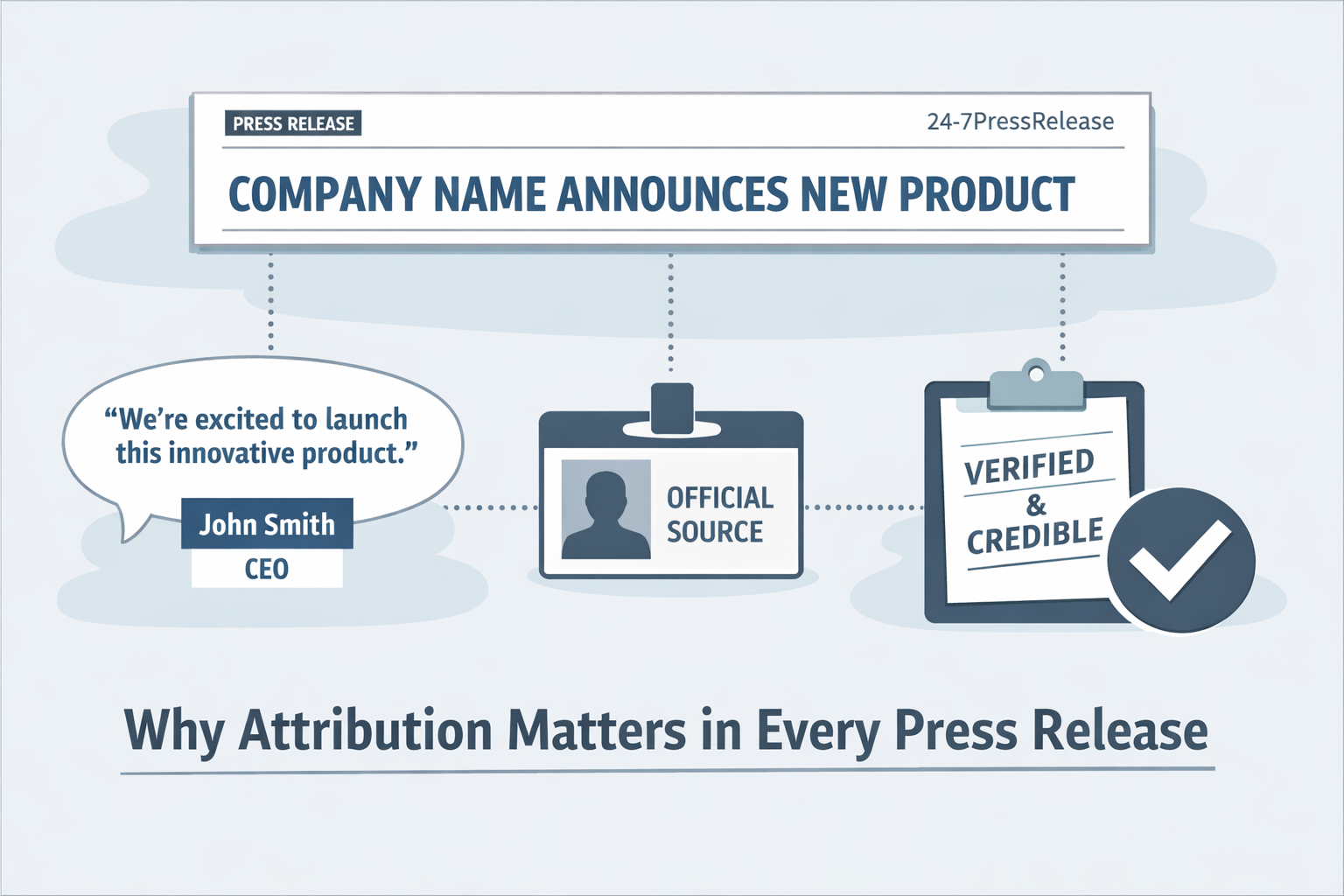
Attribution is one of the most important—and most misunderstood—elements of a successful press release. While many organizations focus on crafting attention-grabbing headlines or promotional language (which, admittedly, we see way too much of at 24-7PressRelease), journalists evaluate press releases very differently.
For the media, credibility, clarity, and accountability matter far more than hype. Attribution is what provides those qualities. When handled correctly, attribution strengthens a press release, improves its chances of being read, and increases its value to journalists using press release distribution services as a news source.
At its core, attribution is the clear identification of who is responsible for the information being presented. In a press release, attribution answers essential questions immediately: who is making the announcement, who is speaking, and who can be held accountable for the claims or statements included.
This identification typically appears in the headline, the opening paragraph, and in quoted statements throughout the body of the release. Without proper attribution, a press release can feel vague or promotional, which is one of the quickest ways to lose a journalist's interest.
The headline is the first place where attribution matters the most. Journalists often scan large volumes of press releases distributed through a press release service and make split-second decisions about what to read and what not to read.
A headline that clearly attributes the announcement to a specific company, organization, or individual provides immediate context. It tells the journalist who is involved and whether the story is relevant to their beat. A headline that lacks attribution may describe an action or outcome, but it forces the reader to dig further to understand the source, which many journalists will not do when time is limited.
Attribution in the headline also helps distinguish legitimate news from generic marketing language. Press releases without attribution often read like advertisements rather than news announcements. Including the company or organization name in the headline signals confidence and transparency, both of which are critical in professional press release distribution. It also reduces uncertainty, especially in industries where multiple companies may launch similar products, services, or initiatives simultaneously. Further, it can help search engines and SEO by incorporating your Company name in the headline.
Once a journalist opens a press release, attribution in the body becomes even more critical. The opening paragraph should reinforce the attribution introduced in the headline by clearly identifying the organization, its location, and its relevance. This information allows the journalist to orient themselves and understand why the announcement matters. Press releases that delay or obscure attribution create unnecessary friction and increase the likelihood that the release will be abandoned before it is fully read.
Attribution within the body of a press release also plays a vital role in supporting claims. Journalists are trained to be skeptical, and for good reason. Statements about growth, innovation, impact, or industry leadership are far more credible when they are clearly attributed to a named source. Whether the information comes from an executive, a spokesperson, or an official company announcement, attribution reassures journalists that the content is not anonymous or speculative.
Quotes are one of the most effective ways to use attribution in a press release. A firm quote gives journalists language they can use directly, while also clearly identifying who is speaking and why their perspective matters.
Properly attributed quotes include the speaker's full name, title, and relationship to the organization. This level of clarity allows journalists to evaluate expertise and authority without additional research. For press release distribution services, well-attribute quotes significantly enhance a release's usability and its likelihood of being picked up by media outlets.
Attribution also helps journalists meet their own professional standards. Journalists are accountable to editors and readers, and they must ensure that information is reliable and sourced. A press release that includes clear attribution makes that process easier. When names, titles, and organizations are consistently presented, journalists can quickly verify information, extract quotes, and determine whether follow-up is necessary. Press releases that lack attribution, or use vague identifiers such as "a leading company" or "industry experts say," often fail this basic credibility test.
Another key benefit of attribution is that it enhances transparency. Readers expect to know who is behind the information they consume, and journalists rely on attributed sources to maintain trust with their audiences. A press release distributed through a professional press release service becomes part of the public record, and attribution ensures the source of the information is clear to both journalists and end readers. This transparency is essential in a time when misinformation and promotional content are increasingly scrutinized.
From a newsworthiness perspective, attribution helps frame why an announcement matters. News is rarely just about what happened; it is about who was involved. An announcement attributed to an established company, a recognized brand, or a credible expert carries more weight than an unattributed statement. By clearly identifying the source in both the headline and body, a press release positions itself more effectively within the broader media landscape. This positioning is one of the reasons press release distribution services emphasize best practices around attribution—it directly affects how newsworthy a release appears.
Consistency in attribution is just as important as inclusion. The organization named in the headline should be the same one described in the opening paragraph and referenced throughout the release. Inconsistent naming, missing titles, or unclear roles can confuse journalists and undermine confidence in the content. A professional press release should read as cohesive and intentional, with attribution reinforcing the same source throughout.
Attribution also signals professionalism. Journalists can often tell within seconds whether a press release was written with media standards in mind. Clear attribution demonstrates that the sender understands how newsrooms operate and respects the journalist's time. This professionalism matters, particularly for organizations that rely on ongoing press release distribution to build media relationships over time. Releases that consistently follow attribution best practices are more likely to be trusted and taken seriously in future coverage.
For businesses and organizations using press release distribution services, attribution is not merely a formatting detail—it is a strategic asset. A well-attributed press release is easier to understand, easier to quote, and easier to publish. It reduces the burden on journalists while increasing the likelihood that the announcement will be used as intended. In contrast, poorly attributed releases often require additional clarification or are ignored.
In today's crowded media environment, where journalists receive more press releases than ever before, the small details matter. Attribution is one of those details that quietly but powerfully improve outcomes. By clearly identifying who is responsible for the news in both the headline and body of a press release, organizations enhance credibility, support journalistic standards, and maximize the value of press release distribution. Even though your press release may not fit a journalist's schedule right now, the next one that comes out may stand a better chance, as they know you are writing for the media.
Ultimately, attribution is not optional for any serious press release strategy. It is a fundamental component of effective communication and a core expectation. When attribution is handled correctly, it transforms a press release from promotional material into a credible news source—one that journalists can trust, use, and share with confidence.