 +1 888-880-9539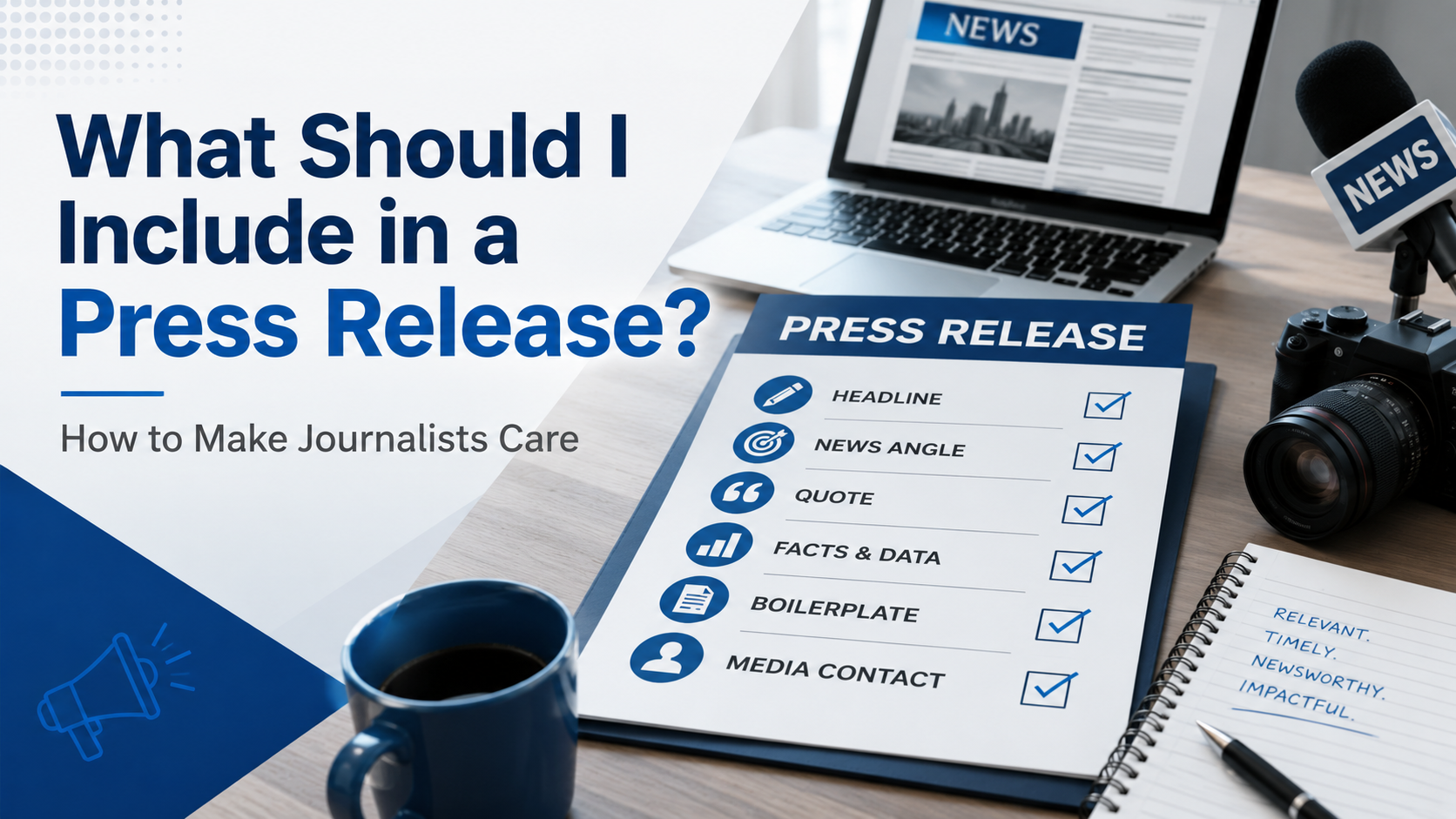
Writing a press release can feel simple at first. You have news, you want people to know about it, and you want media outlets to pay attention. But the part that many businesses struggle with is knowing what to include so the release sounds useful, clear, and newsworthy rather than overly promotional. A good press release is not just an announcement. It is a short, structured news story that gives journalists, editors, bloggers, and readers the information they need quickly.
The first item your press release needs is a clear news angle. Before writing anything, ask yourself: why does this matter now? A new product, company milestone, event, partnership, award, expansion, research finding, or major hire can all be valid reasons for a press release. However, the announcement should have a reason for existing beyond “we want attention.” Journalists are more likely to care when the release answers a timely question, solves a problem, shows growth, connects to a trend, or affects a specific audience.
Your headline should make that angle obvious. A good headline is specific, direct, and easy to understand. Keep in mind, shorter headlines also reflect better for search results. The headline should tell the reader what happened without forcing them to guess. For example, “Local Software Company Launches New Cybersecurity Tool for Small Businesses” is stronger than “Company Announces Exciting New Innovation.” The first headline explains who is involved, what is happening, and who it helps. The second sounds vague and promotional. A press release headline does not need to be clever. It needs to be clear.
After the headline, the opening paragraph is the most important part of the release. This is where you should include the main facts: who, what, when, where, why, and how. Many people make the mistake of starting with background information, a long company story, or a broad statement about the industry. That can cause readers to lose interest. Instead, put the actual news at the top. If someone only reads the first paragraph, they should still understand the announcement.
This style is often called the inverted pyramid, where the most important information comes first and supporting details follow. Purdue OWL has a helpful overview of journalistic writing and press releases, including why clear structure matters. While your press release does not need to read exactly like a newspaper article, it should respect the reader’s time. Journalists often scan quickly, so the easier you make their job, the better chance your release has of being understood.
The body of the release should expand on the announcement without repeating the same point over and over. This is where you can explain why the news matters, who benefits, what problem is being addressed, and what makes the announcement different. If you are announcing a product, explain what it does and who it is for. If you are announcing an event, include the date, location, purpose, and registration details. If you are announcing a company milestone, explain the growth or achievement in a way that gives it context.
Quotes are another important part of a strong press release. A quote should sound like something a real person would say, not like an advertisement. Avoid quotes like, “We are thrilled to announce this groundbreaking solution that will revolutionize the industry.” That type of quote is common, but it usually adds very little value to the reader. A better quote explains the meaning behind the news. For example, a company founder might say why the launch matters to customers, what gap they saw in the market, or what the company hopes to accomplish next.
It is also important to include useful facts, not just claims. Instead of saying your company is “rapidly growing,” include a real detail if possible, such as a new location, number of customers served, percentage growth, funding amount, team expansion, or launch date. Specifics make a press release more believable. They also give journalists something concrete to work with. If you are making claims about customer results, awards, rankings, or endorsements, make sure they are accurate and can be supported.
Accuracy matters because a press release is still a public statement. If you include testimonials, endorsements, or influencer comments, be careful that they are honest and not misleading. The Federal Trade Commission provides useful guidance on endorsements and testimonials, especially for businesses using customer reviews, paid promotions, or influencer relationships. Even when a press release is designed to promote your company, it should still be truthful and transparent.
A good press release should also include proper names, titles, dates, and locations. These details may seem small, but they help make the release easier to use. If you mention a person, include their full name and role. If you mention an event, include the date, time, location, and whether it is online or in person. If you mention a company, make sure the company name is written consistently throughout the release. Small errors can make a release look rushed, even when the news itself is valuable.
Style and readability matter too. Many newsrooms and public relations teams use Associated Press style as a general writing standard. You do not need to memorize every rule, but it helps to understand the basics of concise, consistent news writing. Purdue OWL’s guide to AP Style is a useful starting point for understanding how journalists often approach capitalization, numbers, titles, abbreviations, and punctuation.
The release should also include a short boilerplate near the end. A boilerplate is a brief “about the company” paragraph that explains who you are, what you do, and who you serve. It should not be a full company history. Think of it as a quick background section for anyone who is unfamiliar with your organization. A strong boilerplate usually includes the company’s name, location if relevant, main products or services, target audience, and website. The boilerplate is typically titled with "About ABC Company"
You should also include media contact information. This usually means the name, email address, phone number, and sometimes the title of the person who can answer questions. If a journalist is interested but cannot find a contact, the opportunity may be lost. Make sure the person listed is actually prepared to respond. If you include a phone number or email address, check that it is correct before publishing the release.
Links can be helpful, but they should be used carefully. A press release can include a link to your website, product page, event registration page, report, media kit, or supporting resource. However, too many links can make the release look cluttered or overly focused on search engines. Google Search Central’s guidance on helpful, reliable, people-first content is a good reminder that content should be written for people first, not just for rankings.
Finally, a press release should end cleanly. Avoid adding several closing paragraphs that repeat the same message. Once you have explained the announcement, included the quote, added supporting details, provided the boilerplate, and listed media contact information, the release has done its job. The goal is not to say everything possible. The goal is to give the right information in the right order.
A strong press release helps journalists care by making the news easy to understand, easy to verify, and easy to use. It should answer the basic questions quickly, explain why the announcement matters, include a human quote, support claims with facts, and provide clear next steps. When written properly, a press release does more than promote a company. It gives readers a reason to pay attention.