 +1 888-880-9539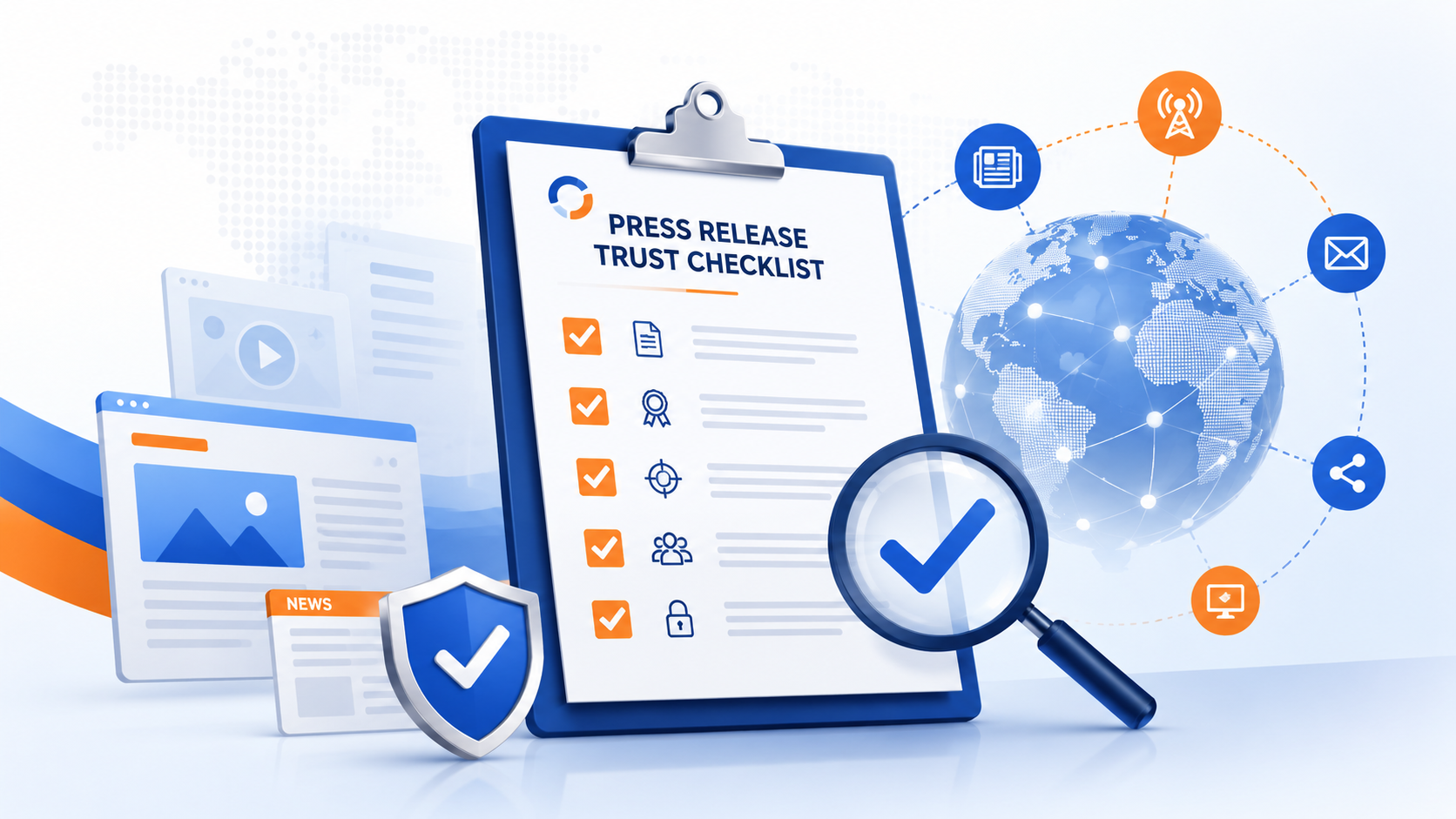
Publishing a press release is not only about getting a company announcement online. It is about presenting information in a clear, credible, and useful way so journalists, customers, investors, search engines, and AI-powered tools can understand why the news matters.
A good press release should answer the basic questions quickly: who, what, when, where, why, and how. But in today’s media environment, that is only the starting point. Readers are more cautious, journalists are more selective, and online visibility depends on clarity, accuracy, and trust.
Before using a press release service or beginning press release distribution, it is worth taking a few extra minutes to review the announcement through a trust checklist. This can help prevent vague messaging, unsupported claims, overpromotional language, and missed opportunities.
1. Is the Announcement Actually Newsworthy?
The first question is simple: why should anyone care?
A press release should communicate a real development, not just a general marketing message. Strong reasons to issue a release may include a company launch, product release, major partnership, new location, executive appointment, event, award, research finding, milestone, or community initiative.
A weak press release often sounds like an advertisement. A stronger one focuses on the news itself. Instead of saying a company is “excited to offer the best solution in the industry,” explain what changed, who it affects, and why it is relevant now.
Newsworthiness does not always require a national story. A local business opening a second location, a nonprofit reaching a fundraising milestone, or a small company launching a new service can all be valid announcements. The key is to make the relevance clear.
2. Is the Headline Clear Before It Is Clever?
The headline is one of the most important parts of a press release. It is often the first thing a reader sees, and it helps determine whether the release is understood at a glance.
A good headline should be specific. It should tell the reader what happened without forcing them to guess. Clever headlines can work in advertising, but press releases usually benefit from clarity.
For example, this is vague:
“Local Company Changes the Game for Homeowners”
This is stronger:
“Seattle Home Services Company Launches Same-Day Furnace Repair Program”
The second version tells readers what happened, where it is happening, and why it may matter.
When using a press release service, a clear headline can also help editors, search engines, and readers categorize the announcement properly.
3. Does the First Paragraph Give the Full Story?
The opening paragraph should provide the most important information right away. If someone only reads the first few lines, they should still understand the announcement.
This is where many releases lose impact. Some begin with background information, industry commentary, or broad statements before getting to the actual news. A better approach is to lead with the announcement.
The first paragraph should usually include:
- The company or organization name
- The main announcement
- The location, if relevant
- The date or timing
- The audience affected
- The basic reason the announcement matters
This structure follows the traditional press release format used by many media organizations and communications teams. Rutgers University’s press release basics also recommends keeping releases concise, newsworthy, and aligned with: AP style.
4. Are the Claims Specific and Supportable?
Trust is built through details. It is weakened by exaggeration.
Words like “best,” “leading,” “revolutionary,” “world-class,” and “game-changing” are often overused in press releases. They may sound impressive, but they rarely add credibility unless they are supported by facts.
Instead of saying:
“We are the leading provider of customer service solutions.”
Say:
“The company now supports more than 2,500 customer service teams across North America.”
Instead of saying:
“Our new product is revolutionary.”
Say:
“The new platform reduces manual intake steps from five to two and integrates with the company’s existing scheduling system.”
Specific details help readers evaluate the announcement. They also make the release more useful for journalists, bloggers, researchers, and AI search tools that rely on clear information.
5. Does the Quote Add Value?
Many press releases include a quote, but not every quote improves the release.
A weak quote repeats what has already been said:
“We are excited to announce this new service and look forward to helping our customers.”
A stronger quote adds context, perspective, or a human reason behind the announcement:
“Many small business owners told us they needed a faster way to manage appointment requests without adding another full-time administrative role,” said [Name], [Title] of [Company]. “This launch is our response to that problem.”
The best quotes sound like something a real person would say. They should explain why the announcement matters, what problem it addresses, or what the organization hopes to accomplish.
6. Is the Release Written for People First?
Search visibility matters, but keyword stuffing can hurt readability. A press release should be written for humans first, with natural wording that also helps search engines understand the topic.
Google’s guidance on creating helpful, reliable, people-first content is a useful reminder that content should be created to benefit readers not simply to manipulate rankings.
That same principle applies to press releases. Keywords such as press release service and press release distribution can be included naturally when relevant, but they should not be forced into every paragraph.
A readable release is usually more effective than one overloaded with repetitive phrases.
7. Is the Company Boilerplate Complete?
The boilerplate is the short “About” section at the end of the release. It should explain who the company is, what it does, where it operates, and where readers can learn more.
A good boilerplate may include:
- Company name
- Core products or services
- Location or market served
- Years in business, if relevant
- Website
- Contact information
This section is often reused across multiple releases, but it should still be accurate and up to date. If the company has changed its services, expanded locations, or updated its website, the boilerplate should reflect that.
8. Is the Contact Information Easy to Find?
A press release should make it simple for someone to follow up. Include a media contact name, email address, phone number if appropriate, and website.
This may seem basic, but it is often overlooked. If a journalist or interested reader cannot quickly find the right contact, the opportunity may be lost.
Before beginning press release distribution, review every contact detail carefully. A typo in an email address or phone number can make the release much less effective.
9. Has Someone Else Reviewed It?
Even experienced writers miss errors. Before publishing, have another person review the release for grammar, accuracy, clarity, and tone.
Ask them:
- Do you understand the announcement?
- Is anything confusing?
- Does it sound too promotional?
- Are the claims believable?
- Is there any missing information?
A second review can catch problems before the release is distributed publicly.
Final Thoughts
A press release does not need to be complicated, but it does need to be clear, accurate, and credible. Before choosing a press release service or starting press release distribution, businesses should take time to review the message from the reader’s perspective.
The strongest press releases are not just announcements. They are useful records of real business activity. They explain what happened, why it matters, and how readers can learn more.
By using a simple trust checklist before publishing, companies can improve the quality of their releases, protect their credibility, and give their news a better chance of being understood.