 +1 888-880-9539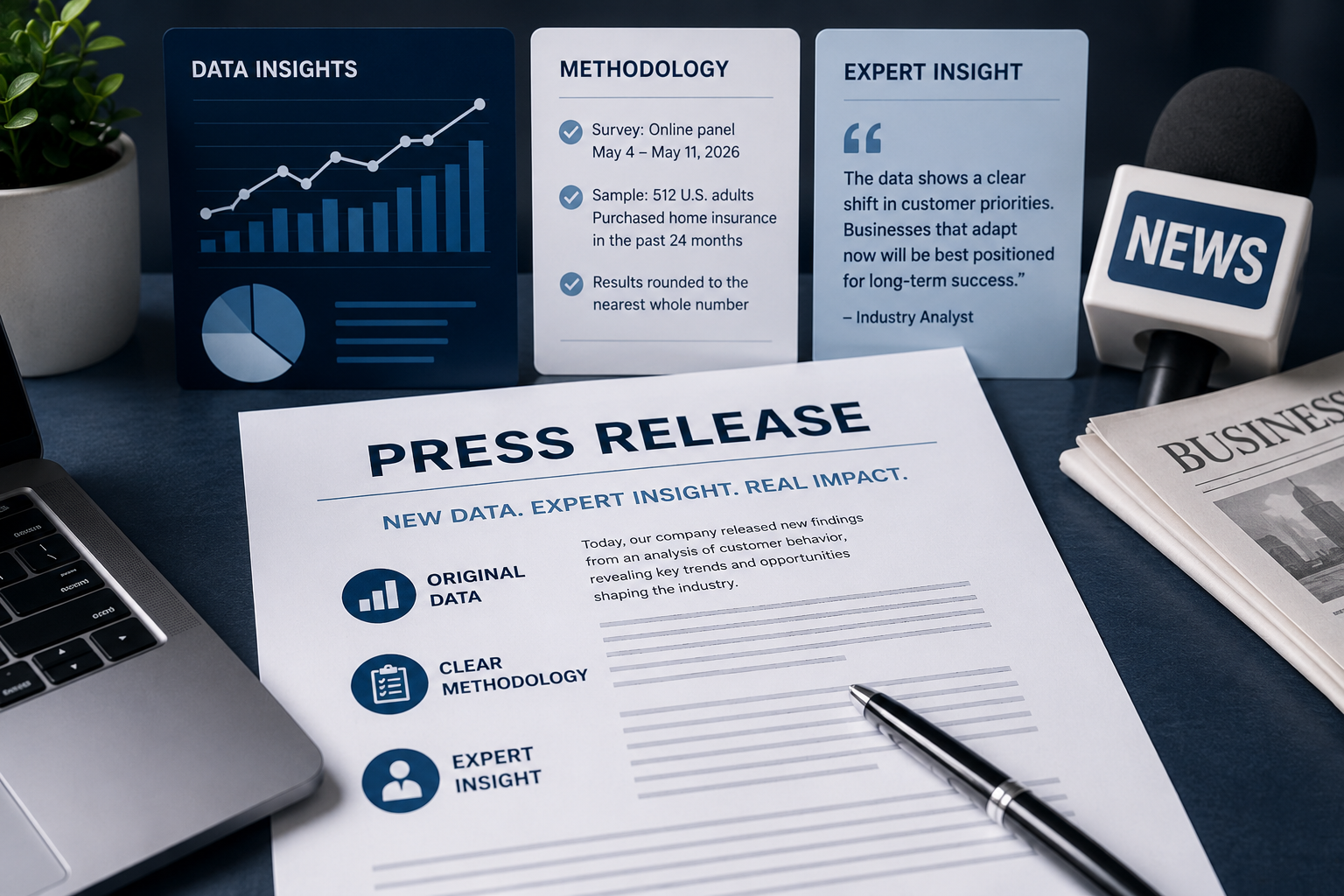
A press release may appear on numerous websites, show up in search results and be shared across social media. However, widespread distribution alone does not make it a valuable source of information.
The releases that earn lasting attention usually give readers something they can confidently use: a measurable finding, a clearly explained trend, a first-hand observation or an expert interpretation that adds to what is already known. They do more than announce that a company is “excited” about a product, partnership or milestone. They contribute information.
That matters as journalists, customers and AI-powered search tools look for reliable material that can support an answer or explain a subject.
Google’s content guidance asks whether a page provides original information, reporting, research or analysis, and whether it offers value beyond what is already available. Its guidance for generative AI search similarly emphasizes unique, expert-led content rather than pages that repeat common advice.
A press release does not need to contain a national survey or university-level study to be worth citing. It does, however, need to explain what is new, where the information came from and why the reader should trust it.
Distribution Makes Information Available. Evidence Makes It Useful.
Press release distribution can help an announcement reach search engines, media databases, journalists and interested readers. Distribution is the delivery system. It cannot supply the substance that an announcement is missing.
Consider a company that states, “Demand for environmentally responsible packaging is growing rapidly.” The claim may be true, but it is too broad to be useful. A reporter cannot tell whether it is based on a market study, several customer conversations or the opinion of the marketing department.
Below is a more specific version:
“After looking at 5,133 orders by our customers that were placed between January and June 2026, the company realized that 43.6% included the option for recyclable packaging. That was an increase from 27 percent during the same six-month period the previous year.”
The second statement gives the reader a finding, a time period, a sample and a basis for comparison. It can be checked, attributed and placed in context. It is not proof of an industry-wide shift, but it is meaningful evidence of what one company observed among its customers.
That is the foundation of a citable press release: provide a fact that is relevant and responsibly described.
Original Data Is More Available Than Many Businesses Realize
The phrase “original research” can sound expensive. Smaller businesses may assume they need to hire a research firm or survey thousands of people before they have anything worth publishing. In practice, many organizations already hold useful information within their normal operations.
Useful data can come from everyday business activity. A property manager might notice that certain maintenance requests are becoming more common, while a staffing firm may see changes in the skills employers are looking for. Retailers can track shifts in what customers are buying, nonprofits can measure changes in community needs, software companies can review anonymized usage trends, and manufacturers can share the results of product testing.
Even a small dataset may be newsworthy when its limitations are clear. A survey of 150 local business owners should not be presented as the opinion of every business in the country. It may still provide a useful picture of sentiment within a city, association or customer group.
The objective is not to make the information sound larger than it is. The objective is to make it clear enough that readers understand what it represents.
Methodology Is Not a Technical Footnote
One of the fastest ways to weaken an interesting release is to publish a dramatic statistic without explaining how it was produced.
If a company says that 87 percent of consumers prefer a particular service, readers should know who was surveyed, how many people participated, when the survey was conducted and how the question was asked. They should also know whether respondents were existing customers, members of the public or people recruited through a survey panel.
A methodology statement does not need to be several pages long. For many releases, one short paragraph is enough:
“The online survey was conducted from May 4 to May 11, 2026, and included responses from 512 American adults who had purchased home insurance within the previous 24 months. Percentages have been rounded to the nearest whole number.”
For internal business data, explain whether the results came from anonymized customer orders, service records, website activity or product tests. Identify the period examined and any exclusions that could materially affect the result.
This protects the credibility of the announcement and makes the release easier for a journalist, analyst, or AI system to interpret without having to guess what the number means.
Google recommends considering not only who created a piece of content, but also how it was produced. Explaining the work, testing or research behind a finding can help readers understand its value and assess whether it deserves their trust.
Do Not Turn a Limited Finding Into a Universal Claim
Original data becomes less valuable when the language surrounding it reaches beyond what the research can support.
A rise in customer inquiries does not prove that an entire industry is expanding. A survey showing that people say they prefer a product does not prove they will purchase it. Two events occurring at the same time do not establish that one caused the other.
Careful wording is not timid wording. It is accurate wording.
Phrases such as “among surveyed customers,” “according to the company’s internal records,” “within the markets examined” and “the findings suggest” define the boundaries of a claim. They allow a company to present a strong result without pretending it answers a larger question.
This is especially important in health, finance, legal services and public safety, where exaggerated claims can affect important decisions. A limited study, customer testimonial or preliminary test result should not be presented as conclusive proof.
Honest limitations do not make research less interesting. In many cases, they make it more credible.
Use Experts to Explain the Finding, Not Advertise the Company
A quote adds value when the speaker helps the reader understand why a finding matters.
Too many press release quotes merely repeat the headline:
“We are thrilled to announce this exciting milestone and look forward to continued success.”
That identifies eagerness, but it provides little information. It does not explain what changed, why it happened or what readers should take from the announcement.
A more effective quote would explain what the company learned from the results:
“We knew more customers were choosing recyclable packaging, but the increase was greater than we expected,” said Jordan Davidson, director of operations at Example Packaging. “Independent food retailers accounted for much of that growth, which tells us this is no longer something only the larger national brands are asking for.” The quote adds context that is not contained in the statistic alone. It identifies who is interpreting the data and why that person may have relevant knowledge.
Make sure to include the speaker’s first name, last name and job title.
When the subject requires specialized knowledge or information, it further helps to mention the person’s relevant qualifications or experience. A good example is when someone is commenting on medical research, they should be identified by their medical or research background, rather than being described as a “company spokesperson.”
The goal is not to make the speaker sound impressive. It helps readers understand why that person is qualified to interpret the information.
Connect the Evidence to Real News
A collection of statistics is not automatically a press release. There should still be a timely reason for publishing it.
Original data may support an annual report, a service launch, a program expansion, a response to a developing issue, a product improvement, or a significant milestone. The announcement gives the information a news angle; the evidence gives it weight.
The opening paragraphs should state what happened, identify the most important finding and explain why it matters now. Do not bury the strongest information beneath company history, background material or promotional language.
A descriptive headline can also help.
“ABC Company Releases 2026 Consumer Trends Report” is serviceable, but it tells readers very little about its contents.
“Survey Finds 64 Percent of First-Time Buyers Delayed a Home Purchase Because of Closing Costs” immediately identifies the central finding. The company and the report can still be mentioned in the sub headline and the opening paragraph.
A clear headline helps journalists, readers and search systems understand the page's subject. It should summarize the actual news without exaggerating what the research proves.
Make the Supporting Material Easy to Find
When a release is based on a larger study, provide access to the full report, methodology, charts or supporting page whenever possible. The release should summarize the main findings, but readers may want to examine the work in greater detail.
A simple chart showing a year-over-year change may be more useful than a generic stock image. Charts should have readable labels, clear time periods, and enough context to prevent numbers from being misinterpreted.
Captions and alternative text should describe what the visual shows rather than repeat promotional keywords. A description such as “Percentage of customers selecting recyclable packaging from 2024 to 2026” is more useful than “industry-leading sustainable packaging solutions.”
The published page should also clearly identify the author or organization responsible for the content, the publication date and contact information. Google has emphasized that bylines, dates, author background and publisher information help readers evaluate news and informational sources.
Whenever practical, link the byline to an author biography that explains the writer’s role and areas of experience. The company’s About page should also make it easy to understand who operates the website, what the organization does, and how to contact it.
These elements do not replace strong content, but they give readers useful context about the people and organization behind it.
Avoid Adding Statistics to Look More Credible
A statistic is not valuable merely because it contains a percentage sign.
Businesses should resist the temptation to conduct a weak survey to create a headline. Leading questions, extremely small samples and unexplained data can create the appearance of evidence without providing much actual insight.
For example, asking current customers whether they like a product is unlikely to produce a balanced picture of the wider market. Similarly, a poll posted on a company’s social media page may reflect the opinions of its existing followers rather than those of the general public.
When the methodology is limited, you need to note this because the information can still be useful when presented honestly. A company may describe a poll as an informal customer survey rather than a national consumer study.
Original information is most valuable when it helps answer a real question—not when it is created to manufacture a dramatic statistic.
The Goal Is Not to Sound Authoritative. It Is to Be Verifiable.
A press release becomes worth citing when another person can understand the claim, identify its source and explain its limits without contacting the company for basic clarification.
Before distributing your press release, ask yourself the following questions:
What exactly was measured?
- What was included?
- When was the info gathered?
- How was the information gathered?
- Who analyzed it?
- What does the finding show, and what does it prove or not prove?
- Is a qualified person available to explain it?
Also consider whether the release adds anything not found in dozens of nearly identical articles. Google’s current guidance for generative AI search recommends creating useful, expert-led material that goes beyond common knowledge and cannot easily be reproduced by simply summarizing what others have already written.
When those standards are met, the release becomes more than a promotional announcement. It becomes a usable reference.
There is no guarantee that Google will rank a particular release, that a journalist will quote it or that an AI system will cite it. Search visibility depends on many factors, and editorial coverage remains a human decision. But clear evidence, transparent methodology and informed interpretation give the release a reason to be selected.
In a crowded information environment, that is the real advantage. Do not simply tell readers that your company has something important to say. Give them something important they can use.
Article By: Michael Iwasaki
Michael Iwasaki is a managing partner at 24-7 Press Release Newswire and has been with the company since 2004. He writes about press release strategy, editorial best practices, and how businesses can create clearer, more credible, and more newsworthy announcements.