 +1 888-880-9539
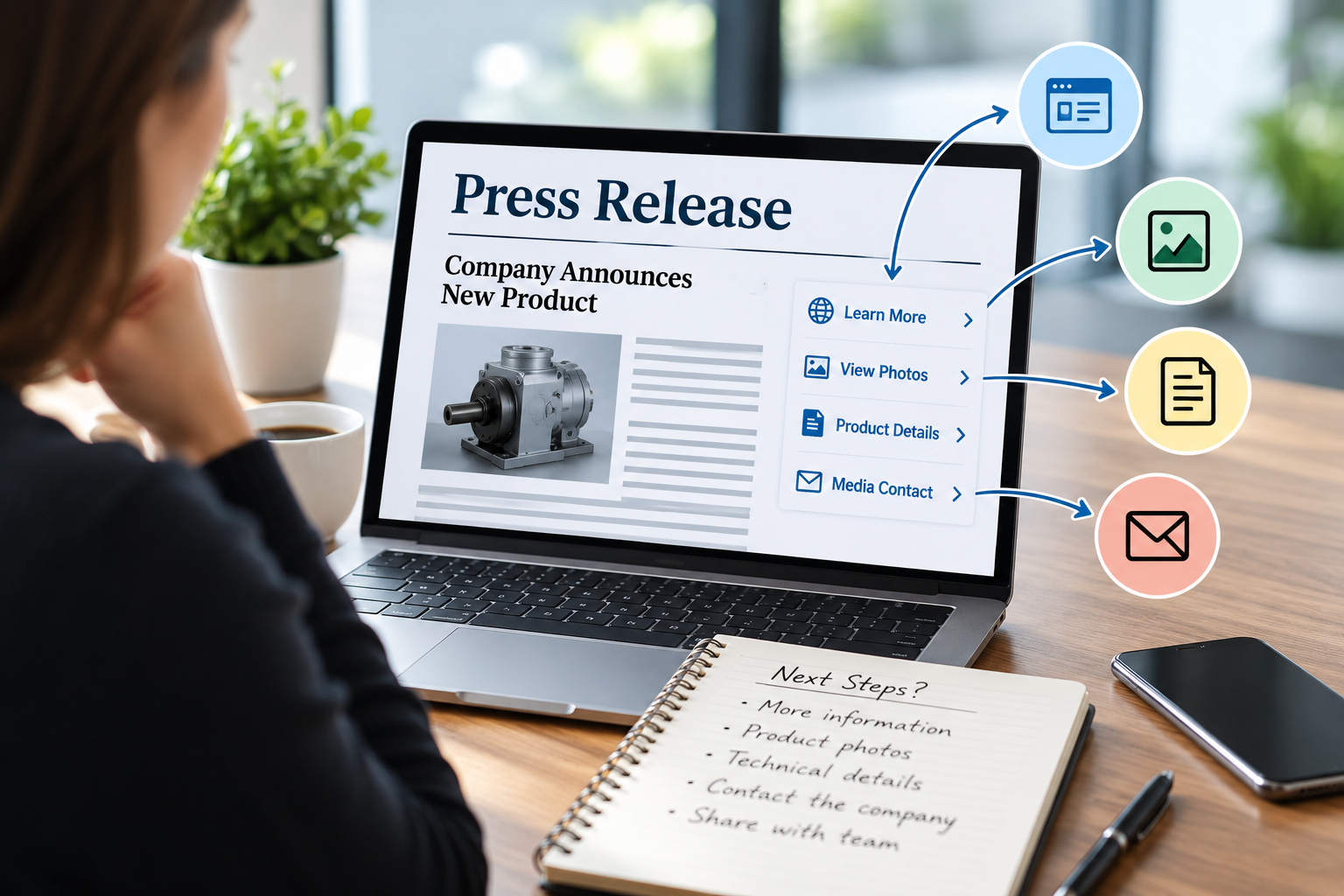
A business can spend hours preparing a press release, making sure the headline is right, the information is accurate, and the announcement explains why the news is important. Once everything is approved, the company distributes the release and hopes it will attract attention.
But what happens when someone actually becomes interested in the announcement?
Imagine a company introducing a new piece of manufacturing equipment. The press release explains what the equipment does, how it could benefit customers, and when it will become available. A journalist comes across the announcement and wants to learn more. They might want to see photographs, learn how much the equipment costs, or speak with someone involved in its development.
Unfortunately, the press release doesn't provide a link to any additional information. The company's website hasn't been updated, and the only contact information is a general email address.
The announcement may have caught the journalist's attention, but now they have to spend time tracking down information that could have been available from the start. Getting Someone Interested Is Only the First Step
When businesses think about how to write a press release, most of their attention naturally goes toward the announcement itself. They want to explain what's happened, why it matters, and who might be interested.
Those are important considerations, but it's also worth thinking about what someone might want to do after reading the release.
A journalist may want to verify a particular detail or arrange an interview. A potential customer might want to see a demonstration of the product. Someone reading about a new development in their community may want to know where the project is located or when it will be completed.
Not everyone will be looking for the same information, and you don't need to anticipate every possible question. However, if the announcement is likely to generate interest in something specific, making that information easy to find can be helpful.
Give Readers Somewhere Useful to Go
Including a link to the company's website is common practice, but where that link takes readers can matter. Suppose a business announces that it has opened a new location. The release includes the company's main website address, but readers have to search through several pages to find the new location's address, opening hours, or services. Wouldn't it be more useful to link directly to a page containing those details?
The same applies to product launches, research announcements, and company expansions. If there's a dedicated page with photographs, specifications, pricing, or additional background, that may be a much better destination than the homepage. This doesn't mean filling a press release with links. In fact, too many links can become distracting, particularly when they lead to pages that have little to do with the announcement. A couple of carefully chosen links are often enough. The idea is to make additional information available without forcing readers to hunt for it.
Make It Easier for Journalists to Follow Up
Journalists often work under tight deadlines, and they may be reviewing several possible stories at once. If something catches their attention, reaching the right person can make the process much easier. For example, a company might announce that it has developed a new technology. A reporter covering the industry wants to ask a few technical questions before deciding whether to write about it. If the media contact listed in the release can't answer those questions or doesn't know who can, the reporter may have to move on.
That's why it's worth checking the contact information before submitting an announcement to a press release service. Is the email address correct? Will someone actually be monitoring it? Does the person listed know enough about the announcement to answer questions or direct an inquiry to someone who can?
The Society of Professional Journalists' Code of Ethics encourages journalists to verify information and seek out sources whenever possible. Although the guidelines are written for journalists, businesses can make that process easier by providing accurate information and a reliable point of contact.
It's also worth having some additional information on hand in case a journalist wants to know more. For example, they might ask for photographs, more details about a product, or an opportunity to speak with someone at the company who can answer their questions.
Don't Make People Search for Information You've Already Mentioned
Research announcements are a good example of where an additional link can be especially useful. Suppose a company publishes a press release stating that its latest survey found 68% of small business owners are concerned about rising operating costs. That's an interesting statistic, and readers may want to know more. How many businesses participated? When was the survey conducted? What other questions were asked?
If the company has published a report with those details, include a link so interested readers can examine the findings for themselves.
This also relates to Google's guidance on creating helpful, reliable, people-first content, which emphasizes providing useful information and supporting it with clear sources.
The press release doesn't need to reproduce an entire research report. It should include enough information to explain the announcement while giving readers a clear way to find the additional material.
The Next Step Doesn't Have to Be a Sales Pitch
There's a difference between helping someone find more information and turning every press release into an advertisement. A business announcing a new product might be tempted to finish with several paragraphs encouraging readers to buy immediately, take advantage of a special offer, or sign up before a deadline. That approach can distract from the news itself.
If the product is available for purchase, there's nothing wrong with mentioning where customers can find it. If a new facility is opening to the public, including the address and opening date makes sense. And if the announcement involves an upcoming event, providing registration information may be useful.
The key is to keep those details relevant to the announcement, not to make the release sound like a sales brochure. When you distribute a press release, it may reach journalists, industry publications, potential customers, and people who have never heard of the company before. Giving them useful information is usually better than assuming everyone is ready to buy.
Make Sure the Information Is Actually Available
One detail businesses sometimes overlook is whether the supporting information is ready when the press release goes out. Imagine announcing a new product and including a link to a page that still says "Coming Soon," with no specifications, photographs, or explanation of when more details will be available. Or announcing the results of a study while the full report is still waiting for approval.
These situations can frustrate readers who follow the link only to find the information they want isn't there. It's worth taking a few minutes to see where the links in your press release actually lead. You might discover that a product page hasn't been updated, a report isn't available yet, or some of the details don't match what's in your announcement. These are easy things to overlook, especially when you've been working on a release for several days.
It only takes a few minutes, but it can prevent unnecessary confusion.
Try the "What Would I Do Next?" Test
Before submitting your next press release, read it as someone who knows very little about your business. If the announcement caught your attention, what would you want to know next? Would you look for a photograph, visit the company's website, request more information, or try to contact someone? Then consider whether the release makes those next steps reasonably easy.
You don't need to include every possible detail or turn the announcement into a directory of links and contact information. The goal is to avoid making interested readers work harder than necessary. A press release can explain the news well and still leave people with unanswered questions. Sometimes those questions signal that the announcement has generated interest. When that happens, make sure there's somewhere useful for readers to go.
After all, getting someone to read your press release is an accomplishment. Giving them a reason and an easy way to learn more can make that attention much more valuable.
Article By: Michael Iwasaki
Michael Iwasaki is a managing partner at 24-7 Press Release Newswire and has been with the company since 2004. He writes about press release strategy, editorial best practices, and how businesses can create clearer, more credible, and more newsworthy announcements.