 +1 888-880-9539
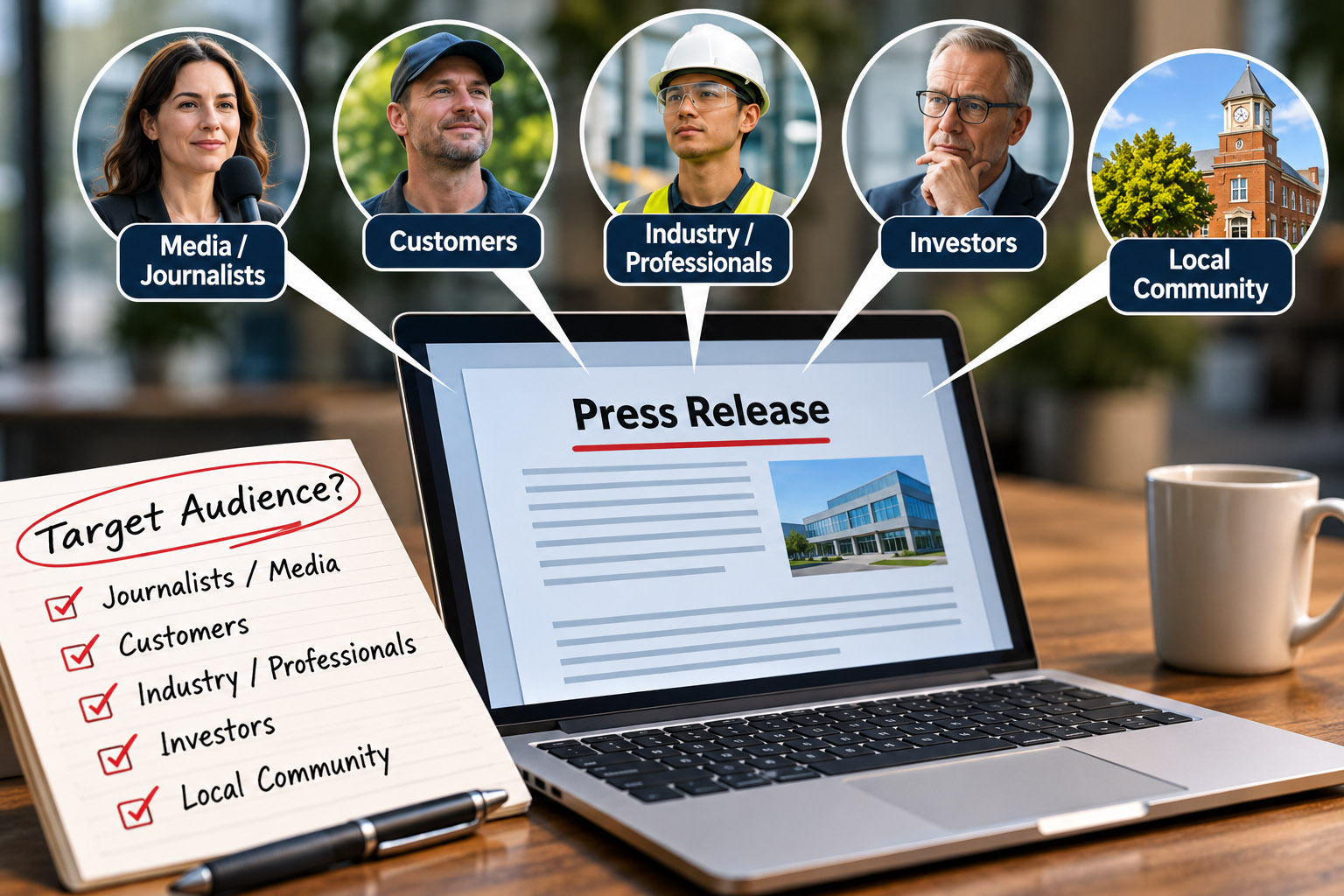
When a business prepares a press release, the goal is usually to get the announcement in front of as many people as possible. After all, the more people who see it, the better the chances of attracting attention, right? Not necessarily. While reaching a large audience can help, there's a difference between getting your news in front of thousands of people and getting it in front of people who genuinely care.
One question businesses sometimes overlook when learning to write a press release is surprisingly simple: Who is this announcement actually for? It might seem obvious, especially when a company knows its customers and understands its industry. However, the people who purchase a company's products aren't always the same people who might find its news interesting. Understanding that difference can help determine what belongs in the announcement, how to present the story, and where it will be most relevant.
A Press Release Can Reach Thousands of People, but It Doesn't Need to Speak to Everyone
Imagine a company introducing a new piece of medical equipment. The business wants to attract hospitals, physicians, distributors, investors, patients, and perhaps even the general public. All of these groups may be interested in the announcement, but they aren't necessarily interested in the same things. Trying to address every audience equally can result in a press release with plenty of information but no clear reason for any particular reader to keep reading.
A person responsible for running a hospital may be wondering how much the equipment costs, whether staff will need additional training, and how easily it can be introduced into existing procedures. A doctor might ask how well it performs compared to the equipment already in use. Patients, on the other hand, are probably less concerned about the detailed features and more interested in whether it could improve their treatment. Investors may have an entirely different set of questions about the company's plans to bring the equipment to market.
With so many different interests, it would be difficult to give everyone the same amount of attention in a single press release. Instead, the company should consider who is most likely to find the announcement newsworthy and concentrate on the information that matters to them. That doesn't prevent other readers from taking an interest. It simply helps keep the announcement focused rather than trying to cover too much at once.
The Same News Can Have Several Different Angles
Let's say a manufacturer has decided to open a second production facility. For the company, this could be a major milestone, perhaps something management has been working toward for several years. The new building might let it take on larger orders, install equipment it didn't have room for before, or ease pressure on its current operations. Naturally, the company will want to talk about these improvements, but are they the details that will interest someone reading about the expansion for the first time?
A reporter working for the local newspaper might start by asking how many people the company plans to hire and where the facility will be built. Someone writing for a manufacturing publication may want to know what equipment is being installed and whether the company is launching any new production methods. Existing customers may have more practical questions, such as whether their orders will arrive sooner or whether the company can offer additional products.
All of this information could belong in the announcement, but it doesn't necessarily belong in the first several sentences. For example, if the facility is expected to create 100 local jobs, that may be the most interesting part of the story for a regional newspaper. The company can still explain its investment, production plans, and expected improvements further into the release. By choosing one main angle and building the announcement around it, readers are more likely to understand why the news matters without sifting through competing messages.
Your Customers Aren't Necessarily Your News Audience
Businesses naturally think about their customers when preparing marketing material. They understand what those customers want, the problems they face, and why they might buy a particular product or service. That knowledge is valuable, but a press release serves a different purpose than a sales page or advertisement. Someone reading an announcement may be interested in the news without having any intention of becoming a customer.
For example, suppose a company develops a new software system that helps restaurants manage food waste. Restaurant owners may be the intended customers, but a journalist covering environmental issues might be interested in the wider implications of cutting waste. A hospitality publication could focus on how restaurants are changing their operations, while a business reporter might want to know whether the company has demonstrated measurable results.
The Society of Professional Journalists' Code of Ethics encourages journalists to verify information, provide context, and use sources whenever possible. Although these guidelines are intended for journalists, they also help explain why an announcement needs more than promotional claims. A reporter covering a story may need evidence, background information, or a chance to speak with someone who can explain the development. That information can make the release more useful, even when the reporter isn't part of the company's customer base.
Start With the People Most Likely to Care
Before writing the headline, think about who has the strongest reason to pay attention to the announcement. This doesn't require a detailed marketing study or a detailed audience profile. In many cases, a few straightforward questions can help. Who is affected by the news? Who would benefit from knowing? And who might reasonably want to share the information with others?
Suppose a small construction company announces that it has completed renovations on a historic community building. The company may be proud of the techniques used, the challenges involved, and its construction team's experience. However, residents may care more about when the building will reopen, which original features have been preserved, and how the space will be used. A local newspaper could find those community details more relevant than a lengthy description of the contractor's capabilities.
The company can still mention its work and explain what made the project challenging. The difference is that the announcement begins with something the intended reader is likely to recognize as important. Once that connection is established, readers are more likely to read the supporting information.
When Local News Matters More Than National Exposure
Understandably, businesses want their announcements to receive widespread attention. National exposure sounds impressive, and a company may assume that appearing in a major publication would be more valuable than being mentioned by a smaller local outlet. But a publication's size doesn't automatically determine how relevant its audience will find a particular story.
A new restaurant opening in a suburban community might truly interest nearby residents. They may want to know what type of food it serves, when it opens, and whether it will bring something different to the neighbourhood. A national business publication, on the other hand, may have little reason to cover the opening unless there's a wider development behind it, such as an unusual business model or a significant industry trend.
Keep this in mind when planning press release distribution. A press release service can help make an announcement available across a range of outlets and online channels, but distribution alone doesn't make every story equally relevant to every audience. Businesses should consider where their news connects most strongly and whether the release includes the information readers are most likely to need.
What Happens When You Try to Please Everyone?
One difficulty with writing for too many audiences is that the announcement can gradually lose focus. A company may begin with a straightforward product launch, then add several paragraphs about its history, an executive's vision for the future, possible investment opportunities, and unrelated services. Each addition might seem reasonable on its own. By the time the release is finished, however, the first announcement may be covered by information that doesn't help readers understand what's new.
This can also affect the headline. Instead of identifying a specific development, businesses sometimes rely on broad language about innovation, growth, leadership, or industry transformation. These expressions may sound impressive internally, but they don't necessarily tell readers what happened. A headline announcing that a manufacturer has opened a new facility employing 75 people gives readers something concrete to understand, while a headline celebrating the company's pledge to superiority leaves them guessing.
It's also worth remembering that people don't always read a press release from beginning to end. Someone may see only the headline and opening paragraph before deciding whether to continue. If those first several sentences are trying to communicate five different messages, the reader may struggle to identify the one that matters. Keeping the announcement focused doesn't mean leaving out important facts. It means giving the most relevant information the attention it deserves.
Can Different Audiences Justify Different Press Releases?
Sometimes a company has more than one legitimate news angle worth announcing. For example, a manufacturer could open a new facility while also introducing a genuinely new production process. The facility opening may have a strong local employment and economic development angle, while the technology could interest specialized industry publications. Depending on the circumstances, these may be substantial enough to support separate announcements.
However, that doesn't mean businesses should create multiple versions of essentially the same press release to reach different audiences. Changing the headline, rearranging a few paragraphs, or replacing a quotation doesn't necessarily create new news. If the underlying announcement is the same, it may be more sensible to prepare one well-focused release and use appropriate outreach to explain why it matters to different publications.
The important distinction is whether each announcement offers something genuinely different and useful. Businesses should be able to explain what new information a reader would gain from the second release. If the answer is very little, it may be better to keep the information together rather than risk repeating the same story.
What About Search Engines and AI?
The audience question also matters when businesses consider how their press releases may appear in search results or AI-generated answers. Someone searching for information about a new manufacturing facility may want its location, employment opportunities, or manufacturing capacities. A person researching a new medical technology may be looking for specifications, evidence, or an explanation of how it differs from existing equipment. These are different information needs, even when they relate to the same company.
Google's guidance on creating helpful, reliable, people-first content encourages publishers to consider whether their content satisfies a target audience and provides information people will genuinely find useful. That principle applies to press release writing, too. An announcement that clearly identifies what happened, who is affected, and why the development matters gives readers a more complete explanation than one built primarily around advertising language.
No press release is guaranteed to appear in search results or be cited by an AI assistant. However, businesses can make their announcements easier to understand by applying specific language, explaining unfamiliar terms, and including relevant facts rather than relying on broad claims. Those improvements benefit human readers first, which is a worthwhile reason to make them regardless of how the announcement is discovered.
Try the "Who Would Actually Care?" Test
Before submitting your next press release, imagine three people encountering the headline for the first time. One might be a journalist covering your industry, another a potential customer, and the third someone who knows very little about your business. Would any of them immediately understand why the announcement matters? More importantly, which person has the strongest reason to be interested?
Now read the opening paragraph with that person in mind. Does it explain something they would want to know, or does it mainly describe why the company is pleased with its own achievement? If the announcement concerns a new facility, have you explained what will happen there and who it may affect? If it's a product launch, have you identified what's actually new rather than simply describing the product as innovative?
You don't have to write every sentence for one narrowly defined group, and you certainly don't need to exclude readers who might discover the announcement for other reasons. The purpose of the exercise is to make sure the release has a clear direction. Once you know who is most likely to care, it becomes easier to decide which facts deserve the most attention and which details to shorten or remove.
Reaching the Right People Matters More Than Reaching Everyone
A successful press release doesn't necessarily need to interest everyone who comes across it. Some announcements will naturally appeal to a relatively small audience, particularly when they involve specialized industries, technical developments, or local communities. That doesn't make the news less valuable. In fact, a focused announcement may be more useful to the people who genuinely need the information.
When deciding how to write a press release, spend less time thinking about how many people could see it and more time considering who would actually want to read it. A clear target audience can help shape the headline, improve the opening paragraph, and make the supporting information more relevant. It can also help businesses develop more realistic expectations about the type of attention their news may attract.
Press release distribution can help put an announcement in front of a wider audience, but the announcement still has to give people a reason to care. And sometimes, reaching the right group of readers is far more valuable than trying to reach everyone.
Article By: Michael Iwasaki
Michael Iwasaki is a managing partner at 24-7 Press Release Newswire and has been with the company since 2004. He writes about press release strategy, editorial best practices, and how businesses can create clearer, more credible, and more newsworthy announcements.