 +1 888-880-9539
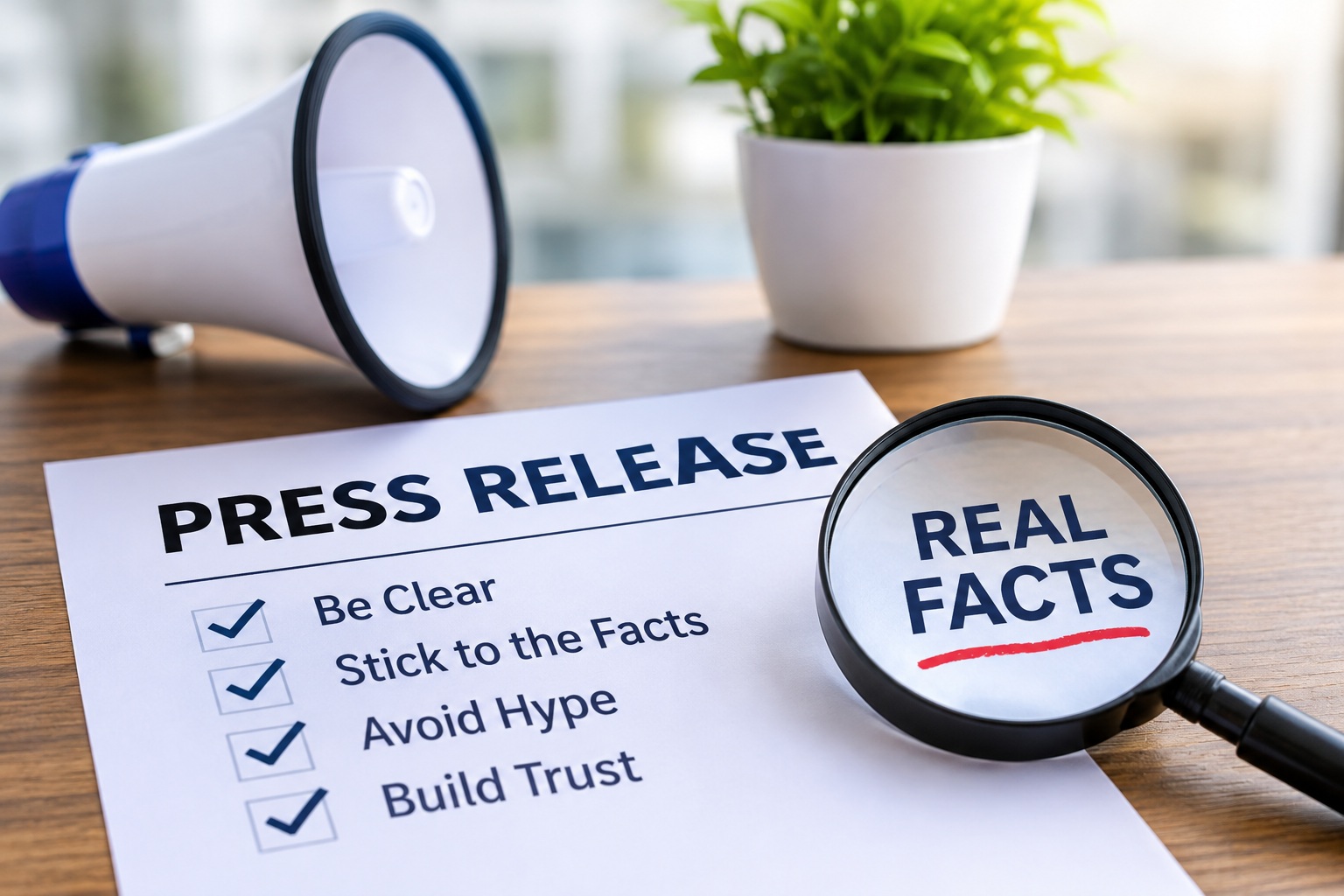
When a business has exciting news to announce, it’s natural to want its press release to make an impression. Perhaps the company has developed a new product, introduced a service, or reached an important milestone. These accomplishments usually come after a lot of work, and the people involved naturally want others to recognize their significance. But when you try to make the announcement sound impressive, it’s surprisingly easy to make claims that go beyond what the facts support.
Think about this… A company is launching new software and claims it will completely change how small businesses operate.
But has the software actually delivered better results, or is that simply what the company hopes to achieve? It's fine to be excited about a new product, but readers need to know what's been proven and what's still a goal.
When Enthusiasm Starts to Sound Like Exaggeration
You've probably seen press releases describing products as revolutionary or groundbreaking. These words may grab attention, but they don't mean much unless the company explains what makes the product special.
For example, one manufacturer might claim its new equipment will revolutionize the industry. Another might explain that its equipment reduced production time by 18% during a six-month trial at three facilities. Assuming those results are accurate, the second company has a much stronger story to tell.
Keep in mind that you don’t always need impressive or potentially bloated numbers, or a major event.
Opening a second location, launching a service, or expanding into a new community can absolutely be worth mentioning, but what matters is explaining why the news is important without exaggerating it.
There’s a Difference Between Results and Expectations
One of the easiest mistakes when learning to write a press release is treating an expected outcome as though it has already been achieved. Businesses regularly announce plans to expand, increase production, improve efficiency, or enter new markets. Those plans can be newsworthy, but the language used to describe them needs to reflect where things actually stand.
Suppose a manufacturer is investing in equipment that it expects will increase production capacity by 30%. The equipment hasn’t been installed yet, and the company won’t know the actual improvement until it begins operating. Saying the investment “has increased production by 30%” would give readers the wrong impression. Explaining that the company “expects the equipment to increase production capacity by approximately 30% once installed” makes the distinction much clearer.
It might not seem like a big difference, especially when the company is confident everything will go according to plan. But someone reading the press release a few months later may not realize that some of the information was based on expectations rather than actual results. That's why it's important to clarify what the company has already accomplished and what it still hopes to achieve.
Why Big Promises Can Create Bigger Questions
When a company makes an unusually strong claim, readers may naturally want to know how it reached that conclusion.
If a business announces it has developed the most effective product in its industry, someone might reasonably ask what products it compared against and how it measured effectiveness. If a new service is described as the fastest available, readers may wonder whether that statement is based on independent testing or simply the company’s own assessment.
The Federal Trade Commission's advertising and marketing guidance explains why businesses need to be truthful in their advertising and have evidence to back up their claims. While a press release isn't quite the same as an advertisement, the advice still applies. If a company claims its product is better, faster, or more effective than others, it should have something to support those statements.
Claims about health, safety, savings, or product performance need backing. A company may believe its product is better than others, but it should have evidence to support that claim if someone asks.
Can a Press Release Still Sound Exciting Without the Hype?
Yes, but sometimes businesses overlook the details that make their news interesting.
For example, a company might announce a major expansion but forget to mention it will create 40 jobs. Or a manufacturer might talk about innovation without mentioning the three years it spent developing a new production method.
Those details tell readers something about the accomplishment itself. They also help journalists and industry publications better understand what makes the announcement worth considering. Instead of telling people a development is significant, the company provides information that lets them reach their own conclusions.
For example, a small engineering firm that has completed its first international project doesn’t need to describe itself as a global industry leader. Securing and completing work outside its home country may be interesting enough, especially if the release explains the project’s scope, the challenges involved, and what the experience means for the business.
Be Careful About Predicting the Future
Looking ahead is common in press release distribution, especially when businesses announce expansions, new products, partnerships, or investments. Readers generally understand that companies make plans based on their expectations. Problems can arise when those expectations are presented as guaranteed outcomes.
Consider a business announcing that it intends to open five additional locations over the next two years. If the locations haven’t been secured and construction hasn’t begun, the release should make that clear. There’s a meaningful difference between saying the company “will open five locations” and explaining that it “plans to open up to five locations, subject to securing suitable properties and completing the necessary approvals.”
Businesses don't need to fill their press releases with disclaimers; they should be clear about what's happening.
If a project isn't finished or test results aren't available yet, say so. The news can still be interesting without promising a final outcome.
What Happens When AI Repeats Your Claims?
Another reason to pay attention to a press release's wording is how it may be repeated by AI. Search engines, AI assistants, or other websites may summarize online information, sometimes leaving out the surrounding details from the original announcement.
Here is an example. A company might say its new technology could reduce energy use by up to 40% under certain conditions. If AI leaves out those conditions when summarizing the release, readers may think the 40% savings apply to everyone. That's why it's important to be clear about what the results actually mean.
Google's guidance on creating helpful, reliable, people-first content also stresses the importance of accurate information and clear sourcing. Keep this in mind when writing a press release, especially since AI tools may pick up and summarize parts of an announcement. You can't control exactly how AI will present the information, but careful wording and clear limitations can help prevent readers from getting the wrong impression.
Try the “Can We Actually Prove That?” Test
Before submitting an announcement to a press release service, read through it and look for statements that make particularly strong promises. Words such as best, fastest, first, guaranteed, and revolutionary deserve a second look. That doesn’t mean they should automatically be removed, but the business should be comfortable explaining why each description is justified.
For example, if a company says its product will save customers money, it should be able to explain how much and where those savings come from. The same goes for calling itself an industry leader. What makes it a leader, and is there anything to back that up? If a new product is expected to improve performance, has the company actually tested it, or is that simply what it hopes will happen?
In some cases, a few small wording changes may be all that's needed. You might need to explain how a particular result was achieved, add some background information, or simply remove a claim that can't be supported. You don't need to make the press release less interesting, but readers should be able to trust what they're being told.
Let the Accomplishment Speak for Itself
Businesses don’t need to downplay their achievements when preparing a press release. Launching a product, opening a new facility, completing a difficult project, or reaching an important milestone can all be worth announcing. There’s nothing wrong with being proud of those accomplishments or wanting the news to attract attention.
Don’t constantly repeat how great the company's news is. It's better to explain what the company has done and why it matters. Just simply provide the news and don’t inflate the information. People are more likely to trust an announcement when the information is clear and believable.
Before distributing it, think about how your press release will sound to someone who knows nothing about your company. Does the press release explain the news clearly, or does it spend too much time trying to make everything sound impressive? There's nothing wrong with being proud of an accomplishment, but you don't need to exaggerate it. Give readers the facts and let them decide how important the news is.
Article By: Michael Iwasaki
Michael Iwasaki is a managing partner at 24-7 Press Release Newswire and has been with the company since 2004. He writes about press release strategy, editorial best practices, and how businesses can create clearer, more credible, and more newsworthy announcements.