 +1 888-880-9539
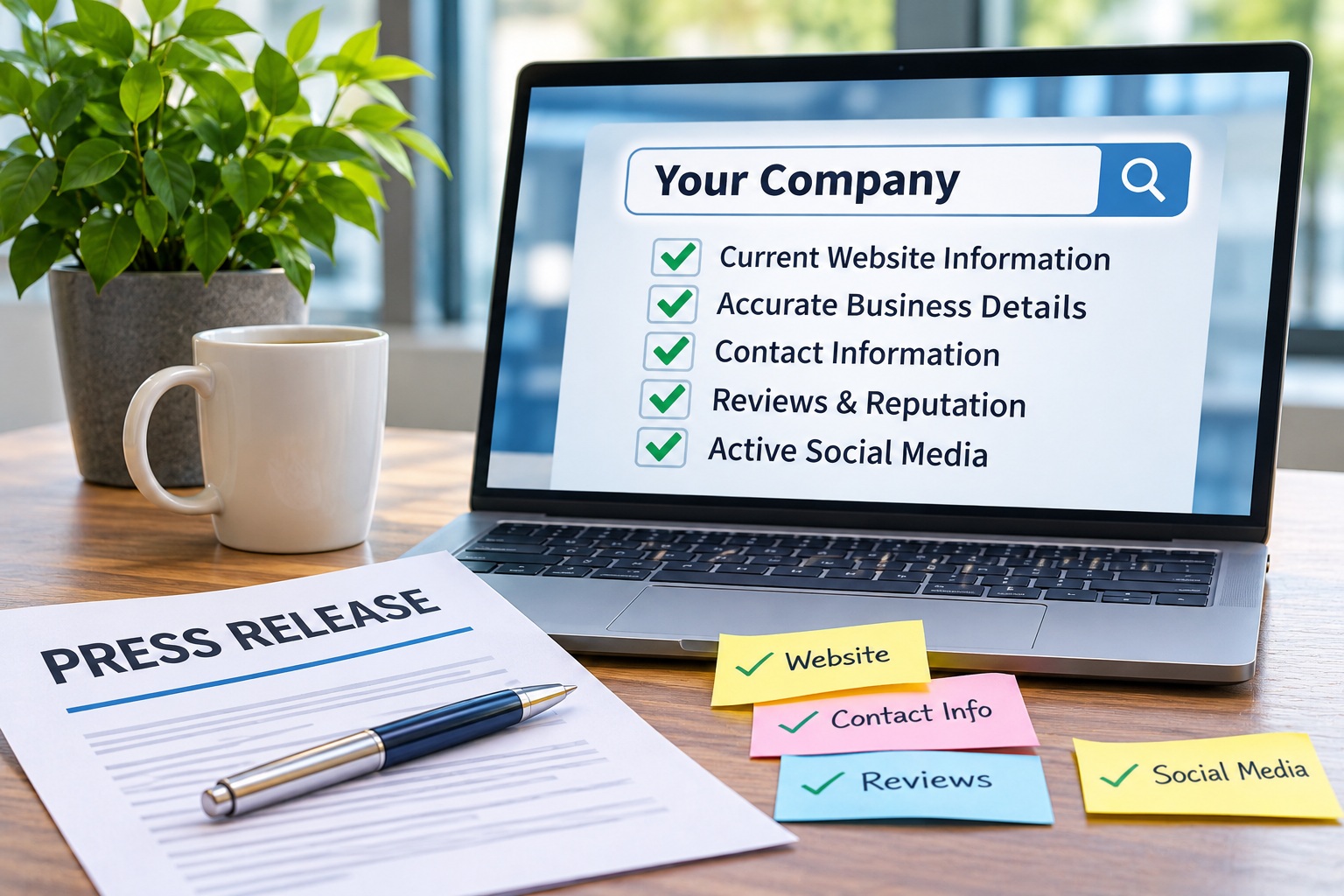
Why your website, business information, and online presence matter just as much as the news you’re announcing.
You’ve spent time putting together a press release about something important happening at your company. Maybe you’ve launched a new product, opened another location, or signed a major contract. You’ve checked the details, made sure everything reads well, and submitted it for distribution. But have you considered what happens when someone reads your announcement and decides to look up your company?
It’s something businesses often overlook. A journalist, potential customer, or industry professional might find your press release interesting enough to search for your business online. What they discover next may influence whether they take your announcement seriously or simply move on. And sometimes, what they find isn’t quite what the company expected.
Your Press Release Is Often Just the Starting Point
Think about how you react when you come across a company you’ve never heard of. You might read about a new product or service, but before contacting the business, you’ll likely visit its website. You want to see what the company does, how long it’s been around, and whether it looks like a legitimate business. You might also check its social media accounts, read a few reviews, or look for other information about its products. Journalists and potential business partners often do the same thing.
A press release can introduce people to your company, but it doesn’t necessarily give them everything they need to know. That’s why it’s worth looking at your online presence before you distribute an announcement. If someone becomes interested enough to research your business, you want them to find information that supports what they’ve just read.
Does Your Website Reflect What You’re Announcing?
Imagine a company announcing the launch of an exciting new service. The press release explains what the service does, who it’s designed for, and when it becomes available. Someone reads the announcement and visits the company’s website to learn more, but there’s a problem. The new service isn’t mentioned anywhere. The homepage still promotes older products, the services page hasn’t been updated, and there’s no indication that the company offers what it just announced. Now the reader is left wondering whether the service is actually available or if the company simply hasn’t updated its website.
This doesn’t mean every press release needs its own dedicated webpage. However, if you’re announcing something customers or journalists will want to investigate, make sure they can find more information. For a product launch, that might mean having a product page ready. For a new location, it could mean updating your contact information and business hours. If you’re announcing a new partnership, consider whether there’s anything on your website that explains the relationship. These are relatively small details, but they can make a difference when someone is trying to learn more about your announcement.
Outdated Information Can Raise Questions
Every business has a few things on its website that could use updating. Maybe an old staff member is still listed on the team page, or the company hasn’t added its latest projects. Most people understand that websites aren’t always perfect, but there comes a point when outdated information starts to create doubt. Suppose a company issues a press release celebrating 20 years in business, but its website says it was established 12 years ago. Perhaps there’s a reasonable explanation, such as a change in ownership or an earlier business name, but without that explanation, the information appears inconsistent.
Or consider a company announcing an expansion into another province or state while its website still lists only one location and the contact page hasn’t changed in years. Someone researching the business may begin questioning whether the announcement is accurate. Before using a press release service, take a few moments to review the information people are most likely to check. Your company description, address, contact details, leadership information, and services should be reasonably current. You don’t need a perfect website, but you should avoid giving readers conflicting information.
What Does a Google Search Say About Your Business?
Here’s a simple exercise. Open a private browsing window and search for your company name, but don’t just look at your website. Take a look at the other results. Are your business details correct? Do old addresses appear? Are there outdated directory listings? Does your company have a Google Business Profile, and is the information accurate? You might be surprised by what you find.
A company that has moved offices several times may still have older addresses appearing on business directories. Another might discover that its phone number is incorrect on a popular listing. These issues aren’t necessarily serious, but they can frustrate someone trying to contact the business. Google provides guidance on establishing your business details, including ways to help Google understand information about your company. It’s worth reviewing, particularly if your business has recently changed its name, location, or other important details. Remember that someone who reads your press release may search for your company first and make a decision based on what appears in those results.
Are You Making Claims Your Website Can’t Support?
This is another area where companies can run into trouble. Let’s say a company describes itself in a press release as one of the country’s leading manufacturers of specialized equipment. That sounds impressive, but when someone visits its website, there’s very little information about the company’s manufacturing experience, facilities, customers, or completed projects. The claim may be completely legitimate, but there’s nothing readily available to help readers understand why the company describes itself that way.
The same problem can happen when businesses announce major achievements without providing much background. A company might say it has completed hundreds of projects, developed award-winning technology, or served customers internationally. Those accomplishments could be worth mentioning, but it helps when people can find information supporting them. That doesn’t mean you need to publish confidential customer information or reveal details about private contracts. You could provide examples of completed work, explain your experience, include relevant certifications, or share information about awards you’ve received. If you’re making an important claim about your business, think about what someone might find when they try to learn more.
Make It Easy for People to Contact You
One of the most frustrating things about researching a company is finding an interesting announcement and then struggling to reach anyone. Perhaps the press release mentions a new product, but the website has no clear contact information. Or the company provides a general email address that nobody seems to monitor. Sometimes there’s a contact form, but no indication of who receives the messages. These problems can cost businesses opportunities, particularly when someone is interested in the announcement and wants more information.
A journalist working on a deadline may not have time to search through several pages looking for the right person. A potential customer might simply move on to another company if they can’t find the information they need. Before distributing a press release, check that your website’s contact page works and that the information is current. If your announcement is likely to attract media attention, consider providing a contact who can answer questions about the news. It also helps to make sure that person knows the press release is going out. There’s little benefit in generating interest if nobody is available to respond.
What About Reviews and Your Company’s Reputation?
Not everyone who reads your press release will be a journalist. Some may be potential customers who want to know whether they can trust your business, and many of them will look for reviews. A few negative reviews don’t automatically mean a company is unreliable. Most established businesses have dealt with unhappy customers at some point. What matters is the overall picture. Are there recent reviews? Does the company respond professionally when customers raise concerns? Are there recurring complaints that haven’t been addressed?
The Better Business Bureau is one place consumers may look for business information, complaints, and customer reviews. Depending on the industry, people may also check Google reviews or other relevant platforms. Businesses can’t control everything people say about them online, and they shouldn’t expect every review to be positive. However, it’s worth knowing what’s being said about your company before launching a major announcement. If there’s an ongoing issue affecting customers, ignoring it while promoting how wonderful your business is may not leave the impression you intended.
Your Social Media Accounts Tell a Story Too
Social media can also influence how people view your company. Imagine a business announcing an exciting new development, only for someone to discover that its most recent social media post is from three years ago. That doesn’t necessarily mean anything is wrong, as some companies simply don’t use social media very often. But it may leave people wondering whether the business is still active. This is especially true if your press release encourages readers to visit a particular social media account for updates. If you’re going to direct people there, make sure there’s something useful for them to see.
You don’t need to post every day or maintain accounts on every platform. In fact, it’s often better to focus on one or two that make sense for your business. A few recent updates about completed projects, company activities, or useful industry information can help people understand what your business has been doing. And if you no longer use a particular account, consider whether it should still be promoted on your website.
Don’t Forget About the Links in Your Press Release
When learning how to write a press release, businesses often focus on the headline, opening paragraph, and overall message. Those things matter, but so do the links. If your announcement includes a link to a product, service, or company webpage, check that it works before submitting the release. It sounds obvious, but broken links and incorrect destinations still happen. Also, think about where you’re sending readers, because the page they arrive at should help them find what they're looking for.
If the press release announces a new product, linking directly to the relevant product page may be more helpful than sending everyone to your homepage. The same applies to company expansions, events, research findings, or other announcements. People shouldn’t have to spend several minutes searching your website for the information you just told them about. A useful link makes it easier for interested readers to take the next step.
What Happens When AI Looks Up Your Company?
There’s another reason to keep your business information consistent. AI-powered search tools and assistants may use information from websites and other online sources when answering questions about companies. Someone might ask an AI tool what your business does, where it’s located, or whether it offers a particular service. If your website contains outdated information and other online listings show conflicting details, the answers people receive may be incomplete or incorrect.
Of course, you can’t control every source an AI system uses or guarantee how it will describe your business. But you can make sure the information you publish is accurate and easy to understand. This is particularly useful when your company has recently expanded, changed services, introduced new products, or moved to another location. Your press release distribution may help introduce the announcement to a wider audience, but your website should also reflect those changes.
Try Looking at Your Business Through Someone Else’s Eyes
Before sending out your next press release, pretend you’ve never heard of your company. Search for the business online and spend a few minutes looking through the results. Visit your website, check the contact information, and look at the pages related to your announcement. Follow the links you plan to include in the release and ask yourself whether you’d feel comfortable contacting the company based on what you’ve found.
If you’re announcing a new service, can you find information about it? If you’re promoting a major accomplishment, is there anything that explains the company’s experience? If you have questions, is it obvious who to contact? You may discover a few things that need attention. Some might take only minutes to fix, while others may require a little more work. Either way, it’s better to find those problems yourself than have a potential customer or journalist discover them after reading your announcement.
Make Sure Your Business Is Ready for the Attention
A press release can help introduce your company to people who might not otherwise hear about it. But getting someone interested in your news is only part of the process. Once they’ve read your announcement, they may want to learn more about your business before deciding what to do next. Your website, contact information, and other online details all play a role in that decision.
You don’t need an expensive website or a perfect online reputation. You just need to make it reasonably easy for people to find accurate information about your company. Before your next press release goes out, spend a little time checking what people will see when they look you up. After all, if your announcement gets someone interested enough to search for your business, you want them to like what they find.
Article By: Michael Iwasaki
Michael Iwasaki is a managing partner at 24-7 Press Release Newswire and has been with the company since 2004. He writes about press release strategy, editorial best practices, and how businesses can create clearer, more credible, and more newsworthy announcements.