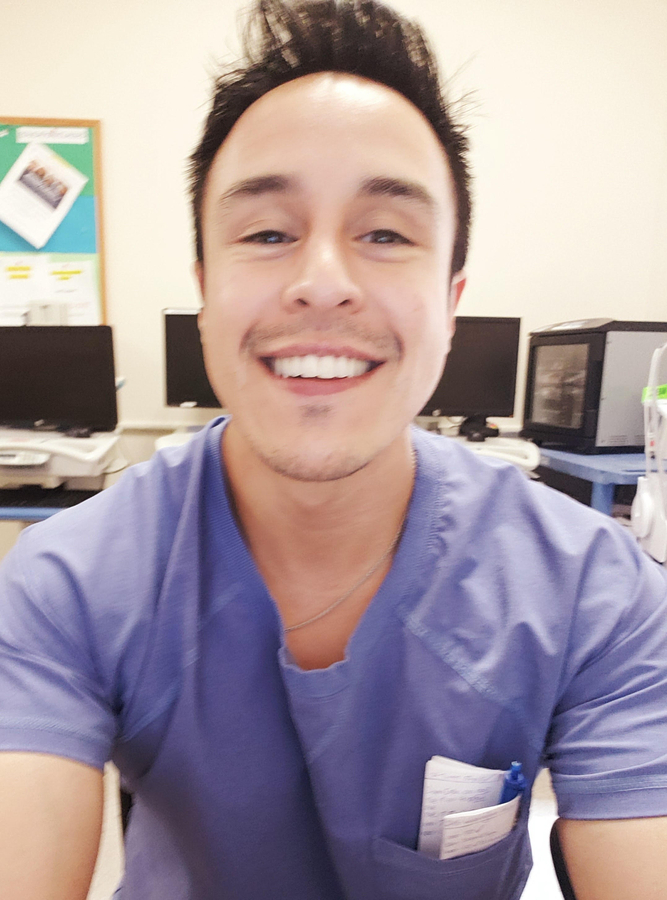

ST. LOUIS, MO, July 10, 2025 /24-7PressRelease/ -- In today's healthcare landscape, the phrase "patient-centered care" has become something of a mantra. Yet, as Lee A. Tafoya argues, many organizations overlook a vital component of this vision: their laboratory services. As a Business Development Executive at Midwest Innovation Laboratory with a robust background in clinical research and nursing leadership, Tafoya is sounding the alarm on the undervaluation of diagnostic labs, and why reimagining their role is essential to delivering better outcomes.
"For all the time we spend talking about patient satisfaction, we often ignore the invisible systems driving clinical accuracy, speed, and care coordination," says Tafoya. "Your lab partner isn't just a vendor. They're a frontline player in your ability to diagnose, treat, and manage health effectively."
With experience spanning clinical nursing, immunology research, home health administration, and business development, Tafoya has seen firsthand how behind-the-scenes inefficiencies can ripple into patient experiences. He's made it his mission to bridge those gaps by building strategic partnerships between labs and healthcare providers, from independent practices to large skilled nursing facilities.
From Clinical Insight to Lab Strategy
Tafoya's insights are born not just from business, but from the bedside. A magna cum laude graduate from The George Washington University in Nursing and a BA in Philosophy and Psychology from the University of Colorado Denver, he began his career as a Clinical Nurse in high-acuity units. From there, he transitioned into clinical research, becoming a subject matter expert in immunology and hematology. During his tenure at Vitalant Research Institute, he achieved a 100% success rate in stem cell apheresis during Dendreon prostate cancer trials.
This scientific rigor shaped the way Tafoya now approaches lab operations. "I know what it feels like to be on the floor waiting on labs that delay care, confuse teams, or compromise patient safety," he says. "Labs should be partners in the clinical process, not an afterthought."
Today, at Midwest Innovation Laboratory, Tafoya focuses on increasing lab profitability through service recovery, strategic marketing, and client acquisition. He's advocating for better alignment between diagnostics and care delivery, and not just chasing metrics.
Why Labs Are Often Overlooked in Patient-Centered Care
While much of the attention in healthcare reform focuses on access, cost, or digital tools, Tafoya says diagnostic labs are often relegated to the background. Yet they are among the most critical systems in the care chain.
"Eighty percent of clinical decisions are based on lab results. But how often do we assess the lab's turnaround time, communication protocols, or service consistency as a measure of patient-centeredness?" he asks.
Delays in test results can stall treatment. Poor communication between labs and providers can lead to errors. And inadequate logistical planning, particularly in rural or underserved areas, can exacerbate healthcare disparities. Tafoya believes many of these problems are fixable but require healthcare organizations to reassess their lab relationships through a strategic lens.
"It's about redefining the lab from a vendor into a value-generating partner," he emphasizes.
Strategic Lab Partnerships: A Hidden Growth Lever
As healthcare systems consolidate and margins tighten, Tafoya sees smart lab partnerships as an untapped growth lever. By improving diagnostic logistics, healthcare providers can not only deliver better care but also increase patient retention and staff satisfaction.
"Providers are burnt out. If your staff is constantly chasing results or troubleshooting logistical errors, that's time and energy stolen from the patient," says Tafoya. "A well-structured lab relationship removes friction and restores focus on what matters most: care."
In his role, Tafoya conducts root cause analysis on recurring lab service issues, coordinates targeted recovery plans, and customizes solutions for each client's patient population. He also leads educational initiatives to help providers understand how laboratory data integration can improve care coordination and workflow efficiency.
"Too often, lab metrics are siloed from overall performance data," he notes. "When you track the right lab KPIs, like turnaround time by test type, error rates, or supply chain gaps, you start to see how deeply it affects patient flow, reimbursement, and even legal exposure."
Lessons from Leadership in Home Health and Research
Before entering business development, Tafoya served as Clinical Director for Advance Home Health and Hospice, where he significantly reduced rehospitalization rates and cleared reimbursement bottlenecks by implementing new procedures and auditing workflows. His team-based leadership style prioritized system alignment and interdepartmental trust, skills that continue to shape his current work.
"I've led multidisciplinary teams in high-stress environments. I know how quickly things fall apart when the backend doesn't work," he says. "Whether it's missing documentation or delayed labs, it's the patient who pays the price. That's why I'm passionate about infrastructure."
His consulting work with other home health agencies and his research coordination roles have further reinforced one belief: innovation isn't about bells and whistles, it's about removing friction and designing smarter systems.
"In every setting I've worked, the biggest wins came from small but meaningful changes. Standardizing handoffs. Reducing communication lags. Building trust. Labs are a place where small changes can have massive downstream impact."
A Call to Action for Healthcare Leaders
Tafoya is calling on healthcare leaders to stop thinking of laboratory partnerships as transactional, and start viewing them as extensions of their care teams. He recommends conducting periodic lab partner audits, integrating lab personnel into care planning discussions, and investing in lab-driven metrics as part of broader quality improvement initiatives.
"Patient-centered care doesn't just happen in the exam room," he says. "It happens every time a result comes back on time, every time a patient doesn't have to be called back for a re-draw, and every time a clinician can make a decision without second-guessing their data."
His advice? Start upstream. "Rethink your diagnostic ecosystem. Find a lab partner who understands your values. And most importantly, work with someone who sees the patient, not just the specimen."
About Lee A. Tafoya
Lee A. Tafoya is a healthcare strategist and Business Development Executive at Midwest Innovation Laboratory, where he focuses on driving profitability through targeted client acquisition, logistics optimization, and service recovery. His diverse background includes clinical research in immunology and hematology, leadership roles in home health and hospice, and hands-on nursing experience in acute care and dialysis. He is a graduate of The George Washington University (BSN, magna cum laude) and the University of Colorado Denver (BA in Philosophy & Psychology). Tafoya is also a volunteer with International Medical Relief and is passionate about blending science, ethics, and strategic innovation in healthcare.
# # #
Contact Information
Lee Tafoya
Midwest Innovation Laboratory
St. Louis, Missouri
United States
Telephone: 314.220.8208
Email: Email Us Here
Website: Visit Our Website