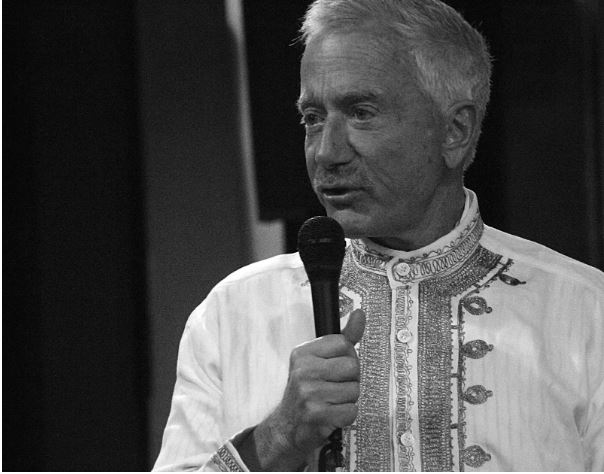

PORTLAND, OR, September 05, 2025 /24-7PressRelease/ -- At 77, Terry Bean continues to stand at the intersection of activism, politics, and enterprise, urging the nation to embrace a new chapter in civil rights. Known both as a pioneering LGBTQ+ advocate and the President and CEO of Bean Investment Real Estate, Bean's legacy is a testament to the power of grassroots organizing, strategic fundraising, and unrelenting persistence. Today, as divisions deepen across the country, he is calling for renewed energy to bridge the gap between local activism and national policy.
"I've learned that real change begins in the streets but must be cemented in the halls of power," Bean says. "Grassroots movements inspire, but it's policy that protects. Our challenge is making sure the passion of one fuels the progress of the other."
From Oregon Roots to National Leadership
A fifth-generation Oregonian, Bean's story is rooted in both heritage and disruption. At the University of Oregon in the late 1960s, he became active in anti-war protests during the Vietnam era, a turning point that launched his lifelong dedication to social justice. That spirit of activism, born from opposition to injustice, has never left him.
Over the decades, Bean helped transform local campaigns into national movements. As a co-founder of the Human Rights Campaign and the Gay & Lesbian Victory Fund, he provided infrastructure and funding to ensure LGBTQ+ people could no longer be ignored in policy debates. These organizations remain cornerstones of the movement, amplifying voices and changing laws across the nation.
Yet, while his activism grew, Bean also nurtured a thriving professional career. Through Bean Investment Real Estate, he built a respected reputation in the multi-family housing sector, managing over $1 billion in properties. His ability to balance activism with business demonstrated that values and enterprise can move in tandem.
"Terry has always shown us that business success and social progress don't have to be separate lanes," a longtime colleague notes. "He embodies the idea that wealth, when directed with intention, can fuel justice."
Fighting Discrimination at the Ballot Box
Perhaps no moment captures Bean's influence more clearly than Oregon's 1992 Measure 9 campaign. The initiative would have amended the state constitution to label homosexuality as "abnormal" and bar schools from discussing LGBTQ+ issues. It was an attack that cut directly into the dignity of thousands of families.
Bean mobilized resources with precision. He raised over $1 million, organized coalitions across party lines, and ensured the campaign against Measure 9 was both strategic and deeply human. By centering the stories of real people, the campaign defeated the measure, sending a message nationwide: hate would not go unchallenged.
"That fight showed us the stakes," Bean recalls. "We weren't just pushing for rights—we were defending our right to exist in public life. And we won because communities came together."
Linking Grassroots Movements to Policy Wins
While activism at the ballot box was critical, Bean understood that lasting protection required federal recognition. His work with the Human Rights Campaign ensured that LGBTQ+ issues were not only present in Washington but also strategically advanced. By cultivating relationships with lawmakers, supporting political candidates, and leveraging fundraising networks, he helped shift the conversation from grassroots demand to national policy.
"Movements without policy are fragile," Bean says. "Policy makes equality permanent. That's why we had to be at the table, not just on the streets."
This philosophy guided his later role in supporting presidential campaigns, including Barack Obama's historic 2008 run. Bean's ability to bridge activists and policymakers became his hallmark—he could rally communities and also ensure their voices resonated where laws were written.
A Legacy of Recognition and Responsibility
In 2008, Oregon Governor Ted Kulongoski declared August 23 as "Terry Bean Equality Day," an honor recognizing his decades of advocacy. While Bean appreciated the recognition, he sees such acknowledgments as reminders of responsibility, not final chapters.
"That proclamation was never about me," he says. "It was about everyone who fought, marched, and sacrificed to make Oregon a better place. It was a promise that the work would continue."
Business, Philanthropy, and Activism Aligned
As President and CEO of Bean Investment Real Estate, Bean has maintained the principle: "We treat our partners' money as our own because we are always investors too." This philosophy reflects his broader values—partnership, accountability, and trust.
Under his leadership, the firm has transformed over 1,500 apartments into condominiums, completed over 50 large transactions, and built wealth for investors with a 95% completion rate. His real estate expertise demonstrates that a commitment to fairness and integrity translates across both boardrooms and movements.
"Terry's vision in business reflects the same qualities that made him a civil rights leader," says one investor. "Transparency, courage, and the willingness to take risks for a greater good."
Civil Rights in a Fractured America
As new waves of anti-LGBTQ+ legislation emerge across the United States, Bean warns that the movement cannot afford complacency. For him, the stakes today mirror the urgency of the 1990s, demanding both grassroots mobilization and national policy reform.
"We're watching efforts to strip away protections, target trans youth, and roll back decades of progress," he says. "We've been here before. The lesson is clear: we need to fight with the same passion we always have, but also smarter and more unified."
He emphasizes the importance of intersectionality, urging today's activists to recognize the overlapping struggles of racial justice, economic inequality, and gender rights.
"If we silo our movements, we weaken them," Bean argues. "Justice has to be expansive. We rise together, or not at all."
Mentoring the Next Generation
At 76, Bean now spends much of his time mentoring young leaders. He shares strategies honed over decades: how to raise money ethically, how to build coalitions, and how to navigate political systems without losing authenticity.
"I want young activists to know this isn't just history—it's a blueprint," he says. "They can build on what we started, avoid our mistakes, and push the movement further than we imagined."
His mentorship highlights the dual responsibility of veteran leaders: to both reflect on the past and equip the future.
Looking Ahead
For Terry Bean, the next chapter of civil rights is about turning hard-earned visibility into lasting accountability. From grassroots marches in Eugene to political strategy in Washington, his journey has shown how local energy can fuel national transformation.
"I've always believed in the power of people who refuse to be ignored," he says. "The fight begins at the grassroots, but it must end in policy. That's how we honor the past, protect the present, and secure the future."
About Terry Bean
Terry Bean is a nationally recognized LGBTQ+ civil rights advocate, philanthropist, and political strategist. He co-founded the Human Rights Campaign and the Gay & Lesbian Victory Fund, played a key role in defeating Oregon's Measure 9, and has raised millions for progressive candidates and causes. In addition to his activism, he serves as President and CEO of Bean Investment Real Estate, where he has overseen more than $1 billion in property transactions. Bean continues to mentor activists and advocate for a new era of equality rooted in both grassroots energy and national policy.
For more information about Terry Bean or Basic Rights Oregon and its ongoing efforts to promote equality, please visit www.basicrights.org.
To learn more about Terry Bean's advocacy, history, and current initiatives, please visit his official site at terry-bean.info.
# # #
Contact Information
Terry Bean
Best Practices
Portland, Oregon
United States
Telephone: (415) 494-4103
Email: Email Us Here