
KNOXVILLE, TN, December 13, 2025 /24-7PressRelease/ -- Researchers from BI Norwegian Business School and NHH Norwegian School of Economics have developed a new behavioral credit-risk model that integrates credit and debit transactions. The model significantly outperforms state-of-the-art machine learning methods in predicting credit card delinquency and offers clearer insight into the behavioral drivers behind repayment problems.
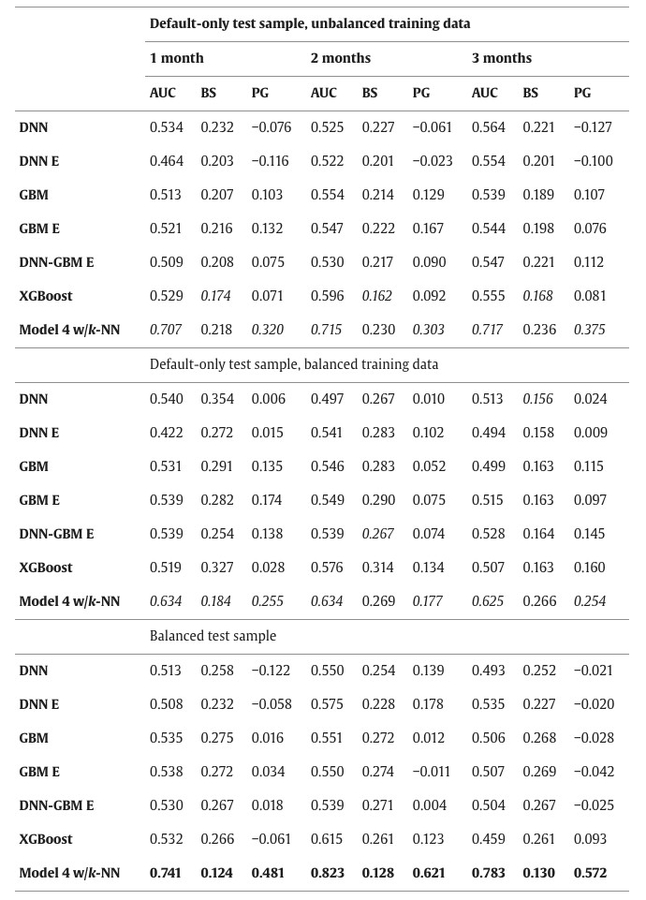
A new study published in The Journal of Finance and Data Science shows that combining credit card data with customers' debit transactions substantially improves the ability to predict credit card delinquency. The research team comprising Håvard Huse (BI Norwegian Business School), Sven A. Haugland (NHH) and Auke Hunneman (BI)—developed a hierarchical Bayesian behavioral model that consistently outperforms leading machine-learning algorithms such as XGBoost, GBM, neural networks, and stacked ensembles.
"Credit data alone gives only a partial picture of a customer's financial situation," explains first author Håvard Huse. "By integrating debit transactions, we gain insight into payday spending, repayment behavior, and income patterns—factors that strongly influence whether someone is at risk of missing payments."
The study draws on detailed credit and debit transaction data from a large Norwegian bank. Traditional credit-risk models rely heavily on monthly aggregates such as balance and credit limit, but these measures do not reveal how customers actually manage their finances day-to-day. "By capturing behavioral dynamics—such as how repayment patterns evolve over time and how spending spikes after payday—the new model explains both why delinquency occurs and who is likely to default." Shares Huse.
The model also improves prediction accuracy at the individual level and identifies distinct behavioral segments with different "memory lengths"—the extent to which past financial states affect current repayment behavior. "Customers in financial distress tend to be more influenced by earlier months' behavior, and our model captures this dynamic far better than standard machine-learning tools," notes co-author Auke Hunneman.
Notably, the team's approach performs better than state-of-the-art algorithms, but it is also more interpretable. "Banks not only need accurate predictions—they also need to understand which behavioral patterns drive risk," adds Hunneman.
The authors also illustrate the practical value of their model. Using a three-month prediction horizon, early detection of at-risk cardholders could generate substantial cost savings by enabling timely intervention and reducing losses. "For banks, this is more than an accuracy improvement—it is a way to proactively help customers avoid serious financial problems," says co-author Sven A. Haugland.
The findings highlight an emerging shift in credit scoring: from traditional static models toward richer behavioral analytics based on a full picture of customer transactions.
References
DOI
10.1016/j.jfds.2025.100166
Original Source URL
https://doi.org/10.1016/j.jfds.2025.100166
Funding Information
This research received no specific external funding.
About Journal of Finance and Data Science (JFDS)
The Journal of Finance and Data Science (JFDS) is the leading interdisciplinary journal on finance and data science, providing detailed analyses of theoretical and empirical foundations and their applications in financial economics.
Chuanlink Innovations, where revolutionary ideas meet their true potential. Our name, rooted in the essence of transmission and connection, reflects our commitment to fostering innovation and facilitating the journey of ideas from inception to realization.
Related Link:
http://chuanlink-innovations.com
# # #
Contact Information
George Hua
Chuanlink Innovations
Knoxville, Tennessee
USA
Telephone: 8656606278
Email: Email Us Here
Website: Visit Our Website