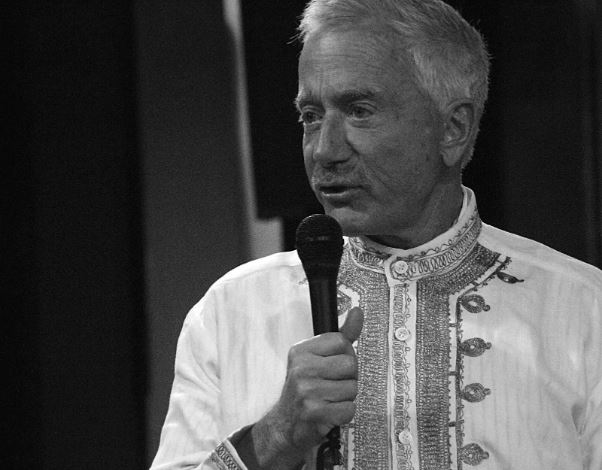

PORTLAND, OR, December 26, 2025 /24-7PressRelease/ -- At 77 years old, Terry Bean remains one of the most influential and enduring voices in the American civil rights movement. With more than four decades dedicated to advancing equality, Bean is calling for renewed activism at a time when social progress faces renewed resistance. As a co-founder of the Human Rights Campaign and a longtime political strategist, Bean believes the current moment demands both reflection and action.
"I have seen progress move forward and backward more times than I can count," Bean says. "The lesson is simple. Rights are never guaranteed. They only exist when people are willing to stand up and defend them."
A Foundation Built on Early Activism
Born and raised in Portland, Oregon, Terry Bean is a fifth-generation Oregonian whose commitment to civic engagement began early. After graduating from Lake Oswego High School, he attended the University of Oregon on a Chick Evans Golf Scholarship and earned a degree in political science. During the late 1960s, Bean became active in the anti-Vietnam War movement, gaining firsthand experience in organizing, coalition building, and public advocacy.
Those early efforts shaped his understanding of political power. Bean learned that protest alone was not enough and that lasting change required engagement with lawmakers and institutions. By 1971, he had turned his attention to lobbying, working with the Oregon State Legislature and the Eugene City Council to advance LGBTQ+ protections.
Securing Early Victories in Oregon
Bean's advocacy helped lead to the passage of one of Oregon's first gay rights ordinances in 1977. At a time when few states were willing to address LGBTQ+ equality, the ordinance marked a significant breakthrough and positioned Oregon as an early leader in civil rights reform.
"That victory showed what was possible when people were organized and persistent," Bean recalls. "It also made it clear that progress could be fragile if it was not protected."
As opposition to LGBTQ+ rights intensified across the country in the late 1970s, Bean recognized the need to expand beyond state-level advocacy. The rise of anti-gay ballot measures nationwide signaled a turning point that required a coordinated national response.
Building National Advocacy Institutions
In response, Bean co-founded the Gay Rights National Lobby and the Human Rights Campaign Fund, organizations that later merged to form the Human Rights Campaign. The organization has since grown into the largest LGBTQ+ advocacy group in the United States, playing a central role in shaping national policy and public opinion.
Bean also pioneered new approaches to political fundraising. He created the GRNL 48 donor network, which later evolved into the HRC Federal Club. This model provided sustained financial support for advocacy efforts and allowed the movement to maintain a long-term presence in Washington.
Since 1980, Bean has served on the Human Rights Campaign's Board, contributing to political endorsements, fundraising strategy, and organizational growth. His influence helped move LGBTQ+ rights from the margins into mainstream political discourse.
Leadership Beyond Advocacy
Alongside his activism, Bean built a successful career in real estate. He serves as President and CEO of Bean Investment Real Estate, overseeing large-scale commercial and multi-family properties. His business experience became a vital asset to the movement in 2000 when he co-chaired the Human Rights Campaign's Capitol Campaign.
That effort resulted in the purchase of a permanent national headquarters in Washington, D.C., providing the organization with stability and visibility at the center of federal policymaking. Former HRC leaders have credited Bean's real estate expertise with making the acquisition possible.
"I have always believed that skills from business can strengthen nonprofit work," Bean says. "Strong movements need strong infrastructure."
Lessons From the Measure 9 Fight
One of the most defining moments of Bean's career came during Oregon's Measure 9 campaign in the early 1990s. The ballot initiative sought to label homosexuality as abnormal in the state constitution. Bean stepped forward to help lead the opposition, raising more than $1 million and building a broad coalition that included educators, parents, faith leaders, and business owners.
The measure was defeated, marking a major victory not just for Oregon but for civil rights advocates nationwide. The campaign demonstrated that direct engagement with voters could overcome fear-based messaging.
"That fight changed how people approached ballot measures across the country," Bean says. "It showed that fairness and dignity still resonate when you speak honestly to the public."
A Changing and Uncertain Landscape
Today, Bean believes the United States stands at a crossroads. While landmark victories such as marriage equality reshaped the legal landscape, new challenges have emerged.
State legislatures continue to introduce laws that restrict transgender healthcare, limit inclusive education, and weaken civil rights protections.
Bean warns that visibility should not be mistaken for security. Cultural acceptance does not always translate into legal safeguards.
"Progress can be reversed," he says. "We are seeing that happen in real time. This is not the moment to step back. It is the moment to recommit."
A Call for Renewed Activism
Bean urges individuals, organizations, and communities to reengage with civic life. He emphasizes voting, advocacy, and local organizing as essential tools for protecting civil rights. He also encourages activists to build coalitions across movements, noting that struggles for justice are deeply interconnected.
"When labor rights, racial justice, and LGBTQ+ equality stand together, every movement becomes stronger," Bean explains. "Division weakens us. Solidarity moves us forward."
Mentoring the Next Generation
At 77, Bean dedicates much of his time to mentoring younger activists. He shares lessons drawn from decades of organizing, fundraising, and political negotiation. He encourages emerging leaders to balance passion with strategy and to prepare for long-term engagement rather than short-term wins.
"The work does not end with one victory," Bean says. "It continues generation after generation."
Looking Ahead
Despite the challenges, Bean remains hopeful. He believes that renewed activism, grounded in history and driven by community, can protect hard-won rights and expand equality further.
"I am not interested in slowing down," he says. "I am interested in making sure the next generation is ready. The future depends on people who understand that democracy only works when citizens stay involved."
For more information about Terry Bean and his ongoing work, visit terry-bean.info.
About Terry Bean
Terry Bean is a civil rights activist, philanthropist, and business leader based in Portland, Oregon. He co-founded the Human Rights Campaign and the Gay Rights National Lobby and has spent more than 40 years advancing LGBTQ+ equality nationwide. He also serves as President and CEO of Bean Investment Real Estate and continues to mentor emerging leaders in advocacy and public service.
# # #
Contact Information
Terry Bean
Terry Bean
Portland, Oregon
United States
Telephone: (415) 494-4103
Email: Email Us Here