
MEMPHIS, TN, January 07, 2026 /24-7PressRelease/ -- My name is Anthony "Amp" Elmore a NARA honored Historian. On December 18, 2025, Memphis Congressman Steve Cohen stood on the floor of the United States House of Representatives and entered my name into the Congressional Record, honoring my work as an African cultural ambassador and recognizing the Mudcloth Tuxedo I created for President Obama — now preserved for the Obama Presidential Library. This federal recognition affirms my role as a cultural historian and contributor to America's archival memory. When I speak about the erasure of Orange Mound's true 1879 origins, I do so not only as a lifelong resident and witness, but as someone whose work is permanently recorded in the nation's historical archives.
Click here to view a video of Memphis Congressman Steve Cohen honoring our work on the floor of Congress. The video is titled: NARA Historian Anthony Amp Elmore Honored on Floor of Congress Corrects Orange Mound Birthdate 1879
Before we get started on our story I would like you to click the link below to see an 1858 map of Memphis, Tennessee and the unknown and untold City of "Fort Pickering" that was incorporated in 1840. The town of "Fort Pickering" about 1863 became a Black town that was annexed by Memphis in 1871. You will learn about the town of "Fort Pickering" not to be confuse with the military fort of Fort Pickering.
Click here to see the 1858 Map of Fort Pickering. This city was annexed into Memphis in 1871.
The hallmark of Memphis, Tennessee is the erasure of its "Black Memphis History" whereas Memphis has a "Cotton Museum" and not a Black Memphis History Museum. In 1905 30,000 whites showed at the unveilings of the "Nathan Bedford Forrest Statue. A Forrest biographer wrote: "Coloreds had been suddenly emancipated…and invested with a certain authority. Colored people needed to be frightened into docility and good behavior."
Click here to view the Anthony "Amp" Elmore video titled: Black Memphis History Forrest Statue erected.
In Memphis in 1905 to Keep Blacks in Their Place In Memphis Tennessee Black Memphis History was erased to keep Blacks in their place. Memphis Whites hated the story of the city of "Fort Pickering" and erased the history of the city of Fort Pickering out of Black Memphis history.
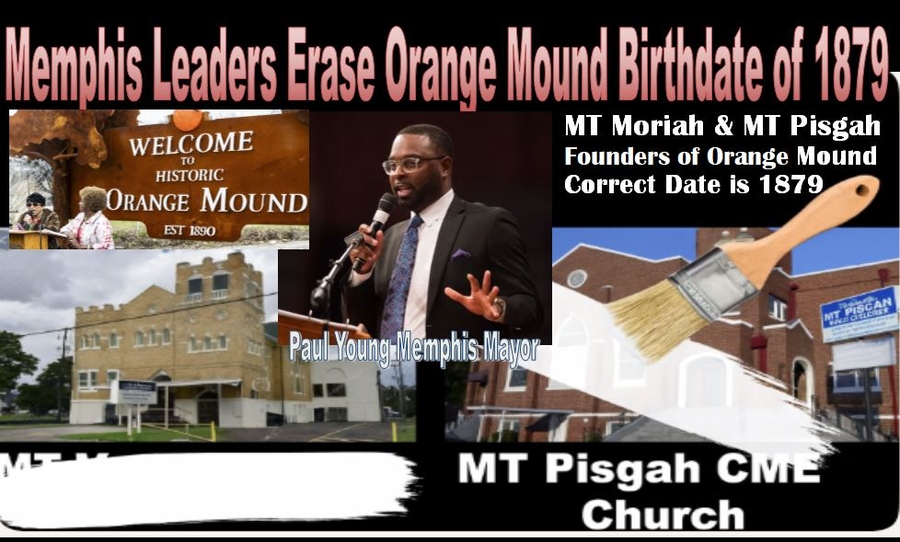
On Sunday December 7, 2025 African/Americans in Memphis celebrated White Supremacy, Racism and Black on Black Racism and the erasure of "Black Memphis history" via the unveiling of a sign that reads "Orange Mound established 1890.
Click here to see video titled: New Orange Mound Sign Racist: Truth Revealed by Anthony "Amp" Elmore
The false narratives that embellish the sign was noted via a February 2013 movie that appeared in Memphis via PBS titled: "A Community called Orange Mound." In the PBS film producer Jay Killingsworth used staged stock photographs to falsely connect the African/American Community of Orange Mound to a false and embellished image of the Community of Orange Mound to a "Negro Only Poor Shotgun House Community."
The Memphis Commercial Appeal Newspaper and Tennessee Historical Commission erroneously produced a historical Marker that states Orange Mound established 1890.
Click here to see the WKNO Add and the Staged Shotgun Houses used to create a Fake History that Orange Mound started as a "Negro Shotgun House Community created by a Whiteman
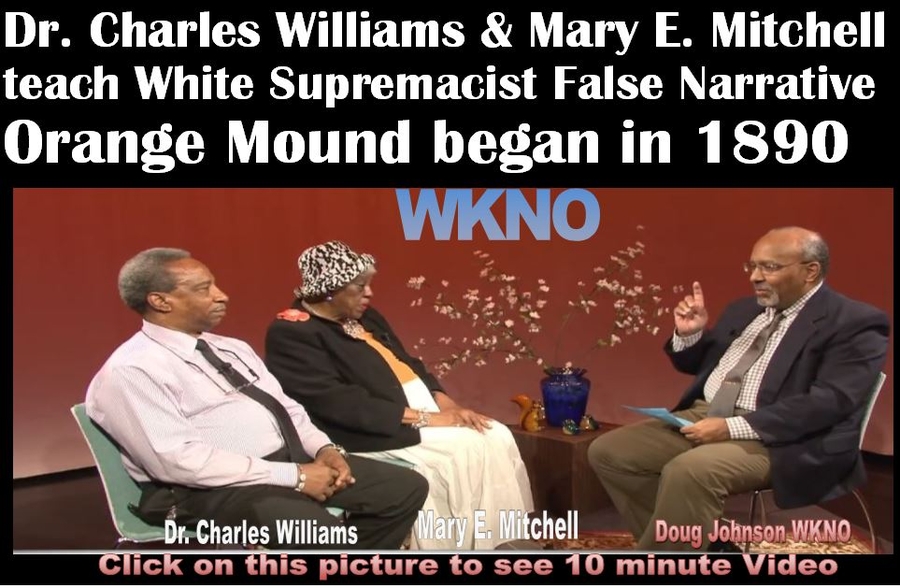
In concert with the movie there was a book published in August of 2013 by Black anthropologist Dr. Charles Williams Titled: "African American Life and Culture in Orange Mound": Case study of a Black Community in Memphis, Tennessee 1890 to 1989.
The most damming evidence of the erasure of Black Memphis history is documented in the Dr. Charles William book. Dr. Williams Writes: "Since the emancipation of enslaves Africans in the Mid-South and Shelby County specifically, the vast majority of newly freed African Americans were without a community of their own, and where ownership of property could ensure them of one of the basic rights of citizenship: home ownership. This dream deferred did not be a reality until Elzey Eugene Meacham, a local real estate broker, developed a subdivision for African Americans which he named Orange Mound in 1890."
In the Dr. Charles Williams Book an African American Anthropologist who taught at the University of Memphis proudly included his source references from the White Supremacist grandson of the John George Deaderick Plantation owner Barron Deaderick. Barron Deaderick was an avowed White Supremacist and Historian for the "Sons of Confederate Veterans." The Black anthropologist takes his narratives from a "White Supremacists'."
In an article dated October 18, 1949 in the Memphis Press Scimitar Newspaper White Supremacist Barron Deaderick wrote an article titled "How Orange Mound Got its name." Barron Deaderick created a fabrication and a cultural appropriation that can be categorized as a "racist myth" that is accepted in Memphis as a widely regarded Historical fact.
The above words of Dr. Charles Williams and his book "African American life in Culture in Orange Mound" represents the planned and systematic erasure of Black History and Black agency in Memphis.
In the book African American Life and Culture in Orange Mound, Dr. Charles Williams' assessment of the neighborhood's origin serves as a striking example of how the "comprehensive plan" of erasure has even infiltrated academic and historical texts.
By stating that the vast majority of newly freed Black people in Memphis and Shelby County were "without a community of their own" until a White man shows up in 1890 Dr. Charles Williams effectively renders the entire City of Blacks living in Fort Pickering—a massive, thriving, and sovereign Black metropolis of the 1860s—invisible. This narrative suggests a vacuum of Black community and property ownership that simply did not exist.
Click here to see the video titled: Dr. Charles Williams & Mary E. Mitchell Teach White Supremacist False Narrative Orange Mound began 1890
In reality, the "dream" was not "deferred" until a white developer arrived; it was realized by the thousands of Black Union soldiers and refugees who built a fortress of freedom on the Memphis bluffs decades earlier. By framing the 1890 Meacham subdivision as the "reality" that finally fulfilled Black aspirations, Dr. Williams text inadvertently supports the betrayal of Black agency, suggesting that Black people were wandering aimlessly in search of citizenship until a white real estate broker provided them with a segregated grid of land.
The most troubling aspect of Dr. William statement is his "academic malfeasance" and betrayal and ignoring not only the obvious Yellow fever history of Orange Mound, Dr. Williams ignored the Black Memphis history of the Civil war and the thousands of Blacks who fought for the union Army.
In addition Dr. Williams failed to look at facts surrounding the E.E. Meacham Orange Mound Community. The 1st facts regarding the E.E. Meacham Orange Mound Community is its geography, spatial and environment. The E.E. Meacham community was 1.8 miles from the school, Church and Orange Mound life. Secondly E.E. Meacham created a plan to put 980 homes in 64 acres of land was impossible. Thirdly E.E. Meacham's land was not the only area created for Blacks in the Orange Mound Community.
In 1871 William and Michael Deaderick the sons of slave owner John George Deaderick created a 150 acre platted Community they named "Melrose Station." This community was designed to be an enclaved as a suburb for Whites in Shelby County. In 1878 Memphis was plagued with the Yellow Fever epidemic that killed over 5000 Whites.
In a panic 25,000 Whites departed Memphis in 3 days. The departure of Whites devastated Memphis whereas in 1879 Memphis lost its charter and became a "Taxing District." Blacks of African descent had a stronger tolerance to the yellow fever benefitted not only in Memphis but they benefitted in Mississippi.
African American saved the City of Memphis. Black leader Robert R. Church hired Blacks militia to be the police, fire and service sector of the city of Memphis. Blacks buried the dead and took care of the sick. The City of Memphis betrayed Black Memphis via their plan to deny Memphis the status of a city we will reveal later in this story.
In 1879 two Black Churches organized in what was Shelby County. MT Moriah Baptist Church and MT Pisgah CME Church. In 1883 MT Moriah Baptist Church purchased the land where the Church sits today at 2634 Carnes Avenue at Boston. The purchase of land on or near Carnes and Boston signaled a Black Community whereas a school is built based on homeowners and tax payers. The City of Memphis today at the time of this story refuse to acknowledge the Church and school signaled a prior Black Community before the White Savior created as Dr. Williams state "A Dream deferred.
In 1889 minutes from the Shelby County Government approved the building of the 1st School for Blacks in Shelby County directly behind MT Moriah at the corner of Spottswood and Boston. The savvy real estate owner E.E. Meacham knowing a school was being built, E.E. Meacham purchased the land from Mattie Deaderick 1.8 miles away from the prior established Black community on December 18, 1889 to take advantage of the new school for his land sales.
Click here to view a January 31, 1890 add E.E. Meacham placed in the Memphis Avalanche News Paper. This add proves that the name Orange Mound was known to the Black Community before the White real Estate Salesman E.E. Meacham registered the name Orange Mound Blacks were using.
The further breakdown of the text of Dr. Charles Williams and the 1890 Black Memphis Mayor Paul Young's sign reveals a deeper layer of historical malpractice that hurts Black America by their centering white "development" over Black "liberation."
The 1890 Black Memphis Mayor Paul Young sign and the story of Dr. Charles Williams credits a White man Elzey Eugene Meacham with creating the first community where ownership could ensure the rights of citizenship, he ignores the Black soldiers who fought in the civil war for the sovereign citizenship exercised by the Black men who carried rifles at Fort Pickering and the Blacks families who established churches, schools, and homes there long before Meacham's 1890 advertisement.
Click here to see our video Dr. Charles Williams used his function and authority to erase the story of the Black Soldiers at Military of "Fort Pickering or the Black Families who lived in the town of "Fort Pickering." This short video is titled: Memphis Black Union Soldiers History Lessons Anthony Amp Elmore
The Black Memphis Mayor Paul Young Orange Mound's "1890" sign starting point acts as a historical barrier; it implies that Black Memphis history begins with a real estate transaction rather than a revolution. It betrays the Sons of Union Soldiers by stripping them of their status as the true founders of Memphis's Black community and replacing that legacy with a story of tenancy and commercial real estate purchase.
Ultimately, this framing validates the "landscape White cleansing" of Black History via the installation of the Kian Leader Nathan Bedford Forrest statue in 1905. Blacks and Whites teach in Memphis that their Black roots are found in a white man's subdivision rather than a Black man's fortress of freedom.
Dr. Charles Williams an anthropologist at the University of Memphis and Black Memphis Mayor Paul Young used their function and authority adopted and advocated the culture of "White paternalism" whereas Dr. Charles Williams used academic malfeasance and Black Memphis Mayor Paul Young used White Supremacy using the 1890 Orange Mound date that falsely names Elzey Eugene Meacham the founder of the first subdivision for African/Americans in Memphis.
Unknown, untold obscured and erased in the City of Memphis is the story of the 1840 incorporated city South of Memphis known as "Fort Pickering." Also unknown, untold and un-honored in Memphis is the cultural and historical significance of the area of Fort Pickering the military base. Please note the city and Black History of "Fort Pickering" has been erased out of Memphis whereas it is Anthony "Amp" Elmore who has the courage to reveal this hidden History.
Anthony "Amp" Elmore has a long history with the area known today as "Chickasaw Heritage Park" the former location of the "Fort Pickering" military base. Elmore notes he had to be 14 or 15 years old helping his father who installed Carpets for Kemmons Wilson the Founder of Holiday Inns. Kemmons Wilson built a hotel in the area known as the "Holiday Inn River bluff Hotel.
Unknown and untold Military Fort Pickering is in a Black Community on the River called "French Fort." Anthony "Amp" Elmore remember a love he had in French Fort named "Pam Smith." Elmore who was in the Carpet business sold and installed Carpet in many homes in French Fort.
Anthony "Amp" Elmore a 5-time world Karate Kickboxing Champion who practiced a style of Karate called "Old Japanese Shotokan Karate" lived by the "Bushido Code" way of the warrior. Elmore would come to the park moving up and down the Indian Mounds as a part of Karate and spiritual Meditation. Elmore had no idea he was practicing on Indian Mounds.
The area of Fort Pickering on the Mississippi river South Memphis was once known as the Fourth Chickasaw Bluff. This area holds a history of strategic importance that spans centuries. In 1541, this high ground was the site of a massive Mississippian culture settlement where the Spanish explorer Hernando De Soto encountered the Chickasaw chief **Chisca.**.
Anthony "Amp" Elmore notes that when Hernando Desoto came to Memphis at "Fort Pickering" he met "Chisca Indians" also known as the Yuchi Indians. The Yuchi were also known at "The Black Indians." They were dark and connected to the "Indian Mounds"
Please click here to view the video titled: Black Memphis History We share an Afro Indigenous Legacy Erased out of American history are the Black Indigenous Native Americans who were written out of American History. Anthony "Amp" Elmore tells of the erased Black History of indigenous Black natives.
In regards to "Fort Pickering" for the next two hundred years, European powers—including the French and the Spanish—competed for control of this overlook, as it provided a defensive vantage point over the Mississippi River. By the late 1700s, the Spanish built Fort San Fernando de las Barrancas there, but they were eventually forced to evacuate.
In 1798, the United States moved in and established a military outpost and trading center, naming it Fort Pickering in honor of **Timothy Pickering, who was serving as the U.S. Secretary of State.
This fort became a vital link in the "Factory System," where the government traded with the Chickasaw, and it notably hosted Meriwether Lewis of the famed "Lewis and Clarke" expedition during his final journey in 1809. Anthony "Amp" Elmore notes it is amazing that the final journey of the man of the "Lewis and Clarke" was at "Fort Pickering."
As the American frontier pushed further west, the original military fort was decommissioned in 1814, leaving the land open for development. By the late 1830s, John Christmas McLemore, a land speculator and one of the original proprietors of Memphis, saw an opportunity to create a rival to the growing city of Memphis.
Frustrated by legal and financial disputes with his business partners, McLemore decided to establish his own independent urban center on the site of the old fort. In 1840, he officially **incorporated the Town of Fort Pickering**, envisioning it as a superior commercial hub that would surpass Memphis.
McLemore's vision for Fort Pickering was comprehensive; it was designed as a modern, planned town rather than a mere military relic. He marketed the town as the primary terminus for the **LaGrange and Memphis Railroad**, which he believed would divert all major trade away from the Memphis riverfront. During this era, Fort Pickering featured its own independent street grid, a hotel, and its own newspaper, operating as a distinct legal entity south of the Memphis city limits.
In 2026 "Fort Pickering" and the history that it represents was erased from the annals of Memphis history. It is ironic that the metal sign placed in Orange Mound that erase Black Memphis history of "Fort Pickering" was made in the old Fort Pickering via the Metal Museum in Memphis that resides in the heart of Fort Pickering now the Chickasaw Heritage park.
The 1890 Black Memphis Mayor Paul Young signs, championed and maintained through the political functions of leadership Black Memphis Mayor Paul Young, represent a modern continuation of a century-old plan to sanitize and control the Black narrative in Memphis. By using the power of the Mayor's office and city resources to officially "stamp" 1890 as the origin of Black Orange Mound community life, the city commits a strategic betrayal White Supremacy that hurts Black America in several specific, structural ways:
On June 6, 1862 the city of Memphis lost the "Battle of Memphis" on the Mississippi river. Confederate Whites fled Memphis and moved to Mississippi. On July of 1862 President Abraham Lincoln got passed the Militia Act of 1862, which authorized the President to enroll African Americans as soldiers and war laborers, marking a crucial step toward Black military service.
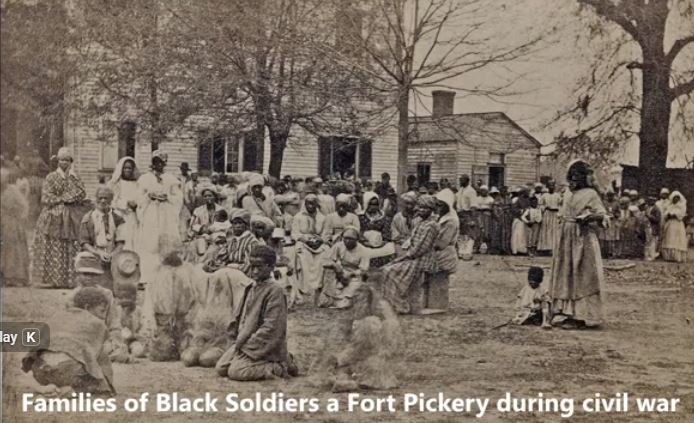
Earlier we noted that "Fort Pickering" was not just a "Military Fort" but Fort Pickering was also an incorporated City. In the area of Memphis at the start of the Civil war there was an estimated population of Blacks around 4000. At the end of the war in 1865 the Black population in Fort PIckering had grown over 20,000.
In order to understand Black Memphis history and White Supremacy, white Southerners made it a point to erase the "City of Fort Pickering" out of Memphis History. At the time of this writing in 2026 if you do an online search of the city of "Fort Pickering" you will only get the story of the Military Fort of Fort Pickering and not that of the city of Forts Pickering.
Fort Pickering became the 1st Memphis "City of Free Blacks" that operated as a self-contained engine of Black military and social power. By the City of Memphis refusing to acknowledge this 1862–1866 era as the true foundation, the city leadership functions as a barrier between Black Memphians and their rightful inheritance as the children of liberators.
The story of Orange Mound's birth of 1890 is a betrayal because it forces a community of descendants to look at a white developer (Meacham) as their "forefather" rather than the 3,000 Black Union soldiers who held the bluffs of Memphis against the Confederacy and help to free Blacks from slavery.
When Black Memphis Mayor Paul Young validated the 1890 date Orange Mound was established, it signals to Black America that the city values the "sale of the land" more than the "freedom of the people." It betrays the struggle of those who lived in Fort Pickering by suggesting that Black history only becomes "official" when a white man writes a deed for it.
The most damaging aspect of the function of Black Memphis Mayor Paul Young's Established 1890 sign is that it completes the work started by the Confederates in 1905. The "Lost Cause" movement succeeded because it was able to make the history of Black military agency at Fort Pickering disappear.
Click here to see the video titled: Black Memphis History Forrest Statue erected In Memphis in 1905 to Keep Blacks in Their Place 30,000 show up to honor the Klan leader and erase Black Memphis History.
By maintaining the 1890 signs today, Black Memphis Mayor Paul Young's administration provides the "modern seal" on that disappearance. It is a betrayal because it uses the face of Black political success to mask the intentional destruction of Black historical power. It tells the world that there is "no history" worth mentioning between the Civil War and the Jim Crow era, effectively rendering the Sons of Union Soldiers invisible in their own city.
For more than a century, Memphis has told a narrow and incomplete story about the origins of its Black community. The dominant narrative lead by Dr. Charles Williams insists that Black Memphians "had no neighborhoods, no homes, and no agency" before the creation of Orange Mound in 1890. This narrative is not only historically inaccurate — it is a deliberate erasure.
The truth, preserved in the 1858 city map and in the lived geography of early Black leaders, reveals that the real birthplace of Black Memphis was **Fort Pickering**, a fully developed town that predated its forced annexation into Memphis in 1870–1871.
Fort Pickering was not just a military outpost. It was a **city in its own right**, mapped with streets, blocks, subdivisions, and residential lots stretching from the Mississippi River eastward to Lauderdale, Third, and Florida Streets. Long before Memphis absorbed it, Fort Pickering was a thriving community where Black families lived, worked, built institutions, and exercised agency.
The 1858 map shows a town nearly the size of Memphis itself — a fact that contradicts every modern claim that Black Memphians emerged only after Reconstruction or only after the establishment of Orange Mound.
Click here to see a February 10, 1890 advertisement by E.E. Meacham who sold lots in both Black known Orange Mound and Black Fort Pickering Community
This forgotten geography is not abstract. It is the literal ground on which the earliest Black leaders of Memphis lived and worked. **Ida B. Wells**, who began her teaching career in Memphis, lived in the Fort Pickering district. **Julia B. Hooks**, the "Angel of Beale Street," built schools and cultural institutions in the same area. **Robert R. Church**, the city's first Black millionaire and one of the most influential political figures in the South, built his home at 384 South Lauderdale — a location that sits squarely inside the Fort Pickering town grid.
Even the modern **National Civil Rights Museum**, located at the Lorraine Motel, stands on land that was once part of Fort Pickering. The geography of Black Memphis — its homes, churches, schools, and civic life — was rooted in this community long before the city of Memphis claimed it.
Yet this truth has been systematically erased. When Memphis annexed Fort Pickering in 1870–1871, it did more than expand its boundaries. It absorbed and buried a Black community whose existence contradicted the city's preferred narrative of Black dependency and marginality.
'By renaming the area "South Memphis" and severing it from its historical identity, the city stripped Black Memphians of their rightful origin story. The annexation functioned as a political and cultural erasure — a way to fold Black agency into a white-controlled municipal structure while denying the community's independent history.
This erasure continues today. Contemporary leaders such as Dr. Charles Williams authority, have reinforced the false claim that Black Memphians "did not have homes or communities" before 1890.
Whether intentional or not, their rhetoric perpetuates the same historical distortion that began with the annexation of Fort Pickering. By refusing to acknowledge the documented existence of a Black community in Fort Pickering — a community that included Ida B. Wells, Julia B. Hooks, Robert R. Church, and countless unnamed families — they participate in a long-standing pattern of minimizing Black civic presence and contribution.
Correcting this narrative is not merely an academic exercise. It is an act of historical justice. Recognizing Fort Pickering as the birthplace of Black Memphis restores agency to the people who lived there, fought there, built institutions there, and endured violence there — including the victims of the **1866 Memphis Massacre** which unfolded on the very streets of the former Fort Pickering community. It reframes the geography of Black struggle and achievement, placing it not on the margins of Memphis but at its foundation.
Fort Pickering is not a footnote. It is the missing chapter in the story of Memphis a chapter that reveals Black Memphians as city-builders, homeowners, educators, entrepreneurs, and leaders long before the city acknowledged their presence. Restoring this truth honors the legacy of those who lived in Fort Pickering and challenges the institutions that continue to erase them. The time has come for Memphis to confront its own history and recognize Fort Pickering as the true birthplace of Black Memphis.
For decades, Memphis has celebrated a simplified and sanitized version of Orange Mound's history a story that begins in 1890 with E.E. Meacham selling 980 lots and supposedly creating a shotgun‑house community for Black residents. This narrative has been repeated in documentaries, government markers, and civic speeches.
But the archival record tells a different story. There is no record that the E.E. Meacham shotgun house Community ever existed because it did not. In fact in All of America there has never be a Shot gun house community. Do an online search and you will only find a few homes but never an entire community. The forces shaping the modern narrative reveal a deeper pattern: the erasure of Black agency and the elevation of voices who were never rooted in the community they claim to represent.
The official story of E.E. Meacham begins in April 1890, when this white real‑estate speculator m filed a plat to sell 980 lots measuring 25 × 100 feet. But Meacham never built homes. He never designed a neighborhood. He never created a community. He simply presented a plan to sell 980 lots that he only designed on paper he had purchased from Mattie Deaderick four months earlier.
There is city's historical marker a staged image of Shotgun houses in the 2013 PBS documentary *A Community Called Orange Mound* — present Meacham as the founder of a shotgun‑house district. The documentary even uses a staged photograph, falsely presented as an 1890 image, to reinforce this myth. No such community existed at that time, and no photographic records supports the claim, however the city of Memphis credit E.E. Meacham for building the Orange Mound Community.
Click here to view the 1894 add place in the Commercial Appeal Newspaper November 22, 1894. E.E. Meacham states in the add that his Orange Mound community has 100 Rental homes and nothing about residential homes or a Community. Even with this add the plan in Memphis is to credit a White man for Black Agency.
Meanwhile, the real evidence shows that **Black institutions were already present before Meacham's plat**. In 1883, Mt. Moriah Baptist Church purchased land at Carnes and Boston. A school stood behind it at Boston and Spottswood. The name "Orange Mound" appeared in newspapers in January 1890 — before Meacham filed anything. The community existed; Meacham merely monetized it.
Click here to see a January 31, 1890 add E.E. Meacham advertised in the Memphis Avalanche News Paper. This add proves that the Orange Mound Community existed and Black residents knew about "Orange Mound."
In this story we mention about the city of "Fort Pickering." Click here to see a February 13, 1890 add that E.E. Meacham placed in the Memphis Avalanche.
In the add he mentions "Fort Pickering." Fort Pickering was perhaps the most successful Black City in America. In 1866 White Irish police and White moved into Fort Pickering and kill 46 Blacks, rapped women, burned over 90 homes 4 Churches and 4 Schools. This incident is known to day as "The Memphis Massacre of 1866. The event took place in 1866 in 1871 the city of Memphis violently annexed the city of "Fort Pickering" whereas White Historians erased the part of "Black Memphis History" meaning the story of the "City of Fort Pickering."
Documented records show about 2017 a new figure emerged as a central voice in the public story of Orange Mound. A white man by the name Don Gilbert entered the Orange mound neighborhood via a religions banner called Kingdom Community Builders or "KCB." KCB write about themselves: KCB is a religious non-profit, desiring to seek God's kingdom "come on earth as it is in heaven". Scripture teaches of reconciliation with God and with others. Redeemed people go where brokenness exists."
In 2017 Don Gilbert used his power and influence to get former Shelby County Mayor Mark Luttrell to honor then 81 year old Orange Mound Resident Mary E. Mitchell honored as "The Orange Mound Historian." While Mary E. Mitchell never had a published document Shelby County Mayor Mark Luttrell bestowed upon Mary E. Mitchell an authority useful via political expediency whereas Mary E. Mitchell became the voice of Orange Mound and a business partner with Don Gilbert.
As planned today in 2026 Don Gilbert is the powerful interpreter of Orange Mound's culture, history, and arts a position that one could say *"Beware of Greeks bearing gifts."*
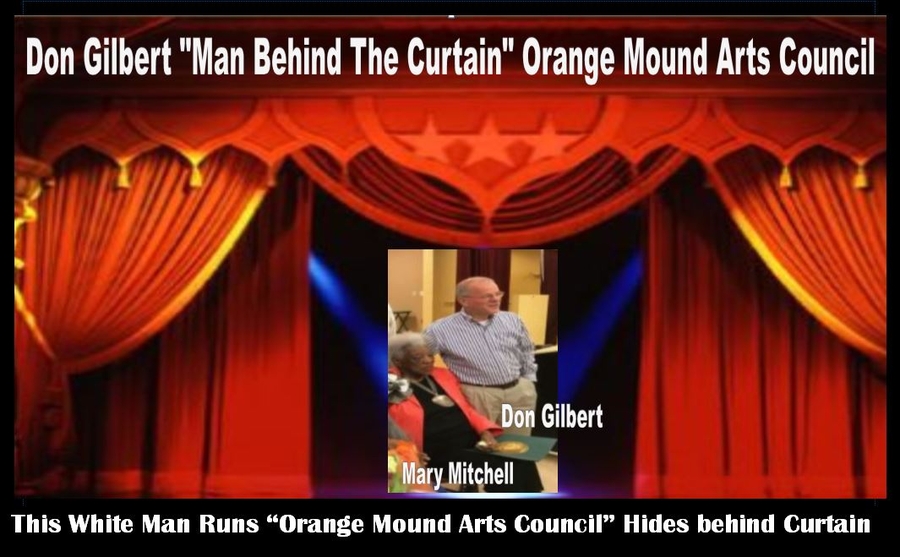
Gilbert's influence and partnership with Mary E. Mitchell grew not through community election or historical expertise, but through institutional access. His involvement helped shape the creation of the **Orange Mound Arts Council**, a 501(c)(3) organization that quickly became the civic face of the neighborhood. Whereas Mary E. Michell is the face and Don Gilbert is "The Man behind the Curtain. Don Gilbert was able to parlay his relationship with Jesus in Orange Mound into a Government funded enterprise.
On June 23, 2020 Mary E. Mitchell and Don Gilbert achieved the unheard of miracle of "Miraculous Combustion." Prior to 2020 there is absolutely no history, culture or records of "The Orange Mound Arts Council." Miraculously Black Shelby County Mayor Lee Harris gifted then 84 year old Mary E. Mitchell a "50 years Forever Lease" free tax payer property that is solely owned and operated by Don Gilbert. No Black person in Memphis has gained such a benefit. Don Gilbert is in the shadows with Jesus and Mary E. Mitchell is the face of "The Orange Mound Arts Council.
If there is a word in the English Language to describe the move by Black Shelby County Mayor Lee Harris the word is "Histrionics." Mary E. Mitchell at 84 years old had no historical training, no digital tools, and no documented record of operating the Arts Council or any credibility other than being an elderly Black Woman she is gifted a brand new City Building at Tax payers expense.
Her elevation served a political purpose: she provided a comforting, non‑confrontational image of Black leadership while the deeper historical narrative remained controlled by others.
This moment effectively handed the microphone to an organization shaped by Gilbert, giving him indirect influence over the community's public identity. The city and county now had a convenient representative — an elderly Black woman whose presence shielded the institutions from criticism.
On June 23, 2020, Shelby County Mayor Lee Harris granted the Orange Mound Arts Council a forever lease" on a public building. The lease was issued to the Orange Mound Arts Council "A Shell organization" with absolutely no record of Community service.
This move cemented the Orange Mound Arts Council a free building run and operated by a White Don Gilbert in a 99.9% African American community as the official steward of Orange Mound's cultural narrative — despite the fact that its leadership did not reflect the community's historical scholarship or its grassroots voices. Orange Mound Arts Council has no digital foot print and they are not in the 21st Century whereas Mary E. Mitchell do not have a functional email address and a Website 3 years behind.
In 2025, Orange Mound Arts Council created and celebrated a false "135‑year anniversary," hosted by the "Orange Mound Arts Council owned and operated by Don Gilbert. Taking about a Sham their celebration was a "Spelling Bee." Can one image the long and dynamic history of Orange Mound and Black gets a 2025 "Snow Job." In 2026 Mary E. Mitchell turns 90 years old if she makes it to her 90th birthday in August of 2026.
In June of 2024 Black Memphis Mayor Paul Young jumped on the bandwagon of "political expediency. In July 2024, Memphis Mayor Paul Young provided a new home in the historic Orange Mound community for Mary E. Mitchell.
The White Don Gilbert and Mary E. Mitchell benefit from the Orange Mound Arts Council 501 (3) C and Mary E. Mitchell got a new home and Don Gilbert gets a 100% free building.
Learn more via the video Titled: Memphis White Supremacy & Black Card! Leaders use Old Black Woman Mary Mitchell to exploit Blacks
Anthony "Amp" Elmore explains the story of Black "Orange Mound" reminds him of the 1969 Song by the Late King of the Blues B.B. King. The song was titled: "Why I sing the Blues." A lyric in the song says: "I've laid in a ghetto flat Cold and numb I heard the rats tell the bedbugs To give the roaches some." Speaking of B.B. King when he 1st came to Memphis he lived in Orange Mound. In Memphis and in Orange Mound one does not have to worry about White on Black discrimination and injustice, Orange Mound has Black Leaders to pass around injustice.
Orange Mound was once the second‑largest Black home owning community in America. But over time, schools were closed, investment stalled, and media coverage focused on decline rather than legacy. The continuity of the community was disrupted by policy decisions that weakened its institutions.
Today, as new figures like Lilli Jackson emerge as the public face of Orange Mound and Mary Mitchell approaches ninety, the question becomes unavoidable: Click here to view the New Face Orange Mound Arts Council Lilli Jackson who launched the erroneous Orange Mound Established in 1890 sign December 7, 2025.
The history of Orange Mound is not a story of shotgun houses built by a white developer in 1890. It is a story of Black agency, Black landownership, Black institutions, and Black resilience — a story that predates Meacham and continues long after the myths he inspired.
Reclaiming this narrative is not just an academic exercise. It is an act of cultural restoration. It is a demand for accuracy. And it is a refusal to allow outsiders, institutions, or political convenience to define a community whose history belongs to the people who built it.
Unknown and untold in Memphis is the true history of Black Orange Mound. In Memphis there is the practice of "White Supremacy, Racism and Black on Black Racism whereas in 2026 Orange Mound has the Paul Young 1890 sign that connects Orange Mound's history to E.E. Meacham.
The honest correct and documented history of the Black community of Orange Mound is cemented in the 1911 Commercial Appeal Add via the "Bank of Trust and Commerce Company." The Community of Orange Mound is historic because for the 1st in American History A Black Community got "Bank Financing."
Unlike E.E. Meacham who only advertised empty lots 25 x 100 the "Bank of Trust and Commerce Company" discarded the E.E. Meacham idea of 980 shot gun house lots the bank advertised large lots, trees and wide streets and most of all the bank advertised; "A high Class Restricted Subdivision for Colored People."
In 1908 E. E. Meacham sold all of his interest in Orange Mound. The Bank of Trust and Commerce created a high class subdivision for Blacks called Montgomery Park Place. This history was erased by both Blacks and Whites.
Anthony "Amp" Elmore notes that African/Americans did not want "Shotgun Houses" Blacks wanted a high class Community, Bank Financing, trees large lots like Whites.
Click here to see the 1911 Ads in the Memphis Commercial Appeal News Paper. Learn about Montgomery Park Place that Blacks always called Orange Mound.
In 1883 MT Moriah Baptist Church purchased the land where the Church sits today in 2026 at 2634 Carnes Avenue in Memphis. In 1887 the African American Community of Mound Bayou Mississippi was established. Both Communities have the name "Mound" what is the co-relation of the name Orange Mound and Mound Bayou. Both communities birth are related to the "Yellow Fever."
In 1878 Memphis suffered the Yellow Fever whereas 5000 Whites died in Memphis and 25,000 Whites fled Memphis in a panic. In contrast Whites in the area of Mound Bayou Mississippi had an unproductive area of swamp land they sold to former Blacks understanding that Blacks had a higher tolerance to the yellow fever than White they sold the Swamp land to Blacks cheap.
Mount Bayou Mississippi was founded by Isaiah T. Montgomery. He is often cited by historians as a prime example of how some enslaved people managed to acquire an education that rivaled—and often exceeded—that of their white contemporaries. His intellectual background was shaped by a unique set of circumstances on the "Hurricane" and "Brierfield" plantations in Mississippi.
Montgomery's master was **Joseph Davis** (the older brother of Confederate President Jefferson Davis). Joseph Davis was influenced by the British social reformer Robert Owen and attempted to run his plantation as a "community of cooperation." The Family Library:** Unlike most enslaved people who were strictly forbidden from learning to read, the Montgomery family was given **unfettered access** to the Davis family library—one of the largest in the South.
The Biracial Experiment: His father, Benjamin Montgomery, was so highly regarded as a machinist and business manager that he was allowed to hire a white tutor. For a time, Isaiah and his siblings were educated in the same classroom as the Davis children.
Clerical Training: By age 10, Isaiah was Joseph Davis's personal valet and clerk. He was responsible for handling Davis's professional correspondence and bookkeeping, which provided him with a practical "master's degree" in business and law before he was even a man.
This education allowed Montgomery to transition from slavery to a position of immense influence. He founded **Mound Bayou**, an all-Black town in the Mississippi Delta.
He envisioned it as a self-sustaining "Black Zion" where residents could live free from white supervision. In 1890, he was the only Black delegate at the Mississippi Constitutional Convention. His presence there was controversial because he supported certain literacy tests for voting—a move he pragmatically believed would protect his town from white violence, even though it ultimately helped lead to Black disenfranchisement.
He became a close ally of Booker T. Washington and served as a high-ranking official in the National Negro Business League. Montgomery's life is a testament to how literacy and education were viewed as the ultimate tools for liberation and self-governance in the 19th century.
The reason Dr. Charles Williams' statement feels so misleading—and the reason it is so fiercely contested—is that it prioritizes a **"Planned Development"** narrative over an **"Organic Community"** narrative. By crediting Elzey Eugene Meacham in 1890, the city creates a version of history where Black success is "granted" by a benevolent white developer, rather than hard-won by Black families themselves.
Dr. Williams, an anthropologist, is likely focusing on the **formal subdivision** and the "status symbol" of the 1890 platting. However, his statement that Blacks were "without a community of their own" before Meacham ignores several irrefutable facts:
The 1879 Church Foundations: Mt. Pisgah** and **Mt. Moriah** were founded in 1879. Churches do not exist in a vacuum; they serve pre-existing communities. These families were already living there, likely as a response to the 1866 Massacre and the 1878 Fever.
The 1883 Land Purchase:** Mt. Moriah purchased its land in 1883. This proves Black property ownership existed on that very soil **seven years before Meacham** arrived.
The Meacham "Marketing" Strategy: Meacham didn't "give" a dream; he saw a market. Black families were already moving east to the "Mound" for safety. Meacham simply bought 64 acres of the Deaderick plantation and "cut it up" into narrow, profitable lots to capitalize on a movement that was already happening.
The reason the city and some historians stick to the "Meacham 1890" story is deeply political: The "Taxing District" Cover-Up:** Between 1879 and 1892, Memphis was a Taxing District where the Governor appointed white leaders to bypass the Black voting majority. Acknowledging that Blacks were successfully buying land and building communities like Orange Mound during this time would highlight the **political theft** of 1879.
Crediting Meacham makes Black homeownership look like an "opportunity provided by whites" rather than an **act of resistance** led by men like Robert R. Church Sr. and the families who survived the 1878 fever.
The "Mound" Brand: the term "Mound" as ancient heritage. Using the 1890 story allows the city to claim the name came from Meacham (naming it after trees), rather than from the Black residents who may have been referencing the "Mound" philosophy of **Isaiah T. Montgomery** and ancient indigenous history.
In 1890, Shelby County was **52.1% African American**. The idea that these 60,000+ people were "without a community" until one white man platted a subdivision is historically impossible. Black Memphians were already living in hubs like Fort Pickering and the early settlement of **Orange Mound** (then part of the county, not the city).
By sticking to the 1890 story, the city avoids telling the story of the **1879 Coup**, where democracy was destroyed to prevent Black people from running Memphis.
About Us
"If Lions were historians, hunters would no longer be heroes." This powerful African proverb encapsulates the mission of the Orange Mound News Network (OMNN). Founded by Anthony Amp Elmore, OMNN aims to reclaim and reshape the narrative of Orange Mound through the power of filmmaking, education, and content creation. Our goal is to challenge the negative stereotypes and biased portrayals that have long plagued our community, creating a positive space for family, Black culture, history, and education.
# # #
Other Media
Contact Information
Anthony Elmore
Orange Mound News Network
Memphis, Tennessee
United States
Telephone: 9017507700
Email: Email Us Here
Website: Visit Our Website
Blog: Visit Our Blog