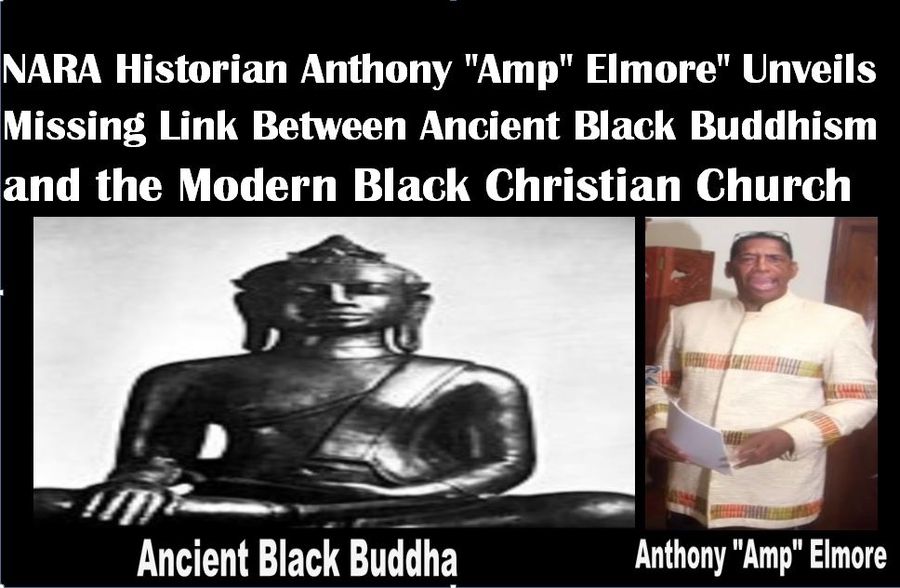

MEMPHIS, TN, February 05, 2026 /24-7PressRelease/ -- The emergence of the Proud Black Buddhist Digital Museum marks a definitive turning point in the documentation of the African Diaspora's spiritual lineage. For decades, the narrative of Buddhism in America has been curated through an Asian-centric or Euro-centric lens, effectively extricating the African roots from the "Sacred Science" of the Lotus Sutra.
Click here to read a March 18, 1991 Letter titled: Dear NSA Members
This historic letter dated March 18, 1991, serves as a seminal document in the struggle for African American spiritual and cultural sovereignty within the SGI (formerly NSA) organization. Written with the encouragement of Almeda Bailey—the first paid Black SGI leader in America—the letter directly challenged the prevailing Euro-centric and Japanese-dominated leadership structures that systematically marginalized the African American experience.
It documented a critical meeting where Black NSA/SGI Buddhist Anthony "Amp" Elmore and Shaka Khalphani were vilified as "racist" simply for proposing an Afro-Centric infusion into the SGI Buddhist practice in Memphis. The letter noted that the existing Buddhist environment in Memphis was culturally irrelevant, insensitive, and effectively moribund. By highlighting the lack of Black representation on executive boards and the expectation for African Americans to assimilate into foreign cultural postures, the letter exposed a "cultural and spiritual void" that was causing Buddhist growth for Blacks in Memphis to decline while local Black churches flourished.
In 2026 Blacks practicing Buddhism in Memphis and throughout America is outright "Dead." The most noted Black Buddhist in America was the late Tina Turner whereas via the 1993 movie "What's Love got to do it" inspired many to seek the Buddhist Faith and chant the sacred words; "Nam Myoho Renge Kyo."
Beyond a mere grievance, this document established a forensic and intellectual foundation for what would later become a global movement. It leveraged the late SGI leader President Ikeda's own lectures on the pyramids to argue that "blind obedience" and the suppression of culture are signs of a "dark machination" at a religion's root.
The letter announced a bold commitment to move forward with a "cultural infusion" of African and African American ethos at the district level, regardless of leadership disapproval. This act of defiance was not just about local representation; it marked the emergence of an independent "Warrior-Scholar" spirit that refused to separate the Lotus Sutra from African ancestry whereas Anthony "Amp" Elmore formally departed the SGI Buddhist organization March 18, 1991.
Today, this letter stands as the primary source "receipt" proving that the battle for Black Buddhism began with a formal demand for institutional sovereignty and the reclamation of a stolen cultural identity.
Click here to visit the "Proud Black Buddhist Digital Museum." The Museum has nearly 1000 You tube videos and the most Black Buddhist educational History and culture in the world.
Anthony "Amp" Elmore in 2026 is the "Father of Black Buddhism." Black Buddhism" is the missing link between Ancient Black Buddhism and the modern Black Church in America.
"Black Buddhism" is a culturally specific reclamation of Buddhist philosophy that centers African origins and identity. It asserts that: The Lotus Sutra is not merely an Asian religious text but an ancient Kushite spiritual science, rooted in African wisdom traditions.
Black Buddhism challenges the Indo-Aryan framing found in Mahayana and other dominant Buddhist schools, which often obscure or erase African contributions. It restores the African identity of the Buddha, the language, and the philosophical foundations of the Dharma, positioning Black people not as adopters but as originators of Buddhist insight.
Black Buddhism is described as the "Sacred Science," whereas the Sacred Science teaches or encourage practitioners to move from a matter of belief to a matter of universal law. This is the explanation and deep dive into what that means within the framework of the Proud Black Buddhist Digital Museum "The Law of Cause and Effect" is the basis Nichiren Buddhism. In the Christian "religion," you pray to a deity for a miracle.
In "Sacred Science," you utilize the law of cause and effect or a Scientific Principle: Just as gravity works regardless of whether you believe in it, the law of Cause and Effect operates in every moment. In Nichiren Buddhism practitioners do not just pray for results it is a teaching and practice of the correct causes that lead to the correct effects.
This is the "Sacred Science" of victory when applied. The Physics of the "Kyo" (The Voice) In the Lotus Sutra, Kyo represents the "voice" or "teaching." In the Buddhist science, it represents Frequency and Vibration.
Click here to see a scene from the 1993 late Tina Turner movie "What's love got to do with it."
The 1993 film "What's Love Got to Do with It" served as a massive cultural catalyst for the growth of many Blacks introduction to Buddhism among African Americans, primarily by presenting the practice as a tool for personal liberation and psychological clarity.
In the pivotal scene where Jackie introduces Anna Mae (Tina Turner) to the chant, she describes the practice as "life's mirror," explaining that chanting allows one to see themselves clearly and, consequently, gain the power to change any circumstance.
For a generation of Black Americans, this cinematic moment demystified the chant and framed it as a "warrior science" capable of breaking the cycles of trauma and abuse. However, while the movie successfully encouraged many to join the faith, it also anchored the practice within an Asian cultural framework, as seen in the phonetic introduction of the words. While the film remains a historic touchstone for Buddhist visibility, it represents the era of adoption—where the practice was presented as a foreign gift—rather than the era of reclamation, where the Dharma is recognized as an ancient Kushite heritage.
Unknown and untold is the connection between the Black revolutionary leader Malcolm X and that of NSA/SGI Buddhist Anthony "Amp" Elmore. Elmore a devoted NSA/SGI Buddhist whom he accepted the SGI leader Daisaku Ikeda as his "Master and Buddhist Teacher."
Anthony "Amp" Elmore read the book by the dynamic African American leader; "Malcolm X on Afro-American History." The date was January 18, 1965 Malcolm said these exact words:
"And at a time even beyond this there was a black-skinned people in India, who were black, just as black as you and I, called Dravidians. They inhabited the sub-continent of India even before the present people that you see living there today, and they had a high state of culture. The present people of India even looked upon them as gods; most of their statues, if you'll notice, have pronounced African features. You go right to India today – in their religion, which is called Buddhism, they give all their Buddhas the image of a black man, with his lips and his nose, and even show his hair all curled up on his head; they didn't curl it up, he was born that way. And these people lived in that area before the present people of India lived there."
Click here to view the Feb 22, 2015 video titled: Malcolm X vs. Daisaku Ikeda Buddhist lecture; Anthony Amp Elmore
This 2015 video represents a history and the line of demarcation between SGI Buddhism and the birth of "The Proud Black Buddhist or Black Buddhism." Black Buddhism is a culture and practice of Buddhism inclusive of Buddhism's Cushite origins In the early 1980s. Anthony "Amp" Elmore drew a definitive line of demarcation that was drawn in the spiritual and cultural journey of Anthony "Amp" Elmore, marking the transition from traditional Asian-led Buddhist sects to the birth of "The Proud Black Buddhist" movement.
This departure was rooted in a fundamental conflict between the "whitewashed" or Aryan-centered history promoted by organizations like the SGI and the suppressed historical reality of Buddhism's Cushite/ Kushite origins. For Elmore, the choice became a moral and intellectual crossroads: whether to follow the narrative of SGI President Daisaku Ikeda, who described the Buddha as an "Aryan" in his writings, or to honor the legacy of Malcolm X, who recognized the original Buddhas as men of African descent with pronounced African features.
Anthony "Amp" Elmore made SGI leader Daisaku Ikeda his "Master and Teacher" whereas reality creeped in Anthony "Amp" Elmore's life. SGI leader Daisaku Ikeda published a book in 1976 titled "The Living Buddha" this was an "Interpretive Biography" whereas he noted in the book that the Buddha Shakyamuni came from an "Indo Aryan Cultural Sphere."
In addition there was the Toynbee/Ikeda Dialogue book that came out also in 1976. It was British Historian Arnold Toynbee who wrote "That only Black people were people who never contributed anything significant to humanity."
Anthony "Amp" Elmore via starting his Buddhist practice with the NSA organization became the paradigm of the new "Black Buddhist in America." On May 29, 1982 Anthony "Amp" Elmore won the PKA (Professional Karate Association) world kickboxing title. It was in 1988 that Anthony "Amp" Elmore wrote, produced, directed and starred in what is known today at the time of this writing in 2026 Elmore created "The 1st Buddhist biopic in World Film history" titled "The Contemporary Gladiator."
Fast forward from 1970 when Elmore began Zen Buddhism to Joining NSA in 1974 to the time of this writing in February of 2026. The 1991 letter to NSA members documents an African American history and account of SGI Buddhism in America. The letter states: "In 1990 the Berlin wall fell, Gorbachev introduced reforms in Russia, and Mandela was freed from prison.
Despite the world epoch, NSA in 1991 does not have African/Americans on its executive boards, its hierarchy, or African/American males on its staff. Policies that systematically omit a culture does not reflect the view of a culture and it is xenophobic and insensitive towards that omitted culture.
Buddhist growth for African/Americans in Memphis is in a state of abeyance and is vacuous or nearly moribund. Buddhism for African/Americans in Memphis is culturally irrelevant and insensitive to the needs of African/Americans. In Memphis the demographics clearly reflect a dominant African/American population.
Despite the demographics African/Americans are expected to acculturate, assimilate, and subjugate to the cultural dominance of Japanese and Whites, yet the consideration of African/Americans is negated. In our meeting Shaka Khalphani and myself were characterized as racist simply because we proposed to infuse Afro-Centric views within the NSA organization.
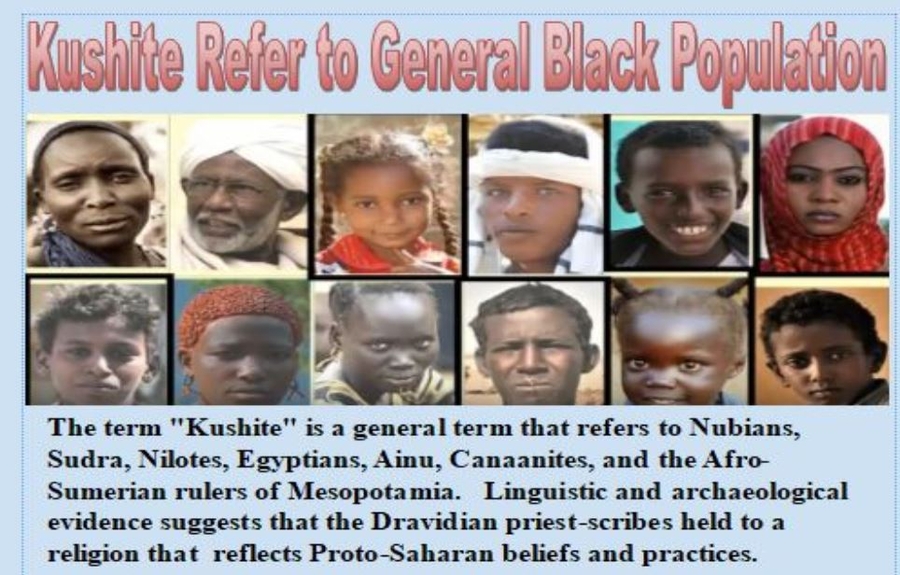
In 1991, Anthony "Amp" Elmore unveiled a historical "Missing Link" that bridge the gap between ancient Black Buddhism and the modern Black Christian Church, identified as the **Cushite Connection**. This connection asserts that the "Cushites" mentioned throughout the Hebrew and Christian Bibles—often referred to as the descendants of Ham—are the exact same ethnic group that founded the original spiritual systems of the Indus Valley and ancient India.
By establishing this link, Elmore demonstrates that the African American spiritual experience is not a fragmented journey from "pagan" Buddhism to "civilized" Christianity, but rather a continuous lineage rooted in the Nile Valley Civilizations that spanned from Ethiopia and Nubia into India. This realization challenges the modern view of Christians and Jews who see Buddhism as a purely "Oriental" or East Asian construct, revealing it instead as a branch of the same African spiritual tree.
The erasure of this connection was a deliberate historical act led by the Kushan King Kanishka and the former Brahmin monk Ashvaghosa. During their reign, they orchestrated the creation of **Mahayana Buddhism**, a movement that effectively "whitewashed" the faith. This transformation involved changing the depiction of the Buddha from a dark-skinned Kushite with Africoid features—as documented by Sir Godfrey Higgins in his 1833 work *The Anacalypsis*—into an "Aryan" figure.
To justify this shift, they promoted the **"Aryan Invasion Theory,"** a narrative designed to suggest that civilization was brought to India by light-skinned invaders rather than being the indigenous creation of the dark-skinned Kushite/Dravidian people. This act of "Asian Cultural Imperialism" extricated Buddhism from its African roots, stripping the Black ethnicity from the history of the Dharma and replacing it with a homogenized, Euro-Asian façade.
By uncovering this "Missing Link," Elmore connects the dots between the Nile Valley, Egypt, India, and Ethiopia. He posits that the "Black Buddha" of India is the primary source of all Western mythologies and spiritual frameworks, including those found in the Christian religion. For the Black Christian, this means that the Jesus of the Bible and the Buddha of history share a common Kushite ancestor.
This research serves as a historical corrective, proving that the African Diaspora is not adopting a foreign religion when they turn to Buddhism, but are instead reclaiming a global legacy that was stolen at the Council of Kanishka. Through this deep dive into the Kushite origins, Elmore restores the dignity of Black history, moving it from the margins of "Orientalism" back to the center of world civilization.
Click here to see the November 22, 2022 video titled: Original Christians were Black Buddhist Lecture by Anthony Amp Elmore Sr.
The historical narrative presented in the lecture "Original Christians were Black Buddhist" by Anthony "Amp" Elmore identifies a profound "Missing Link" that reconnects the African Diaspora to its original spiritual heritage. This connection is rooted in the "Cushite" identity, a term used to describe the advanced, dark-skinned people of ancient Nubia, Ethiopia, and the Indus Valley.
Elmore explains that the original Christians were not followers of a modern Roman or Western doctrine, but were in fact Black Buddhists from India whose spiritual foundations were later "engrafted" into the religion of Jesus Christ. Drawing on the 1833 work The Anacalypsis by Sir Godfrey Higgins, the lecture demonstrates that the celebrated "Black Buddha of India" provided the cultural and philosophical framework for all Western religions.
This historical bridge proves that the Cushites of the Bible and the original Black Buddhists of the East are the same people, separated only by the deliberate erasure of their shared African origins by later "Aryan" and Roman historians.
The lecture details how this spiritual lineage was systematically hidden through what Elmore calls "apocryphal" writings and "Asian Cultural Imperialism." A critical turning point occurred with the Kushan King Kanishka and the former Brahmin monk Ashvaghosa, who created Mahayana Buddhism.
This new movement actively "whitewashed" the faith, changing the Buddha's depiction from a dark-skinned Cushite into an "Aryan" figure and introducing the "Aryan Invasion Theory" to erase the contributions of the indigenous, dark-skinned Dravidians. This process effectively extricated Buddhism from Africa, moving its center to East Asia while rewriting world history to promote white superiority. Elmore highlights that archaeological evidence—such as the Black Madonnas found throughout Europe—serves as a silent testimony to this suppressed truth, representing the original Black Buddha and his mother, Maya, whose imagery was later rebranded as the Christian Virgin and Child.
Ultimately, the video asserts that the "Missing Link" between the Nile Valley and the Indus Valley is found in the shared culture of the Saraswati River and the Harappan civilization, which predated Roman and Greek urbanization by thousands of years. Elmore posits that the term "Samaritan" in the Bible originally referred to the "Samaneans" or Buddhist gymnosophists, and that figures like the historical Jesus were part of this mystical, "Nazarite" path to enlightenment.
By restoring the Cushite Connection, Elmore moves beyond traditional religious boundaries, arguing that for the African American, the struggle to find "solace" in Buddhism or Christianity is actually a journey toward reclaiming an ancient, unified Black history. This "Missing Link" serves as the doctrinal foundation for the "Proud Black Buddhist," transforming the act of worship into an act of historical and cultural restoration.
The historical document of the "Cushite Connection," as unveiled by NARA-honored historian Anthony "Amp" Elmore, identifies the definitive "Missing Link" between the ancient Black civilizations of the East and the modern Black Christian Church. This connection is predicated on the fact that the "Cushites" of the Nile Valley—the descendants of Ham documented in the Biblical record—were the same seafaring and migrating people who established the Indus Valley Civilizations of Harappa and Mohenjo-Daro.
These original inhabitants of India, often referred to as Dravidians or Nagas, were the architects of the world's first high culture, a civilization that existed thousands of years before the rise of Greece or Rome. Elmore's research proves that the original "Buddha" was not an Oriental or Aryan figure, but a Kushite prince of the Shakya clan, whose physical features—documented in ancient bronze and stone as having peppercorn hair, broad noses, and full lips—identify him as a man of African descent.
The systematic erasure of this history began with a monumental shift in Buddhist doctrine during the first century C.E. under the reign of the Kushan King Kanishka and the Brahmin-turned-monk Ashvaghosa. At the Fourth Buddhist Council, they orchestrated the birth of Mahayana Buddhism, a movement that functioned as a tool of "Asian Cultural Imperialism."
This council worked to "whitewash" the image of the Buddha, transitioning him from a Black Kushite into an "Aryan" icon. To solidify this theft, they propagated the "Aryan Invasion Theory," a fabricated historical framework designed to suggest that dark-skinned Africans were incapable of high civilization and that all Indian culture was brought by light-skinned invaders from the north. This doctrinal coup effectively extricated Buddhism from its African roots, leaving behind a "whitened" religion that sought to detach the Dharma from its original Cushite founders.
The "Missing Link" further reveals that the foundations of the Western Christian Church were built directly upon this ancient Black Buddhist framework. Elmore points to the research of Sir Godfrey Higgins in his 1836 work The Anacalypsis, which asserts that "all Western Mythologies" originated from the "Black Buddha of India."
The early "Samaneans" or Buddhist monks were the true predecessors of the "Samaritans" and "Nazarites" mentioned in the Bible. This evidence suggests that the original Christians were, in fact, Black Buddhists whose mystical practices and Cushite philosophy were later "engrafted" into the Romanized version of Christianity. This is evidenced by the "Black Madonnas" found in the oldest cathedrals of Europe, which were originally statues of the Black Buddha's mother, Maya, holding the infant Siddhartha—images that were later rebranded as the Virgin Mary and Jesus to suit the European religious gaze.
By reconnecting the Nile Valley Civilizations of Egypt, Nubia, and Ethiopia to the Indus Valley of India, Anthony "Amp" Elmore provides the African Diaspora with a continuous, unbroken line of spiritual sovereignty. This historical document asserts that when an African American seeks "solace" in Buddhism or Christianity, they are often navigating two halves of the same stolen legacy. The "Cushite Connection" restores the "Missing Link," proving that the Black Church in America and the ancient Temples of the East share a single African source. This restoration effectively ends the era of "Asian Cultural Imperialism" and "Religious Erasure," allowing the "Proud Black Buddhist" to stand as a NARA-honored witness to the truth that the Black man was the original "Living Buddha" and the architect of global faith.
The "Missing Link" is most visible in the term Samanean. Historically, the Samaneans (or Shramanas) were the forest-dwelling, ascetic Black Buddhists of India. Sir Godfrey Higgins and other early historians noted that these Samaneans were the direct predecessors of the Biblical Samaritans and the Nazarites. The vow of the Nazarite—which included abstaining from wine and leaving the hair uncut (often resulting in "dreadlocks")—mirrors the aesthetic and spiritual discipline of the original Kushite Buddhist monks. This proves that the "Holy Men" of the Bible were not practicing a new, Western religion, but were continuing the ancient Cushite-Buddhist tradition of the Nile and Indus Valleys. The Kushan Coup and the Invention of the "Aryan"
The erasure of the Black Buddha was not an accident; it was a political necessity for the Kushan Empire. When King Kanishka convened the Fourth Buddhist Council, he sought to create a religion that could unify a diverse empire under a more "universal" (whitewashed) image. By enlisting Ashvaghosa, a former Brahmin, he ensured that the new Mahayana Buddhism would be stripped of its "Chandala" or indigenous Black identity.
They replaced the ancient Kushite oral traditions with Sanskrit "apocryphal" texts. This was the birth of the "Aryan Invasion Theory"—a doctrine designed to make the original Black builders of Harappa and Mohenjo-Daro seem like primitive "Dasyus" or "slaves" who needed to be "civilized" by light-skinned invaders.
Elmore's research connects the Saraswati River civilization to the Nile Valley. The architectural and mathematical precision found in the Indus Valley—such as standardized brick making and advanced urban plumbing—predates similar developments in Europe by thousands of years and mirrors the engineering of ancient Ethiopia and Egypt. The religion of these people was "Black Buddhism," a system that predated modern Hinduism.
It was a culture centered on the Naga (Serpent) wisdom, symbolizing the awakening of the inner mind. When the Cushite/Kushite people migrated, they carried this "Naga" wisdom into the Levant, where it was eventually transformed into the various sects of early Christianity.
By linking the Black Madonnas of Europe back to Queen Maya (the Buddha's mother), Elmore provides the "Actual Proof" that the foundations of Western Christianity are literally built on the image of the Black woman and child. The "Missing Link" asserts that the historical Jesus was a descendant of these migrating Cushites, practicing a form of the Dharma that had been preserved in the Essene communities of the Dead Sea.
Therefore, the "Black Church" in America is not an "offshoot" of European Christianity; it is a modern survival of the ancient Kushite-Buddhist path. Reclaiming this history allows the African American to move from the role of the "converted" to the role of the "originator."
This document serves as the formal "Extrication" from Asian Cultural Imperialism. It proves that the "Black Buddha" is not a myth, but the biological and spiritual ancestor of the African Diaspora. With this "Doctrine of Identity," the practice of Buddhism is no longer an act of following a Japanese or Chinese leader, but an act of ancestral veneration and the restoration of a stolen world heritage.
Click here to see the Mar 26, 2022 video titled: Orange Mound A Black Lecture Critical Race Theory by Anthony "Amp" Elmore
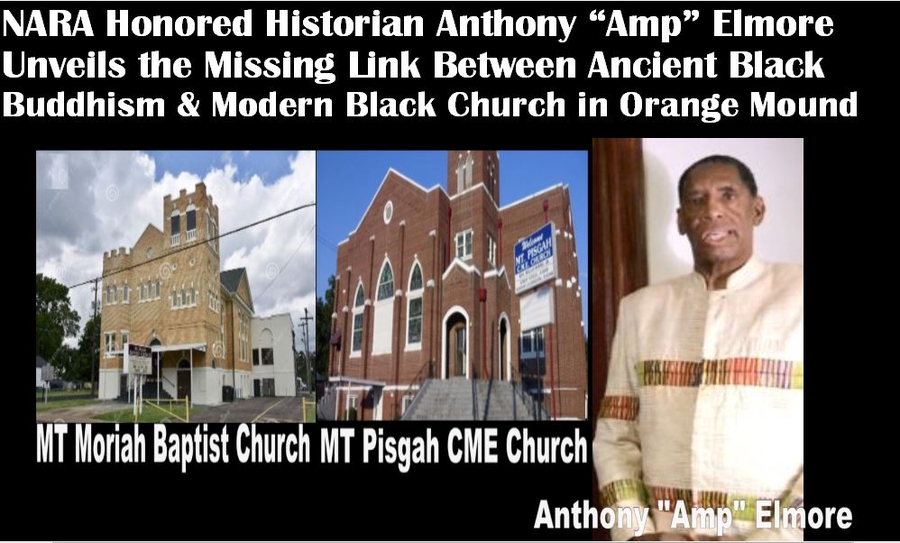
The historical thesis presented in the three-hour documentary **"Orange Mound: A Black Lecture on Critical Race Theory"** serves as the definitive scholarly record connecting the 5,000-year-old **Cushite/Kushite** civilization to the modern streets of Memphis, Tennessee. Anthony "Amp" Elmore identifies the "Missing Link" as a biological and cultural continuity where the residents of Orange Mound are the direct descendants of the Kushite architects who founded the Indus Valley civilizations of Harappa and Mohenjo-Daro.
The lecture proves that the **"Shotgun House"**—the signature architectural feature of Orange Mound—is not a product of American poverty, but a sophisticated survival of the ancient African linear house design that moved from the Nile Valley to the Indus Valley and eventually to the Americas. This architectural "DNA" acts as a physical monument to the Black man's engineering genius, proving that the African mind remained intact through the Middle Passage and manifested in the creation of the first Black community in America built by and for Black people.
The documentary further exposes the global "Chronological Coup" where historical timelines were altered to erase Black achievement. Elmore reveals that just as the **Kushan King Kanishka** and the Brahmin **Ashvaghosa** manipulated the Fourth Buddhist Council to "Aryanize" the Black Buddha and move the founding of **Mahayana Buddhism** away from its Cushite roots, the city of Memphis used similar tactics to suppress the true **1879 founding of Orange Mound**.
By replacing the 1879 date—established by Black churches and families—with the "official" 1890 date credited to white developers, the establishment performed a localized act of "Asian and Western Cultural Imperialism." The lecture argues that reclaiming the 1879 date is a "Bodhisattva practice" of truth-telling, aligning the local struggle of Orange Mound with the global restoration of the **Black Buddha's** identity as a Kushite prince of the Shakya clan.
Linguistically and theologically, the lecture identifies the **Samaneans** (ancient Black Buddhist ascetics) as the original **"Samaritans"** of the Christian Bible, proving that the Black Christian Church is the modern vessel for a pre-existing Kushite-Buddhist framework.
This "Missing Link" clarifies that the **Black Madonna** icons of Europe are actually survivals of **Queen Maya** (the Buddha's mother), demonstrating that the foundations of Western religion were "engrafted" onto a Black Buddhist source. For the resident of Orange Mound, this means their spiritual practice is a continuation of the **Lotus Sutra's** "True Aspect of All Phenomena," where the divinity of the African Diaspora is realized in their everyday life and labor.
The thesis concludes that the restoration of the "Black Buddha" and the protection of Orange Mound's history are one and the same; it is a total "Extrication" from a world history that has systematically sought to deny the Black man his status as the father of civilization and the originator of the Eternal Law.
Click here to see the Jan 26, 2026 video titled : NARA Honored Historian Anthony "Amp" Elmore: "Buddhism for Black Americans" This is an official educational lecture by NARA Honored Historian Anthony "Amp" Elmore, the "Father of Black Memphis History" and the world's leading authority on the "Sacred Science" of Black Buddhism.
In this seminal work, Anthony "Amp" Elmore—a 5-time World Kickboxing Champion and filmmaker—dismantles the "Confederate Playbooks" of historical erasure. He provides the forensic proof that Buddhism is not an "Asian Import" but a cornerstone of ancient African and Afro-Indigenous history.
Our Journey and Mission
Orange Mound, established as the first community in America built for Blacks by Blacks, has a rich history often overshadowed by negative stereotypes.
Mainstream media and societal biases have painted Orange Mound as a "ghetto," contributing to a 30% decline in property values while surrounding communities have prospered. The Orange Mound News Network was created to counter this narrative and highlight the true spirit and resilience of our
community.
Anthony Amp Elmore, a five-time world karate kickboxing champion, filmmaker, and community activist, has been a beacon of change in Orange Mound. With over five decades of community service, Elmore has dedicated his life to uplifting Orange Mound. From becoming a homeowner at 19, establishing businesses, to founding the Proud Black Buddhist World Association, Elmore's contributions have been immense.
# # #
Other Media

Contact Information
Anthony Elmore
Orange Mound News Network
Memphis, Tennessee
United States
Telephone: 9017507700
Email: Email Us Here
Website: Visit Our Website
Blog: Visit Our Blog