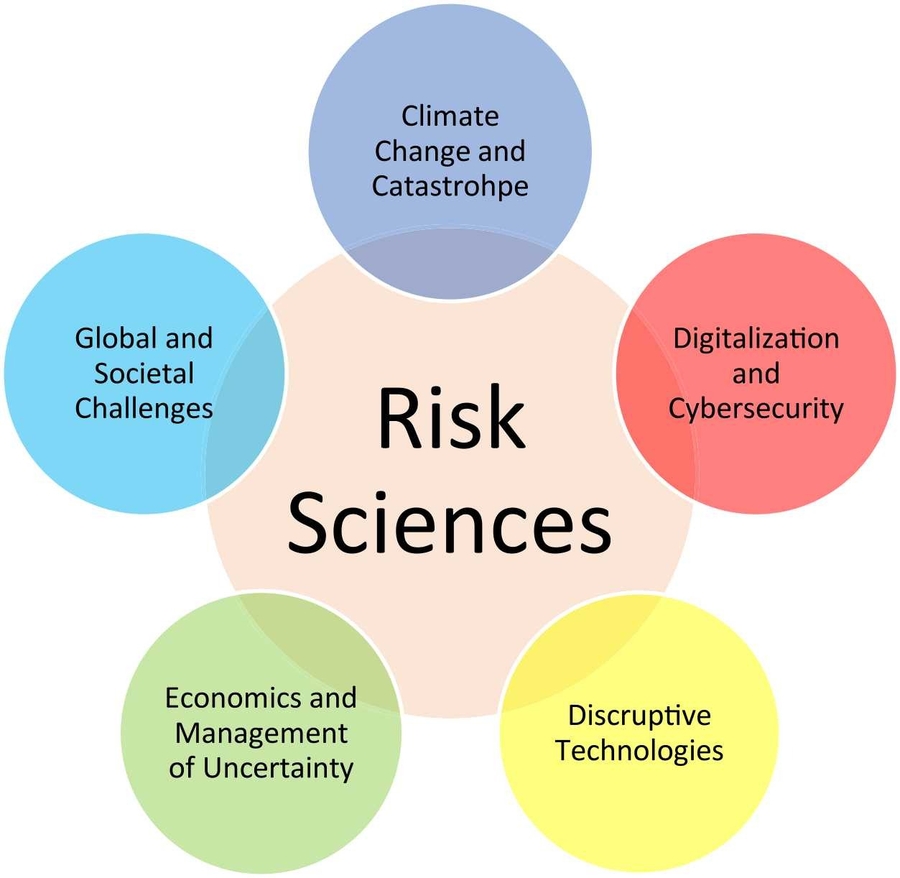

KNOXVILLE, TN, January 31, 2026 /24-7PressRelease/ -- A new article introduces "risk sciences" as an emerging interdisciplinary field focused on understanding and managing uncertainty across natural, social, economic, and technological domains. The study proposes a three-dimensional framework—identification and assessment, mechanism and strategy, and behavior and decision—to organize diverse risk research. By integrating insights across disciplines, the framework aims to strengthen societal resilience in an increasingly complex and uncertain world.
Uncertainty is a defining feature of the modern world—from climate change and pandemics to financial instability, cybersecurity threats, and disruptive technologies. In a new article published (DOI: 10.1016/j.risk.2025.100029) in Risk Sciences, Runhuan Feng from Tsinghua University outlines a conceptual framework for "risk sciences" — an emerging interdisciplinary field dedicated to studying risk and uncertainty across diverse domains.
Rather than offering a single, narrow definition of risk, the article proposes a three-dimensional structure to organize how risks are studied and managed. The first dimension, identification and assessment, focuses on recognizing risks, evaluating their likelihood and impact, and modeling potential losses or consequences. This includes methods ranging from causal risk-factor models used in disaster research to statistical trend analysis common in finance and insurance.
The second dimension, mechanism and strategy, examines how risks are addressed in practice. Mechanisms include concrete tools such as risk avoidance, mitigation, and transfer, while strategies refer to broader, coordinated plans—such as national catastrophe risk management systems or international risk governance frameworks—that integrate multiple tools and stakeholders.
The third dimension, behavior and decision, highlights how individuals, organizations, and institutions perceive risk and make decisions under uncertainty. Drawing on insights from economics, psychology, and behavioral science, this dimension explains why real-world decisions often deviate from purely rational models and how cognitive biases, information asymmetry, and institutional structures shape risk-related behavior.
"Risk sciences is not a single discipline, but an ecosystem of interconnected research," Feng explains. "By bringing together perspectives from natural sciences, social sciences, engineering, economics, and beyond, we can better understand complex risks and design more effective responses."
Using this framework, the article reviews major research areas shaping the field, including climate and catastrophe risks, digitalization and cybersecurity, disruptive technologies such as artificial intelligence, and global societal challenges. It also identifies emerging trends, such as the growing use of network analysis, agent-based modeling, and closer links between academic research, industry applications, and public policy.
The article concludes by introducing Risk Sciences, a new open-access journal designed to foster interdisciplinary integration and innovation. Its central hypothesis is that synthesizing diverse approaches to risk can help build a shared knowledge base—one that supports better decision-making and enhances resilience in an era of escalating uncertainty.
References
DOI
10.1016/j.risk.2025.100029
Original Source URL
https://doi.org/10.1016/j.risk.2025.100029
About Risk Sciences
Risk Sciences is a general-interest journal that publishes academic research and industry practices on risks and disruptive technologies across all fields including agriculture, economics, engineering, environmental science, finance, health, law, management, natural sciences, and public administration.
Chuanlink Innovations, where revolutionary ideas meet their true potential. Our name, rooted in the essence of transmission and connection, reflects our commitment to fostering innovation and facilitating the journey of ideas from inception to realization.
Related Link:
http://chuanlink-innovations.com
# # #
Contact Information
George Hua
Chuanlink Innovations
Knoxville, Tennessee
USA
Telephone: 8656606278
Email: Email Us Here
Website: Visit Our Website