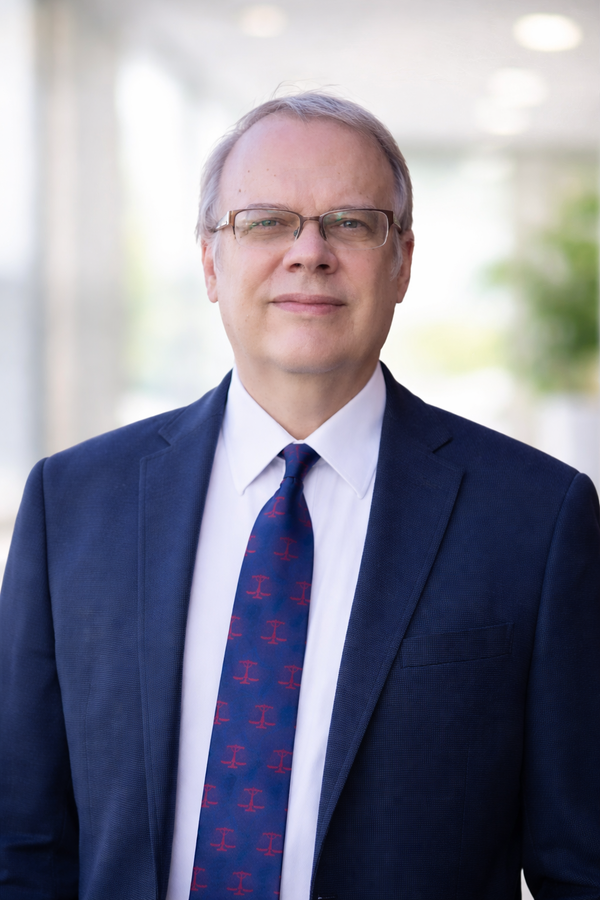

HOUSTON, TX, April 14, 2026 /24-7PressRelease/ -- Most lawyers spend their careers on one side of the appellate process. They write the briefs, make the arguments, and wait for the court to respond. Keith Livesay, Attorney spent his earliest professional years on the other side, working as a briefing attorney for the Fort Worth Court of Appeals and watching how judges actually engage with the cases in front of them.
It is a role that relatively few lawyers hold, and it tends to produce a particular kind of legal thinker. A briefing attorney works alongside judges to analyze the record, evaluate the arguments submitted by both sides, and help frame the legal questions the court must resolve. The work is analytical rather than adversarial, and it offers a view of appellate advocacy that most practitioners never have direct access to.
What Keith Livesay, Attorney observed during that period shaped the approach he has brought to appellate practice ever since. Judges arrive at a case having already done significant analytical work. They have read the record. They understand the governing standards of review. They are not waiting to be persuaded by a narrative. They are looking for whether the legal argument holds up, whether the record supports the claimed errors, and whether the issues were properly preserved below.
The briefs that worked were the ones that met the court where it already was, rather than asking it to reconsider the case from a different starting point. The ones that did not work were often technically capable documents that aimed at the wrong target.
After his time at the Fort Worth court, Keith Livesay, Attorney built his career through a sequence of private practice settings. He practiced in a Texas business law firm, where he eventually led the appellate section and handled complex civil matters involving contract interpretation, statutory questions, and issues where de novo review placed the entire weight of the appeal on the written argument. He subsequently practiced as an appellate attorney within a personal injury firm, where preservation issues and the evidentiary record often defined the scope of what was available on review. He later operated the Livesay Law Office as a solo practitioner before joining Nelson Mullins as Counsel.
Each setting added a different dimension to his understanding of appellate practice. The discipline is not uniform. The standard of review shifts depending on the nature of the issue. The record's adequacy varies by case. The arguments that are available depend entirely on what was raised and preserved in the trial court. Getting those variables right is not a preliminary step before the real advocacy begins. It is the advocacy.
Keith Livesay, Attorney is Board Certified in Civil Appellate Law by the Texas Board of Legal Specialization and admitted to practice before the Texas Supreme Court, the United States Supreme Court, and the United States Court of Appeals for the Eighth Circuit. He graduated first in his class from Baylor Law School, receiving the Ness Flores Scholarship and the Shank, Irwin & Conant Law Review Award. His published scholarship appears in the Baylor Law Review and the Texas Bar Journal, and he has been recognized for pro bono contributions through Nelson Mullins.
Outside his legal practice, the same habits of structured analysis that define his appellate work carry over into his other pursuits. He is scheduled to teach Christian apologetics at a local Bible institute, a discipline that rewards careful reasoning, honest engagement with counterarguments, and precision in how claims are framed and defended. He also maintains longstanding interests in classical music and historical research.
The through line connecting those interests is the kind of intellectual disposition that appellate work tends to produce over time: a preference for getting the question right before attempting to answer it, and a recognition that the strength of an argument depends less on how confidently it is delivered than on how carefully it is built.
Keith Livesay, Attorney practices in Houston and McAllen, Texas.
About Keith Livesay, Attorney
Keith Livesay, Attorney is a Board Certified civil appellate lawyer and Counsel with Nelson Mullins in Houston and McAllen, Texas, focusing on civil appeals, legal research, and motion practice. He is admitted in Texas, the Texas Supreme Court, the United States Supreme Court, and the United States Court of Appeals for the Eighth Circuit. After finishing first in his class at Baylor Law School, Keith Livesay, Attorney served as a briefing attorney for the Fort Worth Court of Appeals before building a career in private appellate practice. He has published in the Baylor Law Review and the Texas Bar Journal and received academic honors including the Ness Flores Scholarship and the Shank, Irwin & Conant Law Review Award. His interests include classical music, historical research, and scheduled teaching in Christian apologetics.
# # #
Contact Information
Keith Livesay
Keith Livesay
Houston, Texas
United States
Telephone: 6168164161
Email: Email Us Here
Website: Visit Our Website