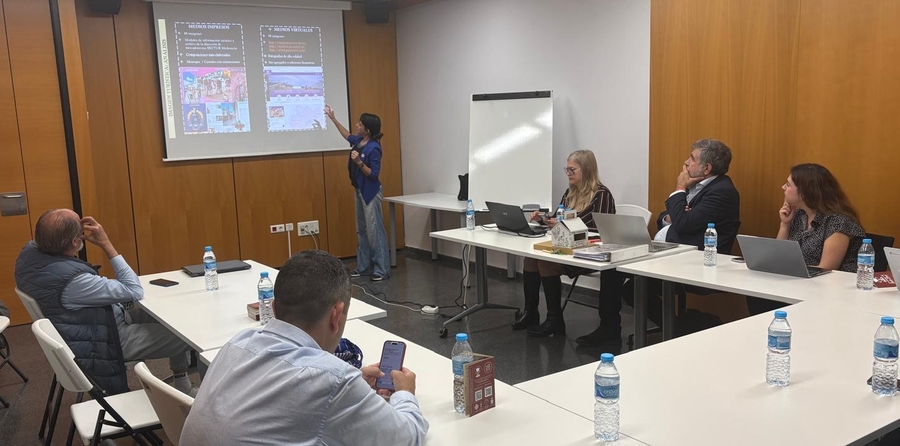

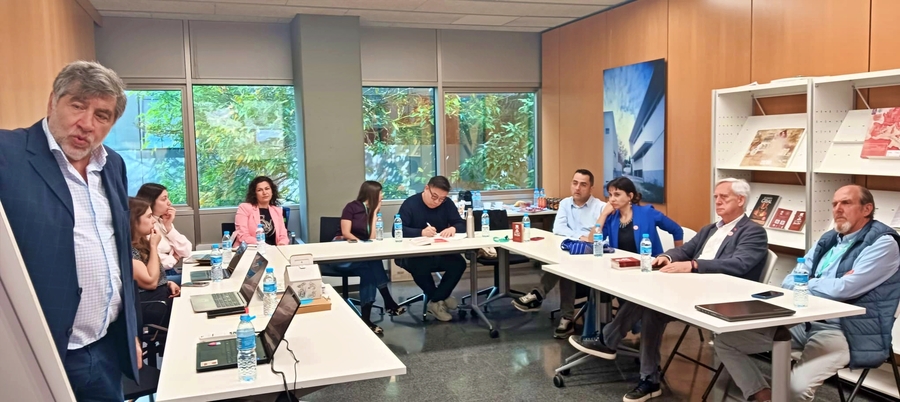
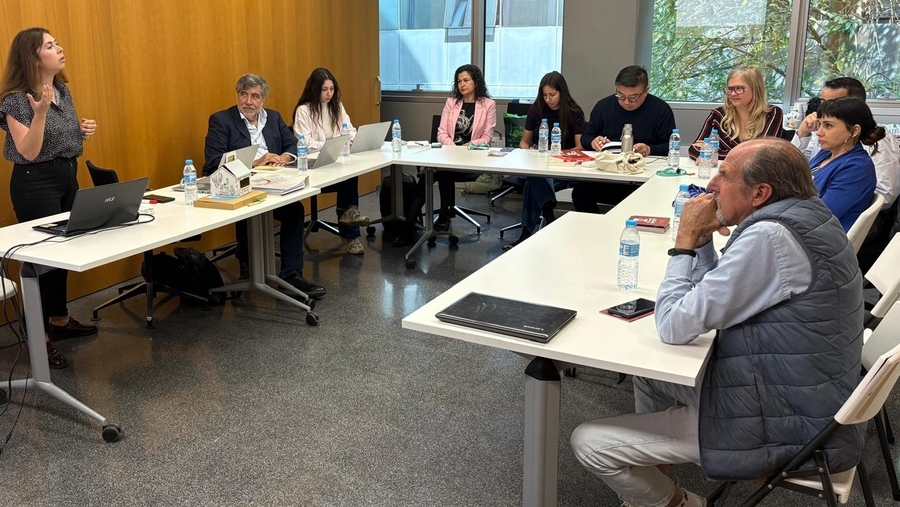
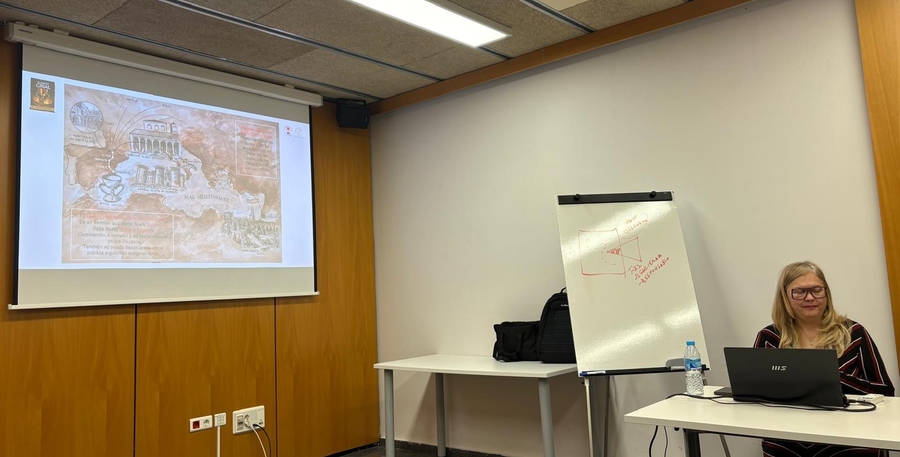
VALENCIA, SPAIN, May 02, 2026 /24-7PressRelease/ -- The Science Park of the Universitat de València has hosted the First International Conference on Tourist Routes – Cultural Itineraries: Regenerative and Responsible, a high-level academic and professional meeting that has brought together international experts, researchers and agents from the tourism sector to reflect on the role of heritage, innovation and international cooperation in the European positioning of 'The Way of the Holy Grail'.
Organised by Regenera Tur-IA Cube, the International Scientific Commission for the Study of the Holy Grail (CCIESG) and collaborating entities, the conference focused on a new tourism paradigm based on regeneration, the measurement of local impact and the transformation of the visitor into a "solidarity traveller", aligned with the European values of sustainability and territorial cohesion.
As stated in the official programme of the event held on the morning of 30 April, the conference structured its content around scientific presentations, strategic debate and action-oriented conclusions.
INTERNATIONAL SPEAKERS: GLOBAL KNOWLEDGE AND EXPERIENCES
The central block of the morning has brought together leading international experts who have provided a comparative and multidisciplinary vision of cultural itineraries:
Dr. Katya García Quevedo (UNAM) has presented the Don Vasco Tourist Route, delving into the territorial and heritage dynamics that articulate this Mexican route. Her speech highlighted the importance of the balance between tangible and intangible heritage, highlighting how social perception and tourist image influence the sustainability of the territory and the participation of local communities.
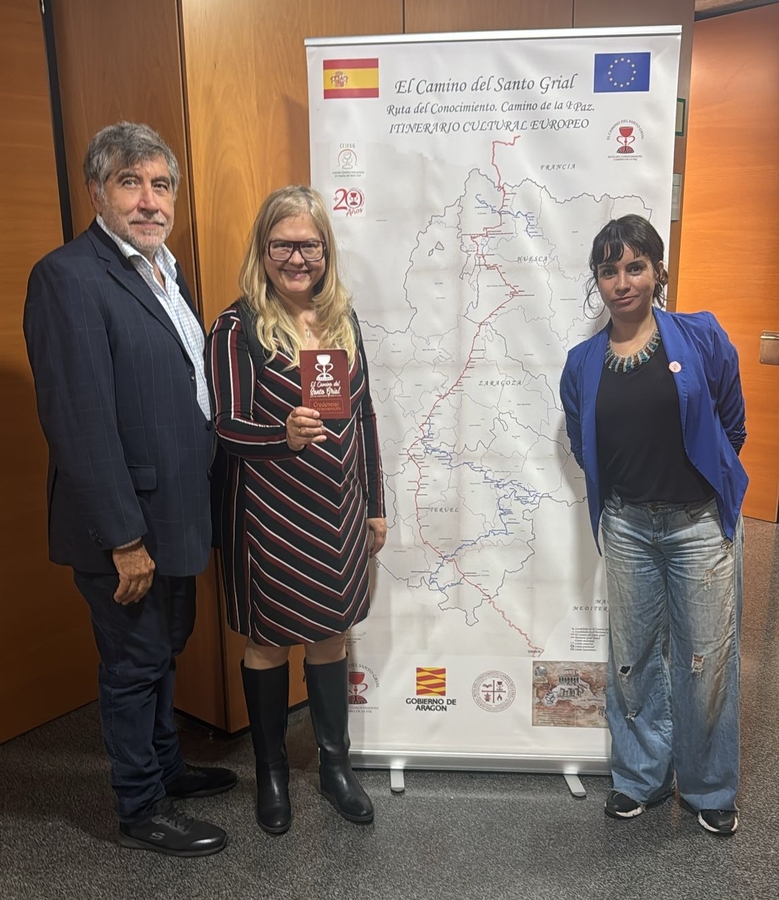
For her part, Dr. Ana Mafé García, president of the International Association Cultural Itinerary 'The Way of the Holy Grail of Europe', underlined the strategic dimension of the itinerary as a European project:
"The Way of the Holy Grail is not only a cultural route, it is an infrastructure of European cooperation that connects territories, knowledge and values. Its consolidation involves generating a real impact on communities and integrating into international networks with a solid scientific base."
On behalf of the Silk Road, Dr. Fernando Molina Pons defended the need to build alliances between consolidated cultural itineraries:
"The future of cultural itineraries lies in cooperation between networks. Sharing methodologies, data and experiences is key to generating added value and strengthening Europe's international positioning as a cultural destination".
The conference also incorporated an innovative Latin American vision through Natalia Castro, who presented the Regenerative Coffee Tourist Route in Colombia, focused on the concept of the "R Factor":
"Tourism must be measured not only by its economic impact, but by its ability to transform the visitor into an active agent of social and environmental regeneration."
Her intervention has highlighted the current challenges of tourism, such as the pressure on ecosystems or the need to redistribute benefits in rural communities, proposing regenerative models based on tourism intelligence and local participation.
Regenerative tourism consolidates itself as a key to transforming travellers into agents of positive impact
One of the central axes of the day was the presentation of the Regenera Tur-IA Cube platform, defined as a pioneering tool that integrates artificial intelligence, regenerative tourism and territorial data to optimize destination management.
As has been explained, this platform allows users:
• To measure economic, social and environmental impact through local impact observatories
• To assess the degree of regeneration using metrics such as the Regenera Tur-IA Value
• To analyse the transformation of the tourist into a conscious traveller using the R Factor
• To facilitate strategic decision-making with integrated data
All this responds to an identified global challenge: the lack of tools that allow tourism to be managed in a coordinated, sustainable and evidence-based way.
In this framework, the international projection of the World Network of Solidarity, Smart, Regenerative and Circular Routes was highlighted, an initiative aimed at connecting cultural itineraries from different continents under a common model based on cooperation, innovation and positive impact on the destination.
This network promotes the exchange of knowledge, the implementation of tourism intelligence tools and the measurement of advanced sustainability indicators, incorporating the concept of "Footprint of Love in Destination" as a qualitative and quantitative metric of the transformative impact of the traveller.
This indicator makes it possible to evaluate not only tourism activity, but also its capacity to generate real well-being in local communities, strengthen the social fabric and contribute to environmental regeneration. In the words of the organisers, "it is not only about connecting territories, but about activating a global network where each tourist experience leaves a positive, conscious and measurable mark on the destination".
CONCLUSIONS: THE WAY OF THE HOLY GRAIL AS A EUROPEAN MODEL
The conclusions of the conference were clear: the future of European cultural routes lies in integrating technological innovation, collaborative governance and impact measurement.
In this context, 'The Way of the Holy Grail' is positioned as a strategic project capable of leading this transition thanks to:
• Its cultural narrative of European scope
• Its capacity for territorial structuring
• Its alignment with regenerative tourism models
• Its commitment to international cooperation
The conference has reaffirmed the need to move towards a model where tourism not only preserves heritage, but also regenerates it, generating tangible benefits for local communities.
The meeting was followed by a meeting of businesspeople, where initiatives linked to the itinerary were presented, promoting the connection between academic knowledge and the productive fabric, an economic engine.
Likewise, the day has had media coverage through a radio programme on Play Radio Valencia (107.7 FM), expanding its impact and social reach.
The First International Conference has consolidated Valencia as a node of innovation in European cultural tourism, marking a clear roadmap: to move towards a model where the traveller not only travels through territories, but also actively contributes to their regeneration.
Report by Will McCarthy
Article copyright '24/7 Valencia'
# # #
Other Media
Contact Information
William Mccarthy
24/7 Valencia
Valencia
Spain
Telephone: ...
Email: Email Us Here
Website: Visit Our Website
Blog: Visit Our Blog


