
MIAMI, FL, May 09, 2026 /24-7PressRelease/ -- Every four years, the World Cup reshapes how billions of people spend their time, where they gather, and what captures their attention. The 2026 edition running June 11 to July 19 across 16 cities in the United States, Canada, and Mexico will be the largest yet, with 48 teams and 104 matches played over 39 days. For advertisers, the question is not whether to activate during the tournament but how to do it effectively without getting lost in the noise.
Lux OOH Advertising, an out-of-home agency with operations spanning London, New York, Miami, Los Angeles, and other major markets across the UK and USA, is making the case that OOH advertising World Cup campaigns represent the highest-impact channel available to brands particularly those without official FIFA sponsorship deals.
The Problem with Going Digital-Only During the World Cup
When a global event dominates conversation for six consecutive weeks, every brand with a marketing budget flood into the same digital channels. Social media ad auctions become more expensive. Search costs climb around football-related keywords. Display advertising gets buried under layers of competing creative. The result is that brands spend more to achieve less, fighting for fractions of attention on platforms where consumers are already overwhelmed.
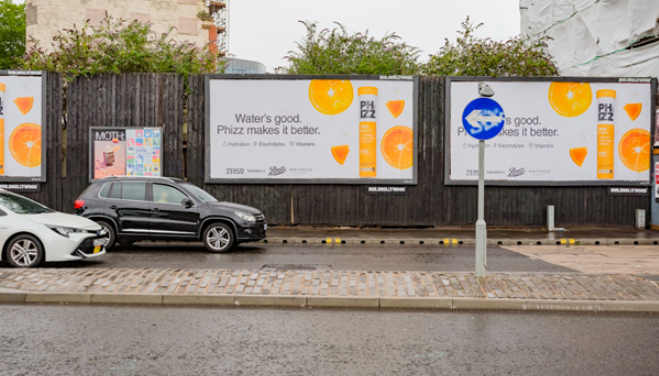
Out-of-home advertising sidesteps this problem entirely. A billboard on a busy motorway does not compete with a scroll feed. A bus shelter poster outside a pub screening a quarter-final match does not require a click to be seen. A wrapped taxi moving through central London or Midtown Manhattan cannot be blocked by ad-filtering software. Street out-of-home ads operate in the physical world, where attention is not optional it is built into the environment.
This fundamental advantage is why experienced advertisers consistently increase their OOH spend during major sporting events. The World Cup 2026, with its unprecedented scale and duration, amplifies this logic considerably.
Where the Fans Are and Where Brands Should Be
Understanding fan behaviour is the starting point for any effective billboard ads World Cup campaign. The 2026 tournament creates two distinct but equally valuable audience environments.
In the United States, host cities will experience an influx of international visitors alongside domestic fans. New York, Miami, Los Angeles, Dallas, Houston, and other venues will see concentrated foot traffic around stadiums, official fan festivals, sports bars, hotels, and transit corridors. Brands placing OOH media in these cities are reaching audiences at their most emotionally engaged walking to a match, celebrating a result, or exploring a host city for the first time.
In the United Kingdom, the experience will be shaped by the time difference. Many group-stage matches kick off between 8pm and 2am UK time, pushing fan activity into pubs, living rooms, outdoor screenings, and late-night food establishments. The morning-after commute becomes a key touchpoint millions of fans travelling to work having stayed up to watch England, Scotland, or Wales play the night before. OOH advertising World Cup placements across London's Tube network, Manchester's tram system, and Birmingham's bus routes intercept these audiences during a moment of high emotional resonance.
Lux OOH Advertising operates across both markets, giving brands the ability to coordinate campaigns that reach fans in host cities and home-viewing markets simultaneously.
Formats That Deliver During Tournament Windows
Not all OOH formats perform equally during a World Cup. The most effective placements are those that align with how fan behaviour changes over the course of the tournament.
Roadside Billboards. Large-format billboard ads World Cup placements along commuter corridors and arterial roads deliver high-frequency exposure over the full six-week window. In the US, highway billboards near host stadiums catch fans driving to and from matches. In the UK, roadside placements along routes connecting city centres to residential areas reach fans heading home after late-night viewings. Lux OOH secures 48-sheet and 96-sheet placements across both markets through its direct relationships with media owners.
Digital Screens and DOOH. Dynamic digital placements allow brands to adjust creative based on match schedules, results, and time of day. A drinks brand might run a celebratory message after a national team victory, then shift to a commuter-focused creative the following morning. This real-time flexibility makes DOOH one of the most strategically valuable formats during a fast-moving tournament.
Transit and Transport Advertising. Bus rears, shelter panels, taxi wraps, Tube cards, and subway posters reach commuters during their daily routines a consistent audience channel regardless of match schedules. Street out-of-home ads placed across transport networks are especially effective because they reach fans repeatedly across the full tournament duration rather than delivering a single impression.
Wild Posting and Grassroots Formats. Street-level wild posters, pavement stencils, and reverse graffiti placements embed brands into the urban fabric of neighbourhoods where fans live, work, and socialise. These formats carry a cultural credibility that polished corporate advertising often lacks they feel like part of the streetscape rather than an interruption of it. Lux OOH manages over 10,000 authorised wild posting sites across London, New York, Miami, and Los Angeles.
Mobile LED and Building Projections. For high-impact activations timed to specific matches or tournament moments, mobile LED vehicles and building projections deliver visual spectacle that generates organic social sharing. A building projection near a fan zone on the night of a semi-final, for example, creates a moment that extends beyond the physical audience into social media reach.
The Cost Efficiency Argument
One of the most overlooked advantages of street out-of-home ads during the World Cup is cost efficiency. While digital CPMs surge during major events due to increased demand, OOH rates are typically locked in during the booking phase meaning brands that secure placements early pay a fixed rate regardless of how competitive the advertising landscape becomes as the tournament progresses.
Lux OOH Advertising works independently of any single media owner, which allows the agency to negotiate across vendors and identify premium placements at competitive rates. For brands working within defined budgets, this vendor-neutral approach often delivers stronger coverage than going directly to a single OOH provider.
About Lux OOH Advertising
Lux OOH Advertising is an out-of-home advertising agency delivering campaigns across the United Kingdom and the United States. The agency operates in London, Manchester, Birmingham, New York, Miami, Los Angeles, and Las Vegas, working directly with media owners across all OOH formats billboards, digital screens, transit networks, wild posting, building projections, and mobile LED vehicles. With access to approximately 80 percent of the global OOH site network and no ties to any single vendor, Lux OOH provides format-neutral campaign planning built around client objectives.
For brands planning billboard ads World Cup campaigns, OOH advertising World Cup activations, or street out-of-home ads targeting fans across the USA and UK this summer, Lux OOH Advertising is accepting bookings now.
# # #
Contact Information
Lux OOH Advertising
Lux OOH Advertising
Miami, Florida
United States
Telephone: +44 203 092 7898
Email: Email Us Here
Website: Visit Our Website