
MEMPHIS, TN, June 11, 2026 /24-7PressRelease/ -- Click here to visit the African Cultural Embassy located in the historic African/American Community of Orange Mound in Memphis whereas Orange Mound root began in 1879 whereas Orange Mound represents the 1st Black America's Reconstruction Triumph.
The African Cultural Embassy is significant because it stands as the first *bi‑national cultural institution* created by an African American to connect the historical and cultural worlds of **Africa, African America, and Latin America**. Its purpose is not political—it is *cultural diplomacy*, a bridge built through education, art, and historical truth. The Embassy's bi‑national character means it operates across borders, uniting communities that share African ancestry but have been separated by language, geography, and colonial history.
The African Cultural Embassy located in the African American Community of Orange Mound in Memphis is a groundbreaking institution that redefines diplomacy through culture rather than politics. Its significance lies in its ability to serve as a bi‑national bridge connecting African Americans in the United States with the broader African diaspora across Latin America. The Embassy represents a living testament to shared heritage, resilience, and unity among peoples of African descent throughout the hemisphere.
By linking communities from Memphis to Mexico, Cuba, and Colombia, it restores the historical truth that Black freedom and identity are not confined to national borders but are part of a continuous hemispheric story. Through education, art, and cultural exchange, the African Cultural Embassy teaches that democracy, diversity, and family are universal values rooted in African traditions. It challenges the silence and erasure of Black history by creating a platform where African Americans and Latin Americans can learn from one another, celebrate their intertwined histories, and build solidarity against racism and inequality. In essence, the Embassy is not just a building or organization—it is a movement of cultural sovereignty and historical restoration that unites the Americas under the banner of Black Freedom and Kinship.
Through initiatives like the **Charter of Kinship** and **Black Freedom 250th**, the Embassy teaches that African American identity is not confined to the United States—it is hemispheric, stretching from Memphis to Mexico, Colombia, Cuba, and beyond. This connection restores the erased narrative that freedom and family are continental values, not national ones. By linking Juneteenth to Afro‑Latin histories such as Palenque in Colombia and the Mascogos in Mexico, the Embassy transforms Juneteenth into a *bi‑national celebration of Black freedom*.
Click here to learn more about the Charter of Kinship.
Its significance lies in education and unity: it challenges white supremacy and internalized racism by showing that Black liberation is a shared hemispheric story. The African Cultural Embassy becomes a living classroom—where African Americans learn that their struggle and triumph are part of a larger family across the Americas, and where Latin America learns that its own African heritage is central to the story of freedom and democracy.
"Black Freedom 250th is the first Black hemispheric movement in U.S. history." To say that "Black Freedom 250th is the first Black hemispheric movement in U.S. history" means that for the first time, an African American–led initiative has expanded the meaning of Black freedom beyond the borders of the United States and connected it to the entire Americas as one continuous historical reality. Black movements in the U.S. have traditionally been confined to domestic narratives—Civil Rights, Reconstruction, Juneteenth, and African American history as taught within U.S. institutions. Black Freedom 250th breaks that boundary by asserting that Black liberation did not begin in 1776 or 1865, but centuries earlier in places like Palenque de San Basilio in Colombia (1599), the Afro‑Mexican abolition of slavery under President Vicente Guerrero (1829), and the Mascogo Juneteenth traditions in Mexico that predate the U.S. holiday.
By linking these histories to Orange Mound's true 1879 founding and to modern Pan‑African diplomacy, Black Freedom 250th creates a unified, transnational timeline of Black sovereignty that stretches across North America, South America, Central America, and the Caribbean. This movement reframes America's 250th anniversary as not just a celebration of the United States, but as a moment to recognize the shared Black struggle for freedom across the hemisphere.
It positions African Americans as part of a larger continental family, rather than an isolated national minority, and establishes a new cultural identity that includes Latinos, Afro‑Mexicans, Afro‑Colombians, Afro‑Indigenous peoples, Afro‑Brazilians, and the African diaspora. In doing so, Black Freedom 250th becomes the first movement in U.S. history to claim hemispheric sovereignty, to build a diplomatic cultural bridge between Black America and Latin America, and to redefine Juneteenth as the first Black hemispheric holiday. It is not simply a commemoration—it is the birth of a new geopolitical and cultural reality in which Black freedom is recognized as a shared hemispheric inheritance rather than a narrowly American story whereas 1776 did not include Black Americans.
Black Freedom 250th introduce the Hemispheric Juneteenth celebration. **Black Freedom 250th introduces the Hemispheric Juneteenth celebration by transforming Juneteenth from a solely African American commemoration into a shared freedom holiday for the entire Americas.** In this expanded framework, Juneteenth is no longer understood only as the day enslaved people in Texas learned of emancipation in 1865; instead, it becomes a continental marker of Black liberation that connects African Americans with Afro‑Mexicans, Afro‑Colombians, Afro‑Indigenous peoples, Afro‑Brazilians, and Caribbean communities.
By grounding Juneteenth in a broader historical timeline—one that includes Palenque de San Basilio in Colombia (1599), Mexico's abolition of slavery under Vicente Guerrero (1829), and the Mascogo Juneteenth traditions in Coahuila, Mexico—Black Freedom 250th reframes the holiday as the first **Black Hemispheric Holiday**, a celebration of freedom that began long before the United States existed. This hemispheric Juneteenth acknowledges that Black liberation is not an isolated American event but part of a shared continental struggle and triumph. It invites Latin America to celebrate alongside the United States, creating an annual moment of unity, education, and cultural diplomacy in which the entire hemisphere recognizes Black freedom as a collective inheritance. Through this reframing, Black Freedom 250th positions Juneteenth as a bridge between nations, a symbol of hemispheric solidarity, and the foundation for a new era of transnational Black identity.
Anthony "Amp" Elmore is a NARA honored Historian, A 5-time world Kickboxing champion, Memphis 1st Independent 35mm Theatrical Filmmaker and community activist. Anthony "Amp" Elmore whose 1988 film he wrote, produced directed and starred titled "The Contemporary Gladiator" has a scene in the movie whereas Anthony "Amp" Elmore wanted to create the ring name "Anthony America." In the movie scene Elmore becomes "Amp" a name he as always used.
Please click here to see a September 2018 video Elmore uploaded titled: "Buddhism and the Red White and Blue."
There is a scene in 1986 via a Kickboxing fight at the Historic Peabody Hotel in Memphis whereas Elmore enters the ring via American flags and wearing the Red White and Blue. There is another scene whereas Elmore enters the ring in Melbourne, Australia in front of 10,000 people wearing "The Red White and Blue."
Anthony "Amp" Elmore notes that there is nothing greater than being an American whereas Elmore can recall honoring America's 200th Anniversary July 4, 1976. Anthony "Amp" Elmore was part of a massive 200th Anniversary Celebration via a Buddhist Organization called NSA. NSA broke the Guinness Book of World Records for displaying the largest array of national flags ever assembled during an event.
Fast forward 50 years later to 2026 whereas Anthony "Amp" Elmore celebrates America's Semiquincentennial or America's 250th. What does the Semiquincentennial mean for Black America and should it be the same for Black Americans as White Americans.
For Black America, the 2026 Semiquincentennial cannot and should not mean the same thing as it does for White America. To force the African American experience into a sanitized, mainstream 1776 narrative is to deny historical truth. When the Declaration of Independence was signed in 1776, proclaiming that "all men are created equal," hundreds of thousands of Black men, women, and children were legally held in chattel slavery. For Black Americans, 1776 was not the birth of freedom—it was the codification of human bondage. Therefore, celebrating the 250th anniversary must look entirely different through the lens of Black America.
As the United States prepares to mark its Semiquincentennial milestone, the historic community of Orange Mound has officially launched "Black Freedom 250th" initiative. Proclaiming the universal hallmarks of Education, Diversity, and Democracy, this historic framework establishes how African Americans define their own 250-year relationship with liberty. The Hallmarks of the African American view of 1776 includes "Education Diversity and Democracy. In 1776 the founding year of America Black people across the American landscape were legally held in chattel slavery.
Anthony "Amp" Elmore launched "Black Freedom 250th. This bold movement expands the traditional boundaries of the American birthday into a borderless celebration of human dignity, transnational alliances, and unyielding self-determination. Guided by the transformative truth that while institutional forces aggressively erased their historic districts, African Americans expanded their destiny, this initiative establishes a sovereign blueprint for cultural preservation, historical education, and grassroots democracy.
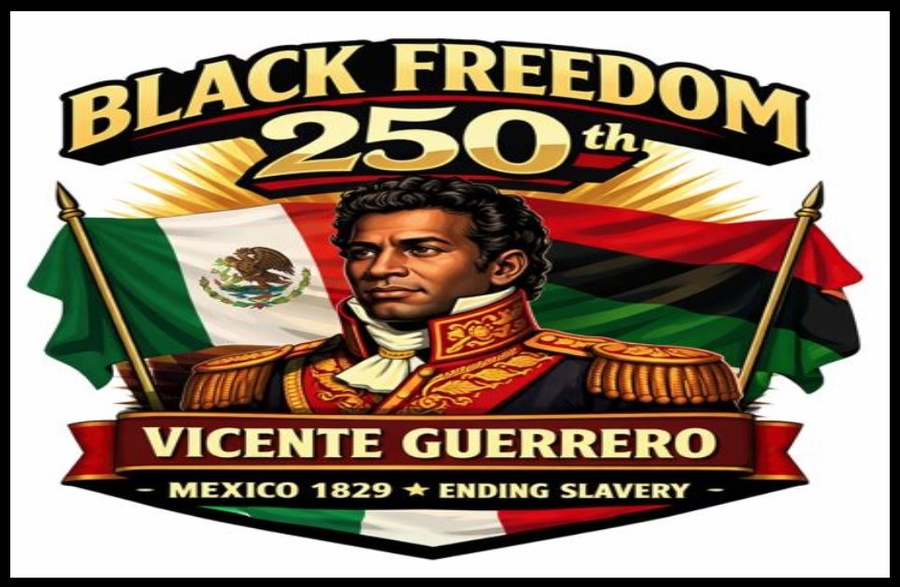
The visual and ideological anchor for the global "Black Freedom 250th" campaign is the revolutionary image of the great Colombian liberate Benkos Bioho and the great MexicanGeneral Vicente Guerrero, the heroic second president of the Republic of Mexico. Born of African and Indigenous descent, Guerrero utilized his executive authority to sign the historic decree completely abolishing slavery across Mexico on September 15, 1829, decades before the United States enacted the Emancipation Proclamation.
By centering Guerrero's portrait at the heart of America's 250th milestone, the "Black Freedom 250th" initiative challenges the continental monopoly on freedom narratives and permanently exposes the deep, long-hidden ties between Black America and Mexico and Latin America. Guerrero's radical human rights mandate turned Mexico into a sovereign sanctuary for thousands of escaping African Americans who traveled along a southern route of the Underground Railroad, discovering that the absolute moment their feet touched Mexican soil, they were legally and permanently free.
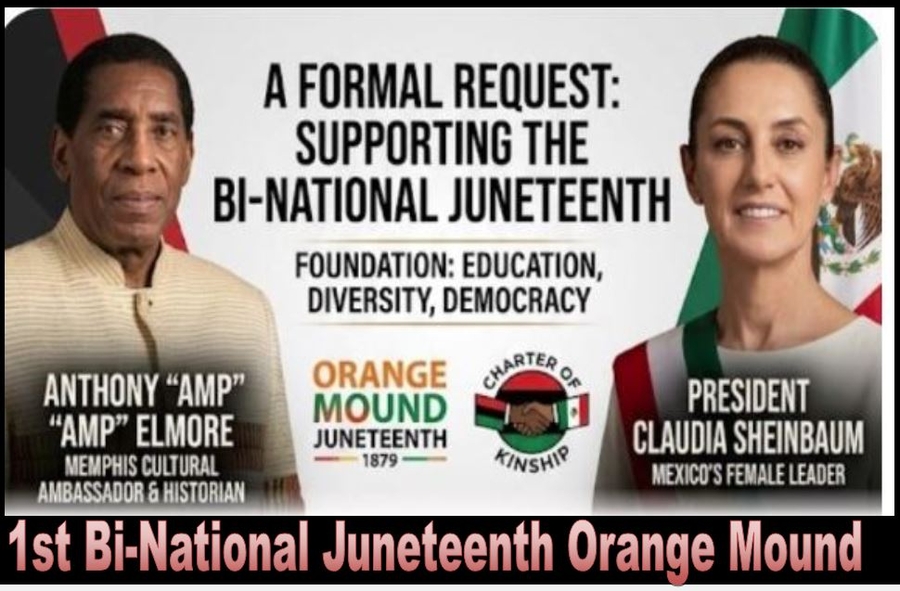
This international historical reclamation will officially take center stage through a formal invitation extended to Mexican President Claudia Sheinbaum and all Latin American leaders, calling upon the Latino nations e to unite with Black America in this monumental celebration. The historic kickoff of America's 250th will be officially manifested on July 11, 2026, during the legendary Orange Mound Juneteenth celebration. This specific local commemoration will serve as the premier public platform to introduce the story of Benkos Bioho and Vicente Guerrero and the Mexican alliance to the global community, beautifully weaving together the separate threads of universal emancipation, neighborhood autonomy, and bi-national solidarity. Through this formal relationship with Latin America, the "Black Freedom 250th" initiative strips mainstream governmental commissions of their restrictive narrative authority, establishing that true democracy is a continuous, living contract authored by the diverse peoples who fought for its realization.
Expanding this destiny even further across the global stage, the "Black Freedom 250th" calendar will converge on August 15, 2026, to celebrate the historic 70th anniversary of the legendary Kenyan leader Tom Mboya's foundational relationship with the American civil rights landscape. Recognizing Mboya's towering legacy of building cultural, educational, and diplomatic lifelines between the African continent and African American leaders, this commemoration seamlessly integrates pan-African heritage into the very core of America's 250-year narrative. By linking the revolutionary legacy of both Benkos Bioho and Vicente Guerrero in Mexico, the historic independence of Orange Mound in Tennessee, and the diplomatic brilliance of Tom Mboya in Kenya, the initiative constructs an unbroken, international golden triangle of Black freedom that redefines what it truly means to honor democracy.
Ultimately, the "Black Freedom 250th" initiative serves notice to the world that the definition of American greatness does not reside in sanitized textbooks or elite corporate structures, but in the radical commitment to absolute diversity and uncompromised truth.. From this point forward, the Semiquincentennial will be remembered not simply as an echo of 1776, but as the moment Black America stood on its own sacred ground, linked arms with global allies, and fully executed an expanded destiny rooted in true friendship, absolute diversity, and borderless democracy.
About Us
"If Lions were historians, hunters would no longer be heroes." This powerful African proverb encapsulates the mission of the Orange Mound News Network (OMNN). Founded by Anthony Amp Elmore, OMNN aims to reclaim and reshape the narrative of Orange Mound through the power of filmmaking, education, and content creation. Our goal is to challenge the negative
stereotypes and biased portrayals that have long plagued our community, creating a positive space for family, Black culture, history, and education.
Our Journey and Mission
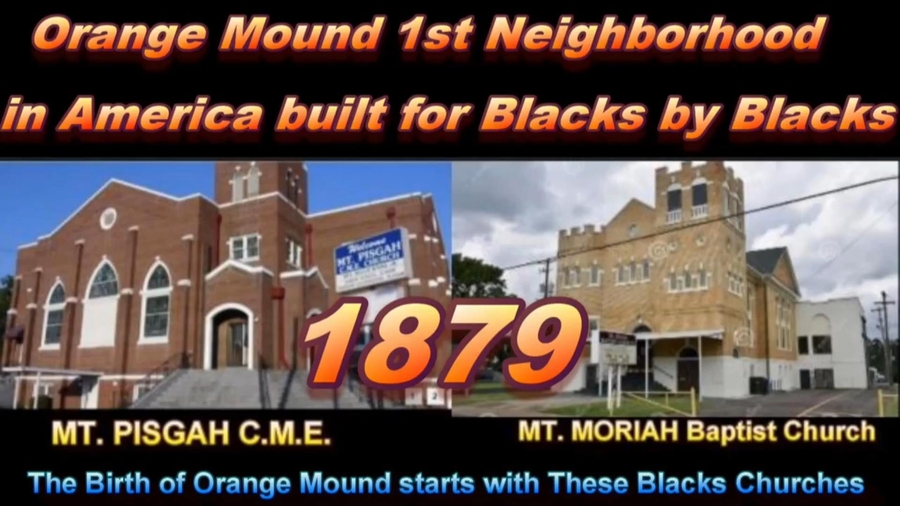
Orange Mound, established as the first community in America built for Blacks by Blacks, has a rich history often overshadowed by negative stereotypes. Mainstream media and societal biases have painted Orange Mound as a "ghetto," contributing to a 30% decline in property values while surrounding communities have prospered. The Orange Mound News Network was created to counter this narrative and highlight the true spirit and resilience of our community.
Anthony Amp Elmore, a five-time world karate kickboxing champion, filmmaker, and community activist, has been a beacon of change in Orange Mound. With over five decades of community service, Elmore has dedicated his life to uplifting Orange Mound. From becoming a homeowner at 19, establishing businesses, to founding the Proud Black Buddhist World Association, Elmore's contributions have been immense.
# # #
Other Media

Contact Information
Anthony Elmore
Orange Mound News Network
Memphis, Tennessee
United States
Telephone: 9017507700
Email: Email Us Here
Website: Visit Our Website
Blog: Visit Our Blog