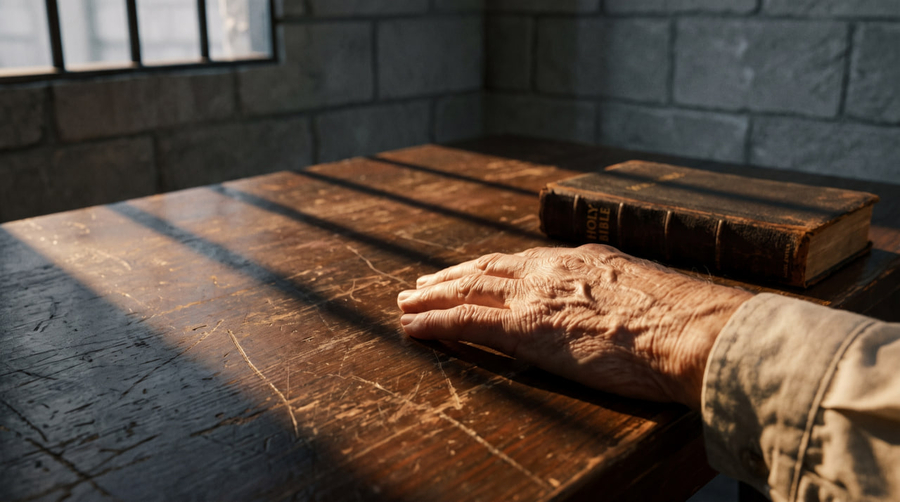

ADELAIDE, AUSTRALIA, July 09, 2026 /24-7PressRelease/ -- International attention is turning to South Korea following the detention and prosecution of 95 year old Shincheonji Church of Jesus chairman Lee Man hee, with religious freedom advocates raising concerns over both the legal process and public comments made by the country's Justice Minister.
Chairman Lee was taken into custody on 24 June and formally indicted on 30 June on charges that include alleged violations of the Political Parties Act. Prosecutors claim that between July 2021 and January 2024, he organised the enrolment of about 50,000 members of the Shincheonji Church of Jesus into the People Power Party to influence presidential and parliamentary primary elections.
The case has attracted attention beyond South Korea after Italian sociologist of religion Dr Massimo Introvigne published two articles in the religious freedom publication Bitter Winter, questioning the use of pre trial detention and the public remarks made by Justice Minister Jeong Seong ho.
According to Dr Introvigne, detaining a 95 year old religious leader in a case that does not involve allegations of violence raises questions about whether the measures are proportionate. He argued that international standards, including the United Nations Standard Minimum Rules for the Treatment of Prisoners, commonly known as the Mandela Rules, encourage authorities to consider factors such as age, health and the necessity of detention before trial.
South Korean authorities have not publicly indicated that Chairman Lee's age alone should exempt him from detention. Decisions on pre trial custody are generally made by the courts after considering factors such as the seriousness of the allegations, the risk of evidence being destroyed and the possibility of a suspect failing to appear for legal proceedings.
The Shincheonji Church of Jesus said Chairman Lee and church representatives had cooperated throughout the investigation, including during search and seizure operations. The church described his detention as an unnecessary physical burden on an elderly man and has rejected allegations that members were forced to participate in political activities.
Attention has also centred on comments posted by Justice Minister Jeong on social media after the indictment. In the post, he wrote that "strict criminal punishment corresponding to its responsibility is inevitable" before quoting Matthew 7:15, a biblical passage warning against false prophets.
Dr Introvigne argued that remarks from a serving Justice Minister at the outset of criminal proceedings could create the perception that the outcome of the trial had already been judged. He also questioned whether citing a Bible verse that could be interpreted as referring to the accused was consistent with the state's obligation to remain religiously neutral.
The Justice Ministry has not publicly responded to those criticisms.
Legal experts generally note that public officials are expected to avoid comments that could be interpreted as influencing judicial proceedings, particularly while a trial is pending. At the same time, the legal impact of public statements depends on domestic law and whether they are found to have affected the fairness of the proceedings.
The prosecution's case is expected to focus on whether church members joined the political party voluntarily or whether they were pressured to do so.
Prosecutors allege there was an organised campaign involving forced enrolment, while Shincheonji maintains that members exercised their rights as individual citizens and were neither compelled nor instructed to join a political party.
The distinction is likely to become a central issue during the trial. Membership of a political party is not unlawful under South Korean law, and citizens retain the right to support political parties and candidates. The court will instead examine whether any unlawful coercion occurred.
Dr Introvigne has argued that the case should be viewed in a broader context of religious freedom, pointing to separate legal proceedings involving Han Hak ja, leader of the Family Federation for World Peace and Unification, formerly known as the Unification Church. He suggested the cases could indicate a wider pattern of elderly religious leaders facing detention, although each case involves different allegations and legal circumstances.
South Korea has long been regarded as a democratic nation with an independent judiciary and constitutional protections for freedom of religion. However, some religious minority groups, including Shincheonji, have faced public criticism and legal disputes over the years, particularly following the Covid 19 pandemic, when the church came under intense scrutiny because of an outbreak linked to its members.
Supporters of Chairman Lee argue the current proceedings will test whether minority religious groups receive the same legal protections afforded to other organisations. Others maintain that the allegations should be assessed solely on the evidence presented in court, regardless of the defendant's religious position or public profile.
As the trial moves forward, international observers are expected to continue monitoring the proceedings. While supporters and critics have offered sharply different interpretations of the case, the court's findings will ultimately determine whether prosecutors can establish that criminal coercion occurred or whether the actions in question fell within the bounds of lawful political participation.
# # #
Contact Information
NHNE ADL
SA Health
Adelaide, South Australia
Australia
Telephone: 0406433833
Email: Email Us Here