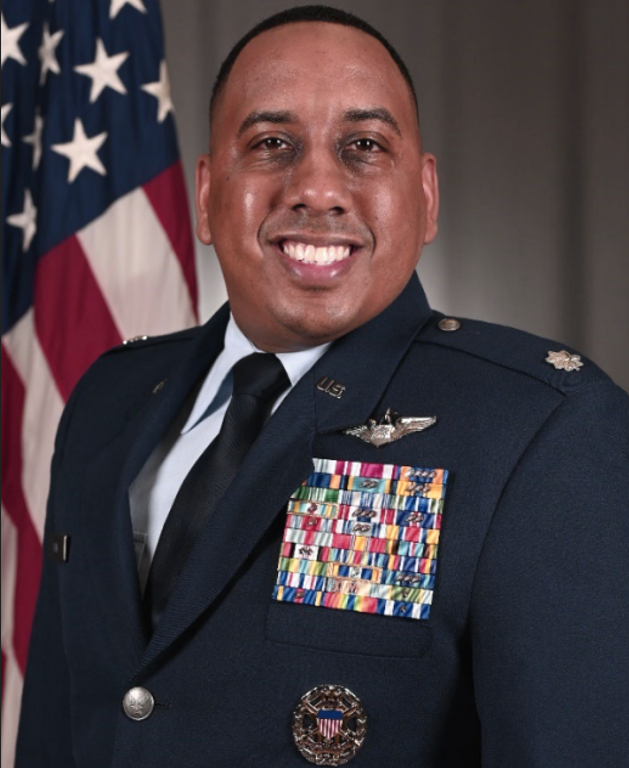

NAVARRE, FL, August 02, 2026 /24-7PressRelease/ -- Brent Byng is a seasoned operations executive and decorated U.S. Air Force leader with more than 28 years of combined military and business experience. Currently serving as a senior military leader, he has earned a strong reputation for transforming strategy into measurable results, leading organizations of more than 300 personnel and managing portfolios valued at nearly $100 million.
Throughout his distinguished career, Brent has consistently demonstrated the ability to optimize performance, streamline processes, and drive modernization across complex enterprises. As Commander of the 19th Special Operations Squadron, he directed the training and graduation of more than 2,700 mission-ready operators each year. He spearheaded the introduction of innovative training technologies, including simulation and virtual reality platforms, which significantly increased efficiency, improved knowledge retention, and reduced instructor workload.
His leadership extended beyond operations into strategic policy as Special Assistant to the Chairman of the Joint Chiefs of Staff, where he worked directly with senior defense officials, White House staff, and international partners to strengthen alliances, expand cooperation, and shape global security strategy.
A proven mentor and team builder, Brent has guided the development of mid- and senior-level leaders, fostering a culture of accountability, innovation, and excellence. His academic achievements, including advanced degrees in operations management, military arts, and strategic leadership, highlight his dedication to professional growth and lifelong learning.
With more than 2,000 flight hours—half of them in combat—and a career spanning command, diplomacy, training, and enterprise management, Brent Byng brings unmatched operational insight, resilience, and vision to every role he undertakes.
1. You've spent more than 28 years in operations and military leadership. What first drew you to this path?
I grew up watching my father solve problems methodically, whether it was fixing a car or planning a family trip, and I think that shaped how I approach challenges today. Joining the Army and then the Air Force felt like a natural extension of that mindset, since it demanded precision and rewarded discipline in equal measure. Once I started leading teams, I realized operations was where strategy meets people, and that combination never stopped interesting me. Nearly three decades later, I still find something new to learn every single day, and honestly, that's part of what keeps the work worthwhile.
2. As Commander of the 19th Special Operations Squadron, you oversaw the training of thousands of operators annually. What was the biggest lesson from that role?
Scale changes everything when you are responsible for training more than 2,700 mission-ready operators every single year, because small inefficiencies compound quickly across such a large group. I learned that real work is not just teaching skills alone; it is building systems that let good instruction repeat itself reliably. That is partly why we introduced simulation and virtual reality platforms, not to replace instructors but to give them stronger supporting tools. The lesson stuck with me well beyond that particular command post: sustainable performance comes from process and repeatable systems, not heroics. I still apply that same thinking whenever I evaluate training today.
3. What does a typical morning look like for you now?
Early, and usually with coffee before anything else takes over. I try to review priorities before emails start pulling me apart. Most mornings I will walk for forty minutes just to think clearly, since it sounds simple, but that quiet time sets the tone completely. Without it, I find myself reacting to whatever lands first instead of what actually matters most, so mornings, for me, are less about routine and more about control. Once that hour passes, the rest of the day moves quickly, and there is rarely time to reset again until evening.
4. You've managed portfolios worth nearly $100 million. How do you approach that kind of responsibility without becoming overly cautious?
Caution has its place, but paralysis doesn't serve anyone. I focus on building strong information flows so decisions are grounded in accurate, current data rather than instinct alone. From there, it's about accountability: making sure the right people own the right outcomes. I've found that clear ownership reduces hesitation because everyone knows what they're responsible for. Risk never disappears entirely, and pretending otherwise is a mistake. The goal is managing it intelligently, not eliminating it, which frankly isn't possible in complex enterprises. I've seen leaders freeze under pressure because they wanted certainty that simply wasn't available, and that hesitation often costs more than the risk itself would have.
5. Your role as Special Assistant to the Chairman of the Joint Chiefs of Staff placed you alongside senior defense officials and international partners. What surprised you most about that experience?
How much diplomacy resembles operations management, honestly. Both require translating complex priorities into language different stakeholders can act on. I expected the policy side to feel abstract compared to commanding a squadron, but it wasn't. Every conversation had real consequences, whether it involved alliance building or resource allocation. What surprised me most was how often listening mattered more than presenting. Senior leaders and international partners responded better when they felt heard first, and that shaped how I approach conversations to this day. It's a lesson that applies just as well in boardrooms as it does in diplomatic settings, and I carry it with me in nearly every meeting I attend.
6. Is there a moment in your career you consider a genuine turning point?
Yes: the first time I had to make a difficult call that affected people's careers, not just outcomes on paper. It forced me to reckon with the human weight of leadership in a way training hadn't fully prepared me for. Up until that point, I had thought about leadership mostly in terms of strategy and execution. That decision changed how I saw the role entirely, because I realized every choice I made carried consequences for someone's family, someone's future, and not just for a mission or a budget line. I've carried that awareness into every decision since, and I don't think it ever fully goes away.
7. You've logged more than 2,000 flight hours, half in combat conditions. How did that experience shape your approach to leadership on the ground?
Combat flying teaches you to trust your training completely, because there isn't time for second-guessing once you're airborne. That translated directly into how I lead teams: preparation has to happen well before the pressure hits. I also learned that composure is contagious, for better or worse. If a leader stays steady under stress, the team generally follows suit. Those hours in the air taught me more about calm decision-making than any classroom ever could, and I still draw on them regularly. It also taught me humility, since no amount of experience removes all uncertainty once you're in the air facing conditions you can't fully control.
8. You're currently pursuing a Doctor of Strategic Leadership degree. Why continue formal education at this stage of your career?
Because I don't think experience alone answers every question. Formal study forces me to test assumptions I've built over decades against newer research and frameworks. It's humbling, honestly. There are moments in coursework where something I've believed for years gets challenged, and I have to sit with that. I also want to model lifelong learning for the leaders I mentor. If I expect them to keep growing, I should be willing to do the same, even later in my career. That said, balancing coursework with a full-time role hasn't been easy, and there have been late nights where I questioned whether the timing made any sense at all.
9. What's something people are usually surprised to learn about you outside of work?
I enjoy woodworking, of all things. It's a quiet counterbalance to a career built around fast decisions and high stakes. There's something grounding about working with your hands on a project that has no deadline attached to it and no one waiting on an answer. I built a bookshelf last year that took nearly three months longer than it should have, mostly because I kept redoing joints until they were right. My family finds it funny that someone who's spent decades moving quickly in high-pressure environments chooses to slow down so deliberately when he's finally off the clock.
10. What do you hope organizations take away from this initiative and your involvement in it?
That artificial intelligence works best as a tool for supporting judgment, not replacing it. Organizations are under real pressure to move faster and cut costs, and AI can help with that. But accountability and transparency can't be automated away in the process. My hope is that leaders walk away with practical ways to integrate these tools responsibly, keeping human oversight central to decisions that affect people's careers and livelihoods. Technology should make good leadership more effective, not substitute for it entirely. That balance, I think, is what will define whether this next wave of technology actually strengthens organizations or simply speeds up the same old mistakes.
# # #
Contact Information
Brent Byng
Brent Byng
Navarre, Florida
United States
Telephone: (415) 494-4103
Email: Email Us Here
Website: Visit Our Website