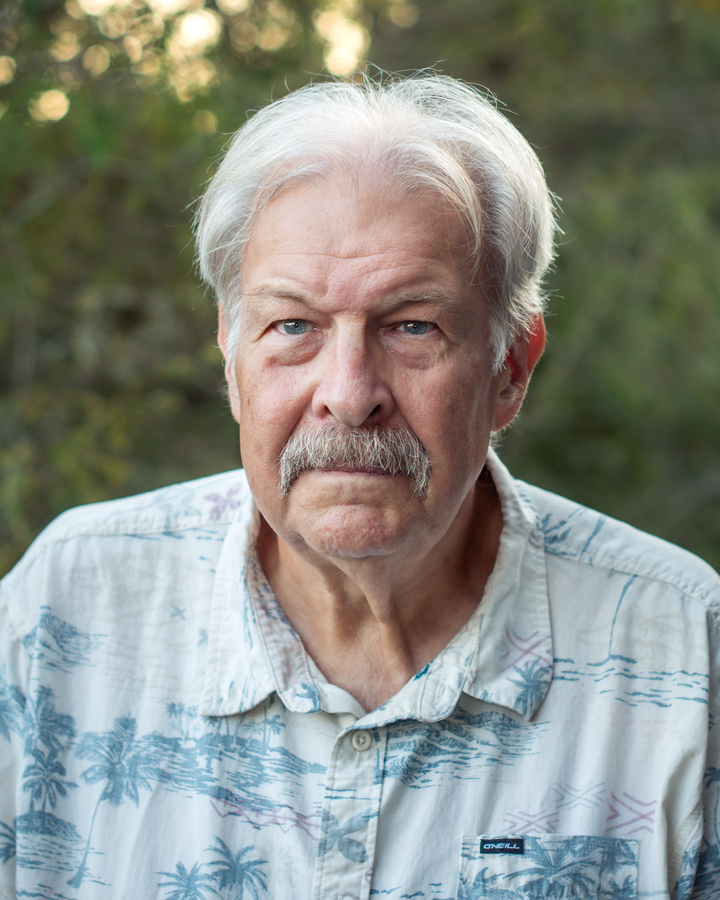

ASHEVILLE, NC, September 14, 2026 /24-7PressRelease/ -- Daniel R. Brooks has been recognized for achievement in the sciences.
Having established a distinguished career as an expert in evolutionary biology, biodiversity, climate change, emerging diseases and theoretical biology over several decades, Dr. Brooks is now recognized with the title of professor emeritus at the University of Toronto since 2011, where his influence continues to shape the academic community.
As a professor emeritus of the University of Toronto, Dr. Brooks continues to provide consulting on integrating evolutionary biology into policy related to emerging diseases and climate change. He has also conducted research fellowships and contributed to science-policy integration work. Aside from his emeritus status, Dr. Brooks continues to serve as an adjunct research professor at the University of Nebraska-Lincoln since 2011.
Dr. Brooks career history in higher education dates back to 1980 when he began serving as a professor at the University of British Columbia in Canada. In this capacity, he developed his expertise in education and mentored students in zoology and evolutionary biology. By 1988, he had accepted a similar position with the University of Toronto, where he contributed significantly to the university's academic reputation through both teaching and research, until reaching emeritus status in 2011. His commitment to advancing scientific knowledge was further reflected in his role as a senior visiting fellow at Collegium Budapest from 2010 to 2011, and the Stellenbosch Institute for Advanced Study beginning in 2017, where he engaged in collaborative research with international scholars.
Earlier in his career, Dr. Brooks completed postdoctoral research at the U.S. National Zoo and the University of Notre Dame. These formative experiences provided him with valuable insights into animal biology and set the stage for his subsequent faculty appointments.
Dr. Brooks's educational background laid a strong foundation for his subsequent achievements in both the sciences and the classroom. He first studied at the University of Nebraska-Lincoln, where he acquired both a Bachelor of Science in Zoology in 1973 and a Master of Science in zoology and animal Zoology in 1975. By 1978, Dr. Brooks had completed a Doctor of Philosophy in biology and biological sciences from the University of Mississippi.
Aside from his primary endeavors, Dr. Brooks's expertise has been acknowledged by his election as a fellow of the Linnean Society of London and a Fellow of the Royal Society of Canada, as well as honorary doctorates from Stockholm University and the University of Nebraska-Lincoln.
Throughout his professional journey, Dr. Brooks became widely recognized for his prolific scholarship. He authored approximately a dozen books and contributed around 400 publications that span topics such as evolutionary biology, biodiversity, climate change and theoretical biology. His most significant contribution was pioneering research programs integrating evolution and ecology. One of Dr. Brooks's most notable projects was leading a decade-long parasite biodiversity and local community training initiative in northwest Costa Rica's conservation area. This effort integrated academic research with community training and supported national ecotourism development strategies. Dr. Brooks's latest book, released in 2024, was nominated for the Grawemeyer Award for Ideas Improving World Order.
Dr. Brooks attributes much of his success to his public high school education at Walt Whitman High School in Bethesda, Maryland, as well as to his experience as a competitive athlete. Earning a silver medal in the Junior Olympics during high school and attending the University of Nebraska on an athletic scholarship andand instilled discipline and perseverance that have guided his sustained efforts over five decades.
Looking ahead, Dr. Brooks intends to continue to devote time to public service initiatives related to climate change and emerging diseases by collaborating with think tanks worldwide and participating actively alongside younger colleagues who share his commitment to global challenges.
# # #
Contact Information
Email: Email Us Here