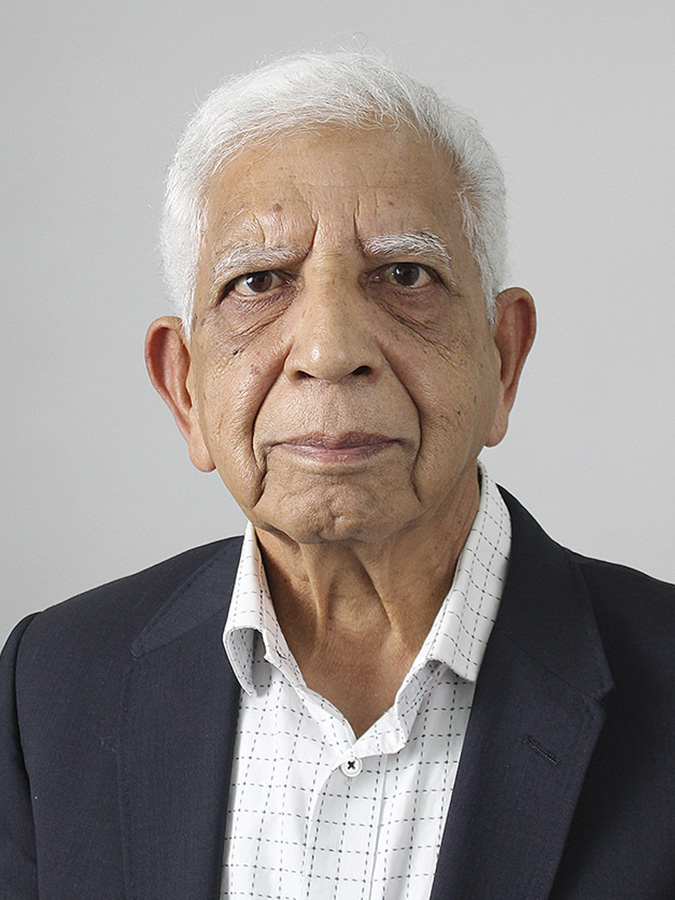

DONCASTER, EAST VICTORIA, AUSTRALIA, September 14, 2026 /24-7PressRelease/ -- Marquis Who's Who, the world's premier publisher of biographical profiles, is proud to honor Muhammad Nawaz with inclusion in Who's Who in the World. An accomplished listee, Mr. Nawaz celebrates many years' experience in his professional network and has been noted for achievements, leadership qualities, and the credentials and successes he has accrued in his field. As in all Marquis Who's Who biographical volumes, individuals profiled are selected on the basis of current reference value. Factors such as position, noteworthy accomplishments, visibility, and prominence in a field are all taken into account during the selection process.
Mr. Nawaz has built a distinguished career spanning four decades in higher education, research and academic administration. His journey reflects a deep commitment to teaching, mentoring and advancing the field of Operations Research and scheduling. Recognized as an expert in these disciplines, Mr. Nawaz has contributed significantly to both the theoretical and practical aspects of optimization and decision sciences.
In his most recent role as a program director in the School of Engineering at RMIT University in Australia, Mr. Nawaz guided academic programs and supported faculty development. During his tenure, he helped in shaping curricula and fostering a collaborative environment for students and colleagues alike. His leadership in this capacity underscored Mr. Nawaz's dedication to educational excellence and innovation within the university setting.
Before his work at RMIT University, Mr. Nawaz served as an associate professor at the University of Engineering and Technology in Taxila, Pakistan. Over many years, he taught, conducted research and administered higher education activities, influencing generations of students and fellow educators.
Mr. Nawaz's educational background laid a strong foundation for his achievements. He earned a Bachelor of Science in Mechanical Engineering from the University of Engineering and Technology in his native Lahore, Pakistan, in 1972, followed by a Master's degree in Industrial Engineering from Pennsylvania State University in 1980, where his research led directly to the creation of a heuristic for flow-shop scheduling problems. These academic accomplishments provided Mr. Nawaz with both the technical expertise and analytical skills that have defined his professional journey.
A defining milestone in Mr. Nawaz's academic legacy was the development of the NEH (Nawaz, Enscore, Ham) algorithm. Conceived during his research at Pennsylvania State University under the supervision of Professor E.E. Enscore Jr. and Professor I. Ham, this algorithm addressed complex flow-shop sequencing problems. The work was published by Elsevier in 1983 in Omega – The International Journal of Management Science under the title 'A Heuristic Algorithm for the M-Machine, N-Job Flow-Shop Sequencing Problem.' The NEH algorithm has since become one of the most influential contributions to scheduling and decision sciences worldwide, widely cited in academic literature and incorporated into advanced optimization techniques, such as genetic algorithms and particle swarm optimization. It remains integral to university curricula globally and stands as a testament to Mr. Nawaz's enduring impact on contemporary research.
Now retired, Mr. Nawaz continues to look ahead with goals that reflect his lifelong devotion to education and knowledge sharing. His legacy is marked by influential scholarship, dedicated service to higher education institutions, and an unwavering commitment to nurturing future leaders in operations research and scheduling.
# # #
Contact Information
Email: Email Us Here