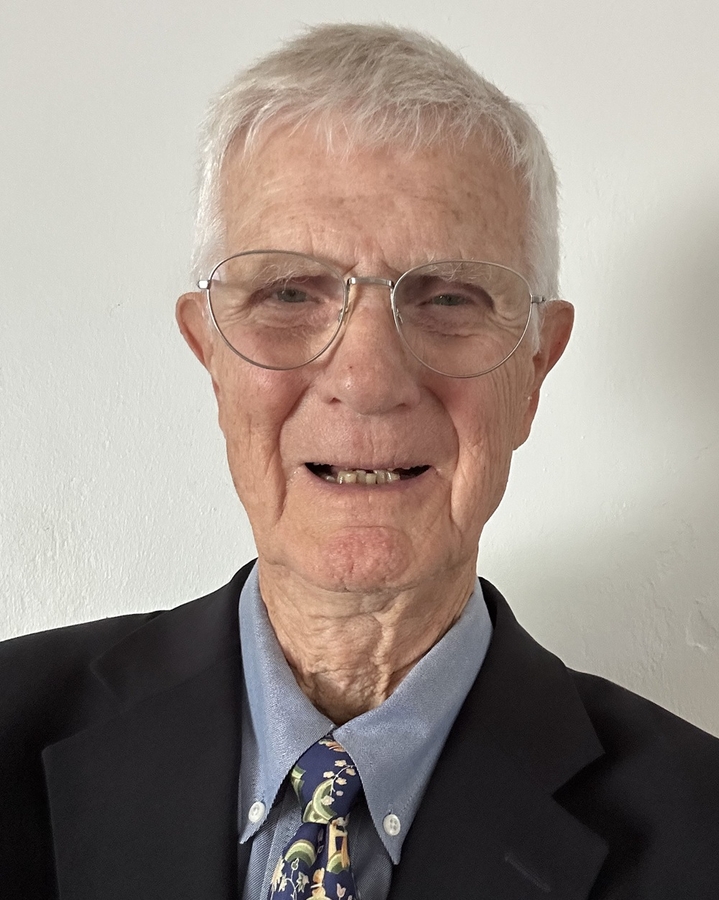

TUCSON, AZ, September 14, 2026 /24-7PressRelease/ -- John Murray has been recognized for achievement in the field of negotiation, conflict management and law.
Mr. Murray's distinguished career in negotiation and conflict management spans several decades and continents, marked by a series of influential academic and consulting roles. Most recently, he has served as an international consultant for negotiation and conflict management with The Bridgeway Group, where his expertise has been sought for projects involving complex political and humanitarian issues, particularly in the Middle East.
Notably, Mr. Murray's work has included training government officials in negotiation skills across many nations, including Iraq, Afghanistan, India, East Timor, Tanzania, Uganda, Palestine, Egypt, France, Britain, Kyrgyzstan and Ethiopia. These experiences have allowed him to facilitate countless applications and training sessions worldwide, furthering his impact on global conflict resolution.
Mr. Murray's final academic position was his appointment as an adjunct professor at Johns Hopkins University's School for Advanced International Studies (SAIS) from 2006 to 2011, sharing his insights on international negotiation with graduate students. He took this position in the Washington DC area after serving for five years as associate director for the Program for the Advancement of Research on Conflict & Collaboration at the Maxwell School of Syracuse University. He also was professor of practice in international relations at the Maxwell School, where he helped shape future leaders in diplomacy and conflict resolution.
In 2002, Mr. Murray began a long-term consultancy with the Palestinian Negotiation Support Unit, an involvement that arose through his colleague Terry Barnett, whom he had known through his work with Professor Roger Fisher at Harvard Law School and with whom he had worked at the World Bank on negotiation training. At the Palestinian NSU, Mr. Murray served as a consultant on strategic analysis, negotiation and conflict resolution. He supported Palestinian negotiators from 2002 to 2008 during Palestine's negotiation with Israel, and has continued to the present day to assist intermittently on either a pro bono or often a contractual basis. While he does not claim credit for any definitive political settlement, Mr. Murray considers this sustained engagement, along with his broader work across the Middle East, among the most meaningful accomplishments of his career.
From 1992 to 1997, Mr. Murray taught conflict management and international law at the American University in Cairo. This period followed his direct involvement supporting his family during a hostage crisis in Beirut and led him to develop lasting relationships with Egyptian scholars and officials. His time in Egypt inspired further work in Somalia advising Puntland leaders on constitutional development during the civil war. Drawing on his knowledge of Islam, Sharia law and democratic governance, he assisted local leaders as they sought to reconcile Islamic principles with democratic institutions. During these years of active work in the Washington D.C. area, Mr. Murray held an appointment as professor at George Mason University, where he contributed to the university's programs in negotiation and conflict management.
Prior to moving to Washington DC, Mr. Murray was professor of international law and negotiation at Texas Tech School of Law beginning in 1982. It was during this time that he began working closely with Roger Fisher, professor at Harvard Law School, after being introduced to him through Tom Stoner in November 1981. In the summer of 1983, Mr. Murray was invited by Roger Fisher to serve as the first executive assistant leading the Conflict Clinic at Harvard University — a formative experience that profoundly shaped Mr. Murray's approach to negotiation.
After earning his law degree, Mr. Murray spent two years as a law associate at Cleary Gottlieb Steen & Hamilton in New York before returning to Iowa as executive assistant to the state's Republican governor from 1970 to 1972. He was then elected to the Iowa State Senate, serving three terms through 1983. During this period, he developed a reputation for applying strategic analysis and negotiation skills to legislative challenges.
Mr. Murray demonstrated editorial leadership as the editor-in-chief of the Iowa Law Review while attending law school. Additionally, he served in the United States Marine Corps, further broadening his perspective on leadership and service.
Throughout his career, Mr. Murray has been deeply involved in civic organizations related to his field. He is a board member of The Bridgeway Group and co-founder and president of Conflict Clinic Inc., organizations dedicated to advancing best practices in negotiation and conflict resolution.
Mr. Murray's academic background has been foundational to his achievements. He earned a Bachelor of Arts from Cornell University before completing a master's degree in public law and government at Columbia University in New York City. He then received a Juris Doctor from the University of Iowa College of Law.
Reflecting on his career, Mr. Murray attributes his success not only to his academic preparation but also to mentorship from influential figures such as Roger Fisher and Tom Stoner, as well as support from friends who introduced him to new opportunities throughout his journey. Mr. Murray emphasizes optimism as essential when confronting complex global challenges; he advocates for incremental progress even when solutions seem distant.
Mr. Murray's contributions have received formal recognition, including the Roger Fisher Life Achievement Award in 2014 as well as honors such as Cornell National Scholars and Athlete of the Year at Cornell University. He is also a member of Phi Beta Kappa and Phi Kappa Phi honor societies.
Beyond professional accomplishments, Mr. Murray was born in Ames and continues to draw inspiration from early experiences rooted in politics and public service introduced by his father. His enduring commitment to negotiation excellence is reflected not only through teaching but also through authoring approximately 40 to 50 articles focused on negotiation theory and practice — reinforcing his belief that effective lawyers must be skilled negotiators capable of resolving conflicts constructively.
Mr. Murray aims to be remembered for a legacy centered on helping individuals navigate serious conflicts toward peaceful, stable and prosperous lives. Though he is not retired and remains actively engaged in the field, he is currently collaborating with a colleague on issues surrounding the Israeli-Palestinian water system. Central to his philosophy is the belief that acknowledging the challenges faced by all parties is the first step toward identifying practical, collaborative solutions.
# # #
Contact Information
Email: Email Us Here