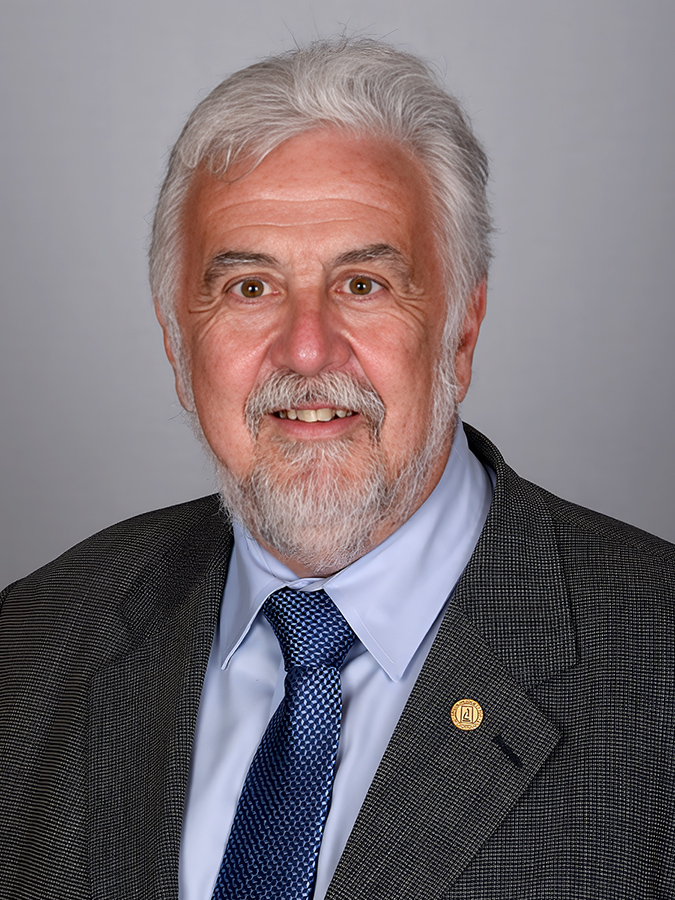

MADISON, WI, September 16, 2026 /24-7PressRelease/ -- Timothy Donohue, PhD, has been recognized for achievement in higher education.
Dr. Donohue's distinguished career in microbial science and renewable energy research spans more than four decades, marked by significant leadership roles and pioneering scientific contributions. Since 1986, Dr. Donohue has served as a professor of bacteriology at the University of Wisconsin-Madison, where he has become internationally recognized for his expertise in the development of technologies that convert renewable resources into valuable products traditionally derived from petroleum. His research has focused on harnessing the power of microbes to transform solar energy and agricultural residues into revenue-generating products, advancing both the scientific community and developing industry applications.
Since 2007, Dr. Donohue has served as a principal investigator and director of the Great Lakes Bioenergy Research Center (GLBRC), a U.S. Department of Energy-funded bioenergy research center led by the University of Wisconsin-Madison. Over nearly two decades, he has led interdisciplinary teams responsible for publishing thousands of peer-reviewed manuscripts, generating more than 250 patents, securing over 100 licenses and launching close to 10 startup companies. The GLBRC has trained more than 1,500 scientists, contributing significantly to the biotechnology innovation ecosystem in the U.S. Dr. Donohue considers his ability to unite researchers from diverse disciplines among his most notable achievements.
In 2017, Dr. Donohue assumed the directorship of the Wisconsin Energy Institute, a cross-campus renewable energy research institute reporting directly to the vice chancellor for research at the University of Wisconsin-Madison. Under his guidance, the institute has expanded its reach across multiple colleges and schools within the university, leading initiatives in grid technologies, carbon dioxide conversion into cement, and the transformation of nonfood crop materials into fuels and products. Notably, the institute's largest endeavor is the GLBRC, which is recognized as one of four U.S. Department of Energy bioenergy research centers in the country.
Early in his career, during the late 1980s, Dr. Donohue directed what was then the largest National Institutes of Health Biotechnology T32 training grant on campus, a program designed to bring together physical and biological scientists to advance basic science and support biotechnology industries. Today, the extensive funding at Great Lakes Bioenergy has allowed him to continue assembling collaborative teams to accelerate basic science discoveries in support of agriculture, biotechnology and the biomedical sciences, while also uncovering findings relevant to healthcare.
Before joining the University of Wisconsin-Madison faculty, Dr. Donohue completed postdoctoral research at the University of Illinois at Urbana-Champaign from 1979 to 1986. There, he also worked as a staff scientist, developing his expertise in microbiology and laying the groundwork for his future leadership in bioenergy research. Notably, Dr. Donohue met his wife, Dr. Patricia Kiley, during his postdoctoral tenure, where she now chairs the department of biomolecular chemistry at the University of Wisconsin-Madison.
Dr. Donohue's academic journey began with a Bachelor of Science in life sciences from the Polytechnic Institute of Brooklyn (now the school of engineering at New York University Tandon) in 1975. He went on to earn both a Master of Science and a Doctor of Philosophy in microbiology from Pennsylvania State University in 1980.
Membership in professional organizations has played an important role in Dr. Donohue's professional life. He is a member of the American Association for the Advancement of Sciences, the Federation of American Societies for Experimental Biology, the American Chemical Society and the American Soeicty for Microbiology (ASM). From 2013 to 2016, Dr. Donohue served as Incoming President, President and Past President of the ASM, the nation's oldest and largest biological sciences professional society, before serving as the secretary on the board of directors until his term concluded in 2024. Dr. Donohue's election as a fellow of both the American Academy of Microbiology in 2000 and the American Association for the Advancement of Science in 2009 further underscores his standing within the scientific community. In 2024, Dr. Donohue was recognized for his numerous contributions to science by the United States Senate.
Among his other honors, Dr. Donohue received the Pound Research Award from the college of agricultural and life sciences at the University of Wisconsin-Madison in 1993. He credits much of his success to the dedication and brilliance of his colleagues and students, emphasizing that their collective efforts have been instrumental in achieving advancements throughout his career.
Born in New York City, Dr. Donohue's early experiences shaped his lifelong passion for science. He has dedicated his career to sustainable solutions through interdisciplinary collaboration.
Looking ahead, Dr. Donohue remains committed to supporting young researchers by expanding opportunities for them to secure funding and pursue rewarding academic careers despite contemporary challenges. He continues to direct efforts at the Wisconsin Energy Institute while partnering with various organizations, such as the Wisconsin Alumni Research Foundation, to advance industry commercialization of research findings. Dr. Donohue's enduring dedication to mentoring emerging scientists reflects a deep commitment to shaping future leaders in science and technology.
# # #