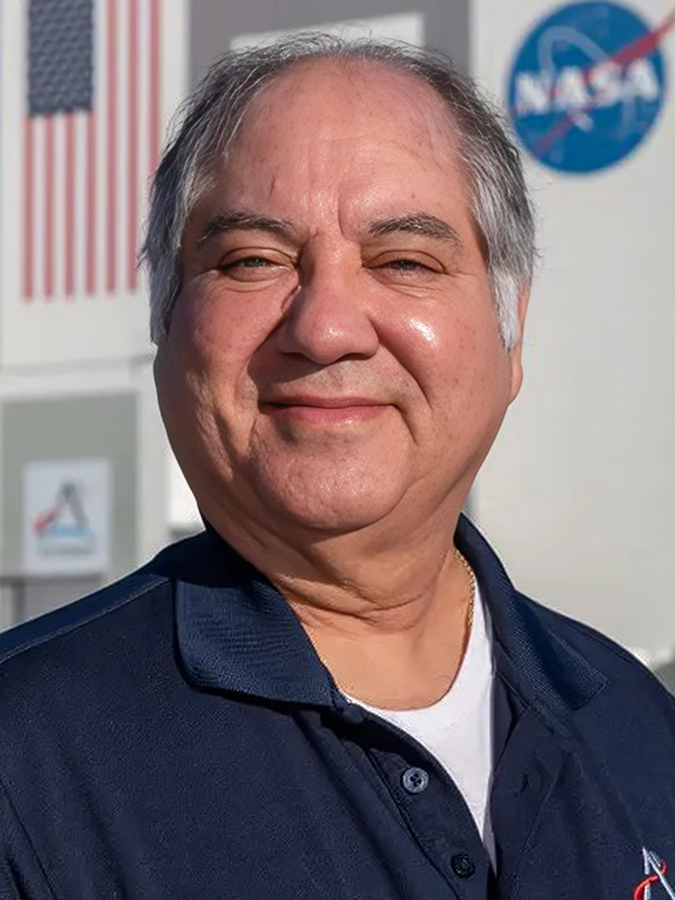

DALLAS, GA, October 19, 2026 /24-7PressRelease/ -- Jose O. Perez Morales has been recognized for achievement in engineering and construction.
Mr. Perez Morales's distinguished career in engineering and construction is marked by pivotal roles and transformative projects, primarily with NASA. Most recently, he served as a senior project manager at the agency, a position he held until his retirement in 2025. Throughout his tenure, Mr. Perez Morales played an instrumental role in the planning, design, construction and activation of some of NASA's most significant infrastructure at Kennedy Space Center.
From 1985 to 2025, Mr. Perez Morales was based at Kennedy Space Center. He was hired as a lead designer, later promoted to project manager, and finally to senior project manager. During these four decades, he managed a broad array of facility development, refurbishment and research initiatives. Notably, he oversaw the Space Station Processing Facility, responsible for every phase from initial planning through activation. This three-story, 457,000-square-foot building became the operational hub for the International Space Station program, supporting module processing and housing over 1,000 personnel. Mr. Perez Morales also directed the creation of the Component Refurbishment Facility, which provided advanced chemical analysis and testing services for orbiter components, and led the construction of the Space Shuttle Main Engine Facility for postflight inspections and maintenance.
Mr. Perez Morales's expertise extended to numerous other high-profile projects. He managed the planning and construction of the Space Experiment Research and Processing Laboratory in partnership with the State of Florida, developed key infrastructure, such as Space Commerce Way, to support future research parks.
Among Mr. Perez Morales's proudest achievements was his leadership on experimental projects, such as the Magnetic Launch Assist initiative under NASA's Advanced Space Transportation Program. Tasked with developing a magnetic levitation system to propel rockets along a six-mile rail track, he collaborated with teams in Huntsville, Alabama, and across multiple agencies to advance this innovative technology.
Another highlight as Senior Project Manager responsible for all development at Launch Pad 39B's and the Vehicle Assembly Building was the transformation of both facilities for the Artemis program. At Launch Pad 39B he managed the demolition of legacy structures and systems dating back to Apollo and shuttle missions, replacing millions of feet of copper cable with modern fiber optics and integrating new systems to support next generation launches. He also led upgrades to critical systems, including lightning protection towers and environmental control systems at both major facilities. Mr. Perez Morales's work on emergency egress systems and hydrogen 1.4-million-gallon storage tanks further exemplified his commitment to safety and innovation.
At the Vehicle Assembly Building HB3 he led modification for the Artemis Program installing new platforms that consist of 10 levels with 2 segments of platforms in each level. Each platform segment weighs approximately 300K lb. Platforms are designed to be able to reposition them up or down and once the Artemis vehicle is in place the close wrapping around the vehicle to provide access to operators for processing.
Earlier in his career at NASA, Mr. Perez Morales faced one of his most solemn responsibilities following the Challenger accident in January 1986. He was tasked with preparing an abandoned underground silo for the entombment of recovered shuttle components, a duty that left a profound impact on him both personally and professionally. The experience led to additional assignments overseeing major facility projects and cemented Mr. Perez Morales's reputation as a leader capable of handling sensitive and complex challenges.
Before joining NASA in 1985, Mr. Perez Morales built a strong foundation in engineering through private sector experience in Puerto Rico. For more than five years after earning his degrees, he worked alongside his father at their family-owned construction company. Together, they completed extensive construction projects and consulted for one of Puerto Rico's largest banks, often taking over unfinished developments left by bankrupt contractors. During this period, Mr. Perez Morales also served as consultant to his father's marina business, contributing to its design and eventual realization.
Mr. Perez Morales's academic background laid a strong foundation for his professional accomplishments. He earned a bachelor's degree in civil engineering from the University of Puerto Rico in Mayagüez in 1976 before completing a master's degree in structural design/engineering on campus in 1978. The rigorous five-year engineering program demanded more credits than many comparable programs in the U.S., which contributed significantly to Mr. Perez Morales's technical preparation and later success at NASA.
Throughout his career, Mr. Perez Morales actively contributed to professional organizations within his field. He served as the president of the Association of Puerto Rican Engineers in Florida under the Puerto Rican College of Engineering and Surveyors of Puerto Rico for two years and is recognized as a founding member of the organization.
Beyond his technical achievements, Mr. Perez Morales has been deeply involved in civic outreach efforts aimed at inspiring future generations of engineers and scientists. As part of NASA's outreach program, he volunteered as a speaker at colleges and universities across the eastern U.S. and Puerto Rico, encouraging students, particularly those from underrepresented backgrounds, to pursue careers in mathematics, science and engineering. Notably, Mr. Perez Morales's approach to leadership was shaped early on by observing environments where responsibility was often avoided. Instead, he consistently volunteered for major initiatives whenever possible, a proactive mindset that propelled him into increasingly complex assignments throughout his time at NASA.
Mr. Perez Morales's professional excellence has been recognized through several prestigious awards from NASA, including the Exceptional Service Medal, the Silver Snoopy Award and an Exceptional Achievement Medal. Reflecting on his career, he notes that, in his experience, the people who ultimately succeed are not necessarily the most academically gifted, but those who are willing to take action, persevere and remain committed even when they encounter challenges.
# # #
Contact Information
Email: Email Us Here