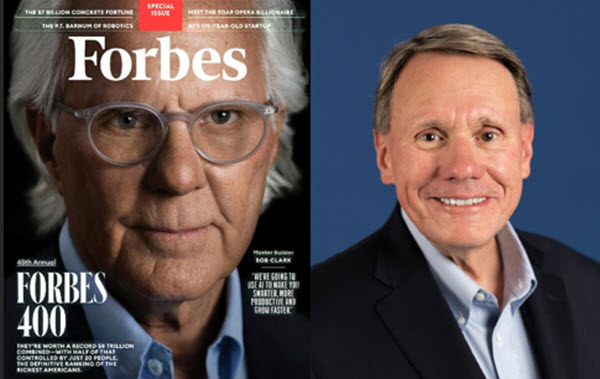

CUMMING, GA, November 09, 2026 /24-7PressRelease/ -- Dr. Steve Munkeby, author, AI strategist and founder of NextGen Publications, LLC and Trusted Decision Systems, Inc., was selected by Marquis Who's Who for a prominent feature in the October/November 2026 Washington, DC, regional issue of Forbes magazine.
Artificial intelligence has become remarkably effective at producing answers. It can draft reports, summarize documents, compare sources and generate polished explanations in seconds. Yet the central challenge facing courts, businesses, news organizations and public institutions is no longer access to information. It is determining how competing information should be understood.
Dr. Munkeby has met that challenge and shaped his work over the past several years. He has written 17 books addressing artificial intelligence, structured thinking, education, research, ethics and responsible decision-making. These books were not simply a publishing portfolio. They became field research focused on a larger question: How can AI help people evaluate disagreement without replacing human judgment?
Today, opposing groups often rely on overlapping facts while reaching sharply different conclusions. Legal filings may present conflicting narratives based on the same events. News organizations must evaluate competing sources under intense deadlines. Corporate leaders face regulatory, operational and ethical claims that are difficult to compare. Individuals encounter experts who sound equally confident but offer contradictory advice.
Per Dr. Munkeby, the problem is not always that one side is truthful and the other false. Claims may contain different evidence, assumptions, definitions, omissions, priorities and levels of uncertainty.
This insight led to the development of Synthesizing Truth™, a patent-pending analytical system being advanced through Trusted Decision Systems, Inc. Its purpose is not to declare an absolute winner or assign a simplistic true-or-false label. Instead, it organizes competing claims into a transparent analytical structure.
The system maps stakeholder positions, connects claims to evidence, identifies agreement and divergence, exposes unstated assumptions, evaluates internal consistency, highlights missing information, and produces a structured synthesis for human review. The goal is to show where available information aligns, where it conflicts and where confidence should remain limited.
This differs from traditional fact-checking, which often evaluates individual statements. Synthesizing Truth™ examines the broader architecture of an argument and the relationships among claims, evidence, context and uncertainty.
In judicial settings, it could help organize complex filings and reduce cognitive overload without replacing the judge. In journalism, it could help editorial teams compare sources and identify unresolved uncertainty before publication. In business, it could support regulatory reviews, strategic decision-making, risk analysis and internal dispute resolution. Similar applications may exist in education, public policy, healthcare and individual decision-making.
The governing principle is simple: AI should support judgment, and not become the judge.
The next evolution of AI may be less about generating more information and more about helping people understand the information already surrounding them. Institutions do not merely need faster answers. They need transparent ways to compare claims, reveal assumptions, recognize missing evidence and make responsible decisions.
In an age of information abundance and fragmented interpretation, structured clarity may become essential infrastructure. This would not be automated truth. It is better support for responsible human judgment and action.
# # #
Contact Information
Email: Email Us Here