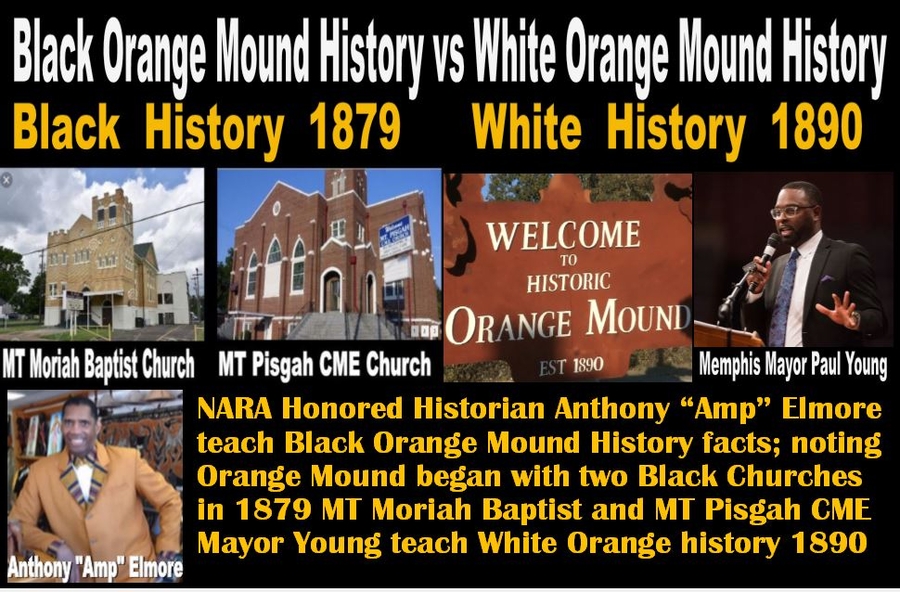

MEMPHIS, TN, January 15, 2026 /24-7PressRelease/ -- Click here to view Black Orange Mound History.Com
January 15, 2026 marks the 97th Birthday of Dr. Martin Luther King Jr. who was killed in Memphis April 4, 1968. In he city of Memphis 58 years after the death of Dr. Martin Luther King Jr. there exist a practice history, history and culture of White Supremacy, Racism and Black on Black Racism whereas Black Memphis Mayor Paul Young installed a historic Marker that notes Orange Mound established in 1890 erases the Black history Dr. Martin Luther King Jr. gave his life in Memphis to protect.
Click here to see a 1959 picture of Dr. Martin Luther King Jr. in Orange Mound at the Historic MT Moriah Baptist Church in Orange Mound whereas a Historic Marker is installed on the grounds that says the Church was Founded in 1879.
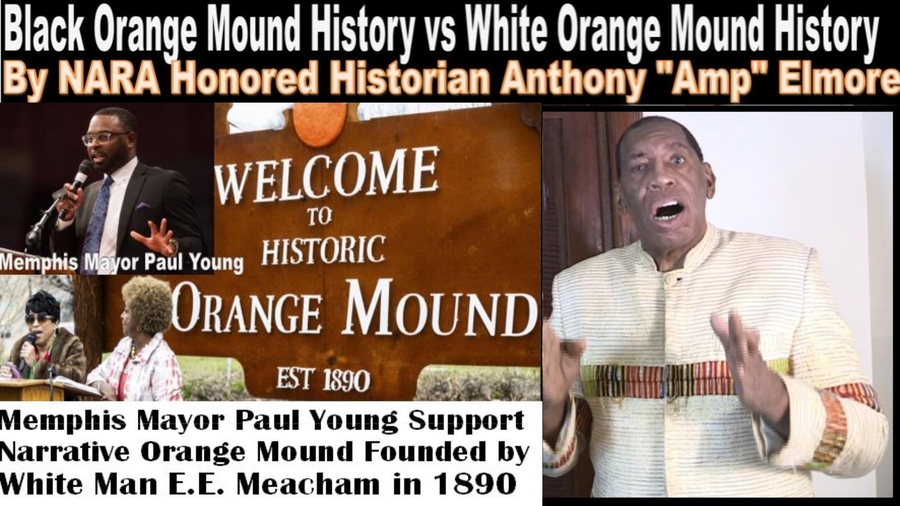
MT Moriah Baptist Church purchased the Land where the Church sits today at 2634 Carnes Avenue in Memphis in 1883. Black Memphis Mayor Paul Young and Black Memphis leaders uphold White Supremacy naming a White man E.E. Meacham Orange Mound's Founder in 1890 ignoring the fact that a Church and school existed before the Whiteman E.E. Meacham who only registered to sell plots of land. There is no evidence of an E.E. Meacham Shotgun house Community.
In a city where 63% of the population is Black, the historical landscape of Memphis presents a striking contradiction: while Memphis has a "Cotton Museum" that stands prominently to preserve the legacy of White Supremacy and Black enslavement there exist a culture and practice in Memphis of Black history marginalization and Black History erasure.
The unspoken word in Memphis, Tennessee there has long been a void silence whereas there is a comprehensive silence regarding the opening or discussion MEMPHIS, TN, January 15, 2026 /24-7PressRelease/ -- Click here to view Black Orange Mound History.Com
In a city where 63% of the population is Black, the historical landscape of Memphis presents a striking contradiction: while a "Cotton Museum" stands prominently to preserve the legacy of a commodity, there has long been a void where a comprehensive Black Memphis History Museum should be. Into this systemic emerged as more than just Black Memphis erasure there exists a White Supremacist fortress designed to protect White Supremacy and force the marginalization and erasure of "Black Memphis History.
The significance of the category Black Orange Mound History lies in its role as a necessary corrective to what NARA honored historian Anthony "Amp" Elmore identifies as a culture of white supremacy and historical "whitewashing." For decades, the narrative of Orange Mound whereas the White Real Estate salesman E.E. Meacham is falsely credited for planning Orange Mound the longest and continuous Black community in the United States built by and for African Americans.
Click here to view an August 6, 2024 national news release titled: Memphis World Kickbox Champ & filmmaker Elmore Ask Memphis Mayor Paul Young to Give Black History & Culture a Chance Learn about the Black Memphis History museum a digital masterpiece created by Anthony "Amp" Elmore.
In the past Blacks in Memphis had to ask White masters for an opportunity in Memphis in 2026 and before Black have to ask "Black Gate Keepers" for a chance for Black opportunity and Black History inclusion. The culture and practice in Memphis is to erase "Black Memphis History."
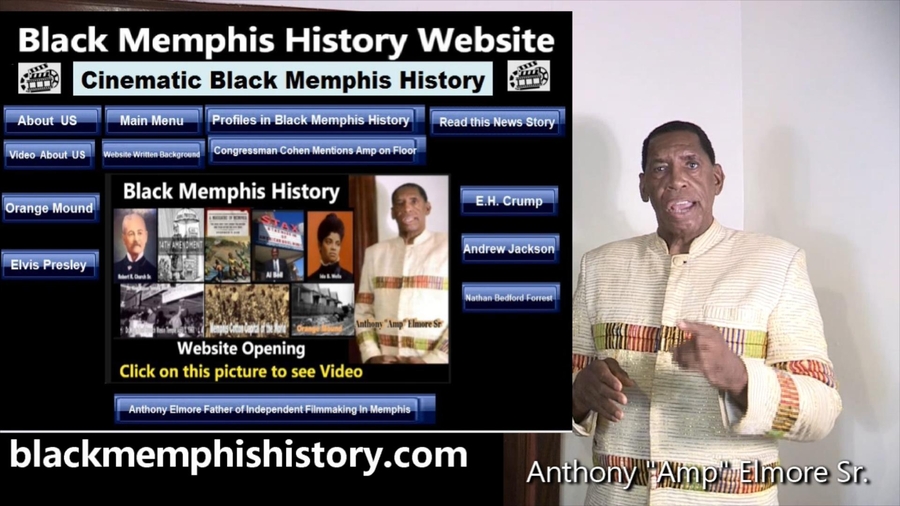
"The Black Memphis History Website created by Anthony "Amp" Elmore serves as a digital cinematic library chronicling 200 years of Black Memphis history. The website explores the rich history of Black Memphis over the past two centuries.
Visitors can discover key figures, events, and landmarks that have shaped the city's legacy. It provides a comprehensive resource for learning about the much erased African American contributions, struggles, and cultural heritage in Memphis. The website preserves and celebrates the cultural heritage of African Americans in Memphis. It ensures that their stories are documented and accessible for future generations.
By recognizing their heritage, African Americans gain a sense of pride and empowerment. It inspires activism, resilience, and positive change. Elmore's work bridges the gap between Africa and Black Americans. It promotes cultural diplomacy, understanding, and collaboration across continents.
There exist in Memphis today a continued concerted white supremacist narrative filtered through the lens and prioritized via white-led histories or was echoed by those who unknowingly adopted those same restrictive White narratives of the Black Memphis community of Orange Mound.
On December 7, 2025 Black Memphis Mayor Paul Young installed a sign in the Historic African American Memphis community of Orange Mound that reflect White Supremacy, Racism and Black on Black Racism that disregards and disrespects the facts of history.
While this historical document is long: Click here to view a January 7, 2026 national News Release title: Memphis Leaders use function & Authority to erase Black History of Memphis Community of Orange Mound
There is a cultural war being waged in Memphis, and the front line isn't at a museum or a government office—it's digital. While the city of Memphis clings to its "Cotton Museum," a monument to a commodity of the past, whereas five-time World Kickboxing Champion and NARA-honored historian Anthony "Amp" Elmore" has built the future: The Black Memphis History Digital Museum.
More Than a Website: An Independent Digital Super-Museum
Make no mistake: The BlackOrangeMoundHistory.com is not just a collection of links. It is a massive, independent digital archive that functions with more agility, more depth, and more raw truth than every mainstream Memphis institution combined.
Anthony "Amp" Elmore has documented more "Black Memphis history" via digital technology than all the Memphis institutions put together."
Click here to view a November 22, 1987 L. A. Times archived New story titled: Films going into production: THE CONTEMPORARY GLADIATOR.
In 1987, Elmore unknowingly entered the realm of the American Elite. In the history of the "Biopic"—the ultimate art form reserved for legends like Muhammad Ali, Jack Johnson, and Mike Tyson Anthony "Amp" Elmore stands as the only kickboxing World Champion in world history to write, produce, and star in his own 35mm theatrical release titled "The Contemporary Gladiator."
This achievement was a contrast to the 1973 song by Black Soul Singer Gladys Knight "Midnight Train to Georgia." The song tells the story of a man who went to Los Angeles who had a dream to become a superstar who had to sell his old car to go back Georgia to a life he once knew.
In 1972 Anthony "Amp" Elmore who moved into the African American community of "Orange Mound" at 19 years old in 1972 would in 15 years make "World Black History" whereas Anthony "Amp" Elmore is fighting Memphis White Supremacy, Racism and Black on Black Racism to get his beloved Black Memphis Community noted for its achievement in "World Black History."
Via the American tragedy where Black dreamers go to Los Angeles where dreams die. Anthony "Amp" Elmore didn't board that train to Georgia instead Anthony "Amp" Elmore took his used 1973 Dodge sportsman Max-Wagon Carpet installation van to Georgia to rent an arriflex 35mm Hollywood Film camera and filmmaking equipment to make a movie about his life story in Memphis.
Not only did a 35mm Film camera did not exist in Memphis, there was not a film lab in Memphis that could develop 35mm film. There was MPL or Motion picture Laboratories on Main Street that developed 16mm film but not 35mm film.
Click here to see the a scene shot in the 1988 film "The Contemporary Gladiator" titled "The Africa and Dinner Scene"
Anthony "Amp" Elmore via a student at Hamilton High school in 1970/71 his brothers joined the Marine Corps it was a time in America where Black youth were drafted in the military. In 1967 Muhammad Ali refused to be inducted in the military. Anthony "Amp" Elmore was part of "The Black resistance Culture whereas Black youth wore long Afro-hair styles. The father who would later go to Kenya with Elmore had a negative view of Africa. Anthony "Amp" Elmore shares a scene and time in America of Black Youth challenging the Status quo.
In this movie scene Anthony "Amp" Elmore whose mother passed in 1984 got permission from his father to take the furniture from his fathers house and bring it to his Orange Mound home to shoot the 1987 scene in Memphis. Much of the 1988 Film Release was filmed at Elmore's Orange Mound home. Clearly Orange Mound is "The Birthplace of Independent 35mm Theatrical Filmmaking in Memphis."
In 1982 a group of then Memphis State students created what Elmore believed was a 16mm film titled: "I was a Zombie for the FBI." This classic Memphis film was directed by Marius Penczner. The film was first released on USA Network in 1995.
I Was a Zombie for the FBI. While it has gained a cult following over the decades the project while taunted in Memphis as brilliant and ground breaking film; "I was Zombie for the FBI" was not shot on film, instead the project was produced via ¾ inch (U-matic) video.
In 1987 Anthony "Amp" Elmore enrolled in then Shelby State College and took an English and Typing Course. Elmore hired a Northside High School senior by the name of Andre Bady whereas Elmore converted his Orange Mound home into a "Film Production Studio."
Anthony "Amp" Elmore reached out to Marius Penczner to direct his film. Marius Penczner politely declined to direct the film. It was not until decades later Elmore understood why Marius Penczner declined to direct the film. Marius Penczner had never produced not only a 35mm Theatrical Film whereas his 1982 project was produced on video and never reached a movie theatre.
Anthony "Amp" Elmore credits Marius Penczner for giving him the "Land Mark Filmmaking Advice." Penczner introduced Elmore to the 1982 book Independent Feature Film Production: A Complete Guide from Concept Through Distribution by Gregory Goodell, was first published in 1982.
Some later editions mention a 1983 date, but the original release through St. Martin's Press occurred in 1982. This book became widely known as the "filmmaker's bible" because it was one of the first comprehensive guides to explain the technical, legal, and financial steps required to create a professional independent film.
The significance of the November 22, 1987, Los Angeles Times story, which archives Anthony "Amp" Elmore's film The Contemporary Gladiator as being in production, serves as an undeniable forensic record that pre-dates the 1989 release of Jim Jarmusch's Mystery Train.
This article acts as a "smoking gun" in the historical record, proving that Elmore's production was recognized by a major national publication as a professional 35mm theatrical feature while the local Memphis film establishment, under the leadership of Film Commissioner Linn Sitler, allegedly chose to ignore it.
The existence of this national press coverage reveals a sharp contrast between national recognition and local erasure; it suggests that while Hollywood and the broader film industry saw a pioneer in Orange Mound, the Memphis film hierarchy was actively constructing a narrative that prioritized white "indie" cinema over the historic breakthrough of a Black world champion kickboxer and filmmaker.
In the context of 2026, the L.A. Times story stands as evidence of a "planned strategy" of historical negationism used to protect white-centric narratives of "Memphis Movie Making." By installing a historical marker at G.E. Patterson and Main Street that credits the White produced film Mystery Train as the first Memphis produced independent 35mm theatrical film, the city utilizes its official authority to "erase" the technical and cultural milestone achieved by Anthony "Amp" Elmore who had never walked on a film set and who had never taken a lesson in Filmmaking.
This practice Black erasure is identified as a combination of White Supremacy, which centers white creativity as the "birth" of local cinema, and "Black-on-Black Racism," where Black elected officials remain silent or complicit in this erasure to avoid challenging established power structures. This institutional silence effectively steals the legacy of Orange Mound as the true birthplace of modern independent filmmaking in Memphis, replacing a story of Black self-determination with a narrative of white revitalization.
Furthermore, this erasure is not merely a local oversight but is framed as part of a broader systemic practice by organizations like Indie Memphis, who are seen as parties to the silencing of Black film history. By failing to rightfully acknowledge "Anthony "Amp" Elmore as the "Father of Independent Filmmaking in Memphis" and maintaining the White Mystery Train myth, these institutions perpetuate a "plantation mentality" that subordinates Black achievement.
The proximity of the *Mystery Train* marker to the site where Dr. Martin Luther King Jr. was assassinated and the 1866 Memphis Massacre adds a layer of tragic irony, as the same ground where Black blood was shed for dignity is now used to host a narrative that racially extricates "The Contemporary Gladiator" World's first kickboxing film in World Film history.
While unknown and untold in the City of Memphis Anthony "Amp" Elmore's 1988 film Release made not just Black Memphis history, this film made "World Film History" whereas "The Contemporary" is the 1st Kickboxing Film in World Film History.
Karate/Kickboxing is truly an authentic global sport whose origins trace 1000's of years to the Pyramids in Egypt and is known and practiced worldwide.
The L.A. Times archive remains the primary evidence that Elmore's work was a "Black Heritage Asset" that existed and was nationally documented before the city's official film history began.
In 1987 Anthony "Amp" Elmore did not ask Hollywood for a seat at the table. Anthony "Amp" Elmore turned his Orange Mound home into a Hollywood Film set.
Click here to view the video titled: Anthony Amp Elmore from Kickboxer to Film Director/ Producer
The video shows Anthony "Amp" Elmore on the Memphis T.V. Channel 5 news 46 years ago in 1980 whereas they show Elmore fighting Kickboxing on a boxing card a the then Holiday In River Mount Hotel in 1979.
In regards to the Gladys Knight 1973 Song "Midnight Train to Georgia." No Black person has to travel to L A to get a break in the film Industry in 2026 whereas Georgia has created a multi-Billion dollar Film Industry. Whereas Black Film maker Tyler Perry is a Billionaire in 2026 whereas in Memphis, Tennessee the City of Memphis Film Commission Linn Sitler promotes only White Films and White approved narratives.
Click here to see Video titled: Ms. Ann White Woman Shaped Memphis Culture History and Art . In 2026 in Memphis Linn Sitler Memphis film Commissioner continues to shape Memphis via the Narrative of a plantation mentality. Please watch the above video. Click link.
In 2026 Memphis continues to operate via a "plantation mentality" where as the City of Memphis history and culture is only seen via the lens of Southern White Narratives.
Click here to view the video titled: Black Memphis History E H Crump ran Robert R Church Jr & Black Leaders out of Memphis
Former Memphis Mayor E.H. Crump known as boss Crump ran Memphis with an "Iron Fist." Crump ran all Black leaders out of Memphis and made the KKK leader Clifford Davis Police Chief. Black history was erased in Memphis and in 2026 many Black leaders continue to abide by the "E.H. Crump Legacy of erasing Black history.
Anthony "Amp" Elmore work has raised Orange Mound to International heights via "The Global Power of African Cultural Diplomacy.
Elmore's work has elevated Orange Mound from a local neighborhood to a global stage. His efforts in African Cultural Diplomacy bridging the gap between Memphis and the Motherland—have been officially acknowledged by the National Archives and Records Administration (NARA).
100% Uncut in Germany: His 1987 film "The Contemporary Gladiator" was translated for a European audience, proving that the Black Memphis narrative is a global commodity.
The Safari Initiative: From creating the "Most African Home in America" to designing a Mud Cloth tuxedo for President Obama, Elmore has used film and culture to link Orange Mound directly to the roots of the African continent.
In a city that is 63% Black, the absence of a physical Black Memphis History Museum is a testament to the "Culture of Erasure" and White Supremacy. Anthony "Amp" Elmore has countered this by creating the largest digital Black Memphis history library in American film history.
Using footage captured in 1987 and 1988 and creating the 2019 film titled; "200 Years of Black Memphis History"
In 2019 in celebration of the 200th Bicentennial Anniversary of Memphis Anthony "Amp" Elmore created a video titled "200 Years of Black Memphis History." Black leaders specifically Black Shelby County Mayor Lee Harris wanted no association to the movie "200 Years of Black Memphis History. White Memphis Shelby County Film Commissioner Linn Sitler would not allow Anthony "Amp" Elmore's move 200 years of Black Memphis history to be a part of the 200th Celebration of Memphis.
Anthony "Amp" Elmore via a challenge to Memphis White Supremacy Racism and Black on Black Racism whereas he was not allowed to be a part of the Official Celebration of of Memphis and Shelby County's bicentennial Anthony "Amp" Elmore rented the Malco Majestic Theatre to show the movie. In Addition Anthony "Amp" Elmore released the movie concurrent on You Tube with the film showing at the theatre. Anthony "Amp" Elmore's plan was to use You Tube as an official date stamp showing the movie premiered on You Tube May 22, 2019 the exact date as the birth of Memphis.
Click here to see the entire film "200 years of Black Memphis History" that is 1:38 minutes long.
In order to fight Memphis White Supremacy, Racism and Black on Black Racism Anthony "Amp" Elmore converted his movies into short Black Memphis history shorts. These short videos became the 1st place of Black Memphis History .Com
Elmore has created hundreds of short films and news stories that serve as a time capsule of a people. He has transformed "movie clippings" into a tool to fight against Memphis Black History erasure.
Anthony "Amp" Elmore is not just a filmmaker; he is the "Father of Black Orange Mound History." His digital museum provides a voice that is "unknown and untold" in the traditional Memphis record. While gatekeepers and those who adopt "white narratives" try to change the story of Orange Mound, the search engines of 2026 tell the real story.
The "Black Narrative" is no longer waiting for a museum curator to approve it. It is alive. It is digital. It is BlackOrangeMoundHistory.com
The inclusion of "Black Orange Mound History" as told by NARA Honored historian and Memphis 1st 35mm Theatrical Filmmaker Anthony "Amp" Elmore notes; a distinct space is essential because it distinguishes between the geography of the neighborhood and the soul of Black people in Memphis.
Just as Black History Month exists to highlight stories omitted from the standard curriculum, the creation of the category "Orange Mound Black History" created by Anthony "Amp" Elmore provides a platform for a narrative that does not seek permission from the status quo. It counters "Black-on-Black racism" by reclaiming the story from those who have been marginalized by their own city's historical institutions.
Anthony "Amp" Elmore the father of Black Memphis History created The Digital Voice to tell the unknown and untold Black Memphis history. In 1987 Anthony "Amp" Elmore started production of his 1988 Semi-auto biographical film titled "The Contemporary Gladiator.
The Unknown and untold story never revealed to Anthony "Amp" Elmore why he encountered so much resistance and cover up regarding his 1988 Film release "The Contemporary Gladiator." Unknown to Anthony "Amp" Elmore he a Black man was the 1st in Memphis history to write, produce, direct, help score Memphis 1st Independent 35mm Theatrical Film.
Anthony "Amp" Elmore explains; I was not this dynamic super 35mm Theatrical Filmmaker. Elmore admits if I understood what goes into making a 35mm Theatrical film I would not have the courage to make a 35mm film.
Elmore on the other hand I gained an education rare to the best of Americans. In 1981 Anthony "Amp" Elmore was the 1st to bring E.S.P.N. to Memphis. Because Anthony "Amp" Elmore was the promoter he had to meet with the E.S.P.N. production team that brought the E.S.P.N. Truck to Memphis.
Anthony "Amp" Elmore brought National Television to Memphis Memphis City officials were thrilled and sadden at the same time. The moment was "Bitter/Sweet" Anthony "Amp" Elmore had to meet with Memphis Mayor Wyeth Chandler and Memphis officials had to meet with E.S.P.N.
The them Memphis "Cook Convention Center" had large Windows whereas E.S.P.N. required that those windows be covered up from Sunlight. A planned production had to be put in place whereas Anthony "Amp" Elmore the fight promoter had to know every detail of a preplanned E.S.P.N. production.
Anthony "Amp" Elmore had access to the E.S.P.N. Truck. Elmore would also become a then PKA Color commentator and producers whereas Anthony "Amp" Elmore produced E.S.P.N. fights in Memphis and an E.S.P.N. Fight in Little Rock Arkansas when Bill Clinton was Governor of Arkansas in 1983.
Elmore visited E.S.P.N. headquarters Bristol, Connecticut. In 1984 when Elmore loss what he called an unfair decision in October of 1984 against Tony Palmore in Miami, Florida Elmore promoted a KICK Title bout whereas he fought "Super Ray Williams" the Kick or "Karate International Council of Kickboxing" Superheavyweight Title defeating Super "Ray Williams."
Anthony "Amp" Elmore used his production knowledge to produce his own Kickboxing bouts. Whereas in 1986 Anthony "Amp" Elmore met with the President and owner of Black Entertainment Television Bob Johnson whereas Anthony "Amp" Elmore promoted events that aired of "Black Entertainment Television"
While never producing a 35mm film Anthony "Amp" Elmore knew how to produce a Kickboxing show. For three years Anthony "Amp" Elmore produced Kickboxing bouts in Memphis whereas he owned 3 years of video Footage of his and other footage he owned.
Anthony "Amp" Elmore—a five-time World Kickboxing Champion and NARA-honored historian—has created a digital archive that functions as an independent museum. Elmore's work has advanced Orange Mound's recognition from a local neighborhood to a subject of "African Cultural Diplomacy", acknowledged by the National Archives and Records Administration (NARA).
His voice provides the "unknown and untold" perspective that mainstream Memphis history has historically ignored.
Click here to visit the Website Safari Initiative. Com
The Safari Initiative is a cultural and economic movement founded by Anthony "Amp" Elmore, designed to bridge the gap between African Americans and the African continent through trade, education, and heritage.
An acronym for "Styled African Family Application Renaissance Initiative," the project promotes a "cultural safari" model that shifts the focus from traditional wildlife tourism to immersive experiences in African cities, cuisines, and communities.
Central to the initiative is the "Made in Africa Movement," which advocates for the global distribution of African-style furnishings and products, exemplified by Elmore's creation of the "1st All African Home in America" in Memphis and his design of an African Mud Cloth Tuxedo for President Barack Obama made in Ghana in 2008.
Beyond commerce, the Safari Initiative serves as a diplomatic platform aimed at healing the historical wounds of the slave trade by fostering a "formal homecoming" for African Americans. Elmore has spent decades advocating for this vision, including presenting plans to Kenyan governors and presidents to establish Kenya as a primary "returning point" for the diaspora.
The initiative also honors the shared legacies of Civil Rights leaders like Dr. Martin Luther King Jr. and Kenyan statesman Tom Mboya, proposing the development of educational and cultural centers in Kenya to preserve these historical links.
Through his "Safari House Museum" and digital platforms, Elmore continues to use the initiative to challenge Eurocentric narratives and empower the Black community by reconnecting them with their ancestral cultural heritage.
The website doesn't just look backward; it connects the history of Orange Mound to a global African future. By linking the neighborhood to the "Made in Africa Movement" and the "Safari Initiative," the category of Black Orange Mound History establishes a lineage that stretches from the streets of Memphis to the continent of Africa. This is exemplified by artifacts like the African Mud Cloth Tuxedo designed for President Obama—a piece of history that transitioned from Orange Mound to the White House and into the National Archives.
By establishing this digital space, Elmore provides a "contrasting view" to the traditional Memphis story. Where the city celebrates the "Cotton" era—a period inextricably linked to the exploitation of Black people in America.
Click here to view the website; Black Orange Mound History.com.
This website celebrates Black agency, entrepreneurship, and cultural excellence. It is the digital manifestation of a Black Memphis History Museum that the physical city has yet to build.
In essence, Black Orange Mound History is not just a sub-chapter of Memphis history; it is the foundation of a new, unyielding narrative. It ensures that the pioneers, the activists, and the cultural icons of Orange Mound are not merely footnotes, but are recognized as the primary architects of the city's identity.
Through this digital medium, Anthony "Amp" Elmore has ensured that while buildings may crumble and archives may be lost, the Black Narrative of Orange Mound remains globally accessible and eternally preserved.
On December 18, 2025 Memphis Congressman Steve Cohen Congratulated Anthony "Amp" Elmore on the Floor of Congress. Congressman Cohen said: "I rise today to congratulate Memphis native, African cultural ambassador, and five-time world heavyweight karate-kickboxing champion Anthony ''Amp'' Elmore, a resident of the historic Orange Mound neighborhood in Memphis."
Congressman Cohen noted that an African Mud Cloth Tuxedo that Anthony "Amp" Elmore made for President Obama's 2009 inauguration is now displayed via the President Obama digital Presidential Library via "NARA" or the National Archives and Records Administration."
Click here to see video titled; NARA Historian Anthony Amp Elmore Honored on Floor of Congress Corrects Orange Mound Birthdate 1879
This video notes Congressman Cohen on the Floor of Congress and this video challenges the December 7, 2025 unveiling of the Black Memphis Mayor Paul Young Orange Mound sign that notes Orange Mound Established in 1890.
The 1890 established date of Orange Mound is based on the traditional "White Southern Narratives" that is the practice and culture that marginalize and erase Black history and culture. In January of 2025 President Donald Jay Trump extricated DEI or "Diversity, Equity and Inclusion" from the Federal Government.
In American History Dr. Carter G. Woodson started Black History Month (originally Negro History Week) in 1926 to combat the erasure of Black contributions to American history, challenge racist narratives that portrayed Black people as having little history beyond slavery, and instill pride in Black heritage by highlighting the rich, overlooked achievements of African Americans in all aspects of life, selecting February to coincide with President Lincoln's and Fredrick Douglass's birthdays.
In 2026, there are significant and ongoing concerns, supported by civil rights organizations and historians that a culture and practice of erasing or sanitizing Black American history exists.
This is evident through various legislative, political, and institutional actions. Over 20 states have passed laws or introduced bills that restrict how race and American history can be discussed in classrooms, often under the umbrella of banning "critical race theory".
These laws have created a "chilling effect" on educators, who fear losing their jobs or federal funding for teaching a comprehensive history of racial injustice. There has been an increase in book bans and challenges targeting books by Black authors or those discussing race and sexuality.
Federal Actions and Directives: Actions at the federal level have included executive orders aimed at "restoring truth and sanity" to American history, which critics argue are attempts to downplay systemic racism and the contributions of marginalized groups.
Government websites, including those for the National Park Service and Department of Defense, have reportedly had content related to Black history censored or removed.
Attacks on Diversity, Equity, and Inclusion (DEI) Initiatives: The anti-DEI movement is viewed by some advocates as a deliberate attempt to erase historical gains made through civil rights movements and to remove Black stories from public memory.
While DEI and Black history is being moved and erased in other cities the City of Memphis, Tennessee via its history Culture traditional practices have never adopted DEI whereas Black History, Culture and Black history Education has been erased in Memphis for decades most notably in 1905 via the unveiling of the Grand Wizard of the Ku Klux Klan leader Nathan Bedford Forrest Statue.
In 1905 30,000 whites showed at the unveilings of the Grand Wizard of the KKK "Nathan Bedford Forrest Statue. A Forrest biographer wrote: "Coloreds had been suddenly emancipated…and invested with a certain authority. Colored people needed to be frightened into docility and good behavior."
Click here to view the Anthony "Amp" Elmore video titled: Black Memphis History Forrest Statue erected.
The pattern practice and erasure of Black Memphis History has continued in Memphis since 1905 and continues in Memphis today at the time of this writing in January of 2026. Memphis, Tennessee's most notable disparity is the fact that Memphis has a Cotton Museum and no "Black Memphis History Museum."
On December 7, 2025 via the influence, practice, culture narrative of White Orange Mound History, Black Memphis Mayor Paul Young Sign was installed at the Corner and Airways and Park Avenue titled Orange Mound Established in 1890.
This 1890 Orange Mound birth narrative is part of Blacks in Memphis upholding the longstanding Memphis Southern tradition, culture, history, education and education whereas the true history of Orange Mound has been erase and replaced via a White Narrative as described by Anthony "Amp" Elmore as "White Orange Mound History."
Not only is the consensus and acceptance of "White Orange Mound History" is honored and accepted in Memphis by Black leaders Anthony "Amp" Elmore rejects Memphis Black leaders White Supremacy, Racism and Black on Black Racism.
While Memphis is the largest majority Black City in America, Anthony "Amp" Elmore not only calls that there should be a "Black Memphis History Museum" Anthony "Amp" Elmore single handily created Memphis "1st Black Memphis History museum via a digital format.
If one were to compare Anthony "Amp" Elmore digital library in regards to "Black Memphis History, Culture and Education" Anthony "Amp" Elmore's digital foot print in regards to Memphis Black education and Black culture; regarding Black Memphis history than all of Memphis institutions combined.
Click here to visit the Anthony "Amp" Elmore You Tube channel. Anthony "Amp" Elmore has posted nearly 1000 You Tube Videos.
The history of Black Memphis Community of Orange Mound, has long been framed through a "White History" lens—defined primarily by the White Real Estate Salesman E.E. Memphis who registered a plan to sell 980 plots of land 25 x 100 to Black residents in Memphis.
While the White Real Estate Salesman E.E. Meacham only registered plans to sell plots of land there does not exist one single trace of evidence that such a community ever existed. The planned community was only 60 acres of land bordering Park Avenue on the South, Airways on the West, Cable on the North and Marechalneil on the East.
Click here to see video titled: Memphis Mayor Paul Young Betrays Black America
In the video you will learn how Memphis Mayor Paul Young and Black leaders in Memphis betrays Black America via falsely uplifting a White history narrative regarding the Birth of the Black Community in Orange Mound in 1890 via the White Real Estate Salesman E.E. Meacham that never happen. Elmore notes that Orange Mound was started in 1879 via tow Black Churches Mt Moriah and MT Pisgah whereas Black Memphis leaders uphold White Supremacy via crediting the White man E.E. Meacham for starting Orange Mound in 1890.
NARA-honored historian Anthony "Amp" Elmore has systematically deconstructed this limited narrative of the birth of Orange Mound in 1890 to carve out a "New Black Category" of history.
This thesis asserts that Orange Mound is not merely a residential landmark but the global "Birthplace of African Cultural Diplomacy," an anchor for "Afro-Indigenous" lineage, and a digital bastion of Black heritage that surpasses the archives of traditional Memphis educational institutions.
Anthony "Amp" Elmore has made Orange Mound as the Epicenter of African Cultural Diplomacy.
At the heart of this new category is the concept of "African Cultural Diplomacy," pioneered by Anthony Elmore through Elmore African Imports. This initiative transformed Orange Mound into a bridge between the African continent and the American Diaspora. The pinnacle of this work is the "NARA Honored Tuxedo"—the first African garment produced in Ghana and officially cataloged by the National Archives and Records Administration and the Barack Obama Presidential Library.
By placing an item of Orange Mound origin into the highest level of American historical preservation, Elmore established the community as a diplomatic sovereign. This legacy is further solidified by his creation of the "1st All African House in America" within Orange Mound, moving beyond passive history into a "living culture" that integrates African architecture and trade into the American landscape.
Click here to see the video titled: Most African House in America "The Safari House" Video Tour
The "New Black Orange Mound History" also claims a distinct territory in film and sports history. Elmore's 1988 film, The Contemporary Gladiator, is documented as Memphis's first independent 35mm theatrical film, predating the more widely cited *Mystery Train* (1989).
Crucially, Elmore defines this as the "1st Kickboxing Film in World Film History," distinguishing it from general martial arts cinema by its authentic use of boxing gloves and ring rules.
This filmic achievement, produced and premiered from Orange Mound, serves as a testament to the community's early independent media infrastructure, which Elmore contends has been systematically erased by traditional Memphis film commissions.
Elmore's category further expands Black history into the "Afro-Indigenous" realm, as detailed in his lecture Black Memphis History: We Share an Afro-Indigenous Legacy*. He posits that the name "Orange Mound" and the community's identity are connected to a pre-colonial presence of Black Native Americans and the ancient Malian expeditions of King Mansa Abu Bakari II in 1311.
This narrative shifts the origin of the community from a post-slavery plantation model to an ancient, indigenous one, asserting that the people of Orange Mound have roots in the land that predate the Atlantic slave trade. This "New Category" challenges the "White History" version of the Trail of Tears and the Five Civilized Tribes, centering instead on the "Black Native Americans" who were historically disenfranchised by both European settlers and "Civilized" tribes.
The modern relevance of this history is showcased in Orange Mound's status as the first community to explicitly challenge the erasure of Diversity, Equity, and Inclusion (DEI) policies. Following executive actions aimed at dismantling DEI, Elmore utilized the platform of Orange Mound to launch a "DEI Celebration," linking the community's historical struggle for independence to the contemporary fight for representation.
With a digital archive that Elmore asserts is more comprehensive than the Memphis libraries and local educational institutions combined, the "New Black Orange Mound History" is not just a collection of facts; it is a technological and cultural movement.
Anthony "Amp" Elmore has effectively moved Orange Mound history from the periphery of Memphis folklore to the center of global African diplomacy and indigenous heritage. By leveraging NARA-recognized artifacts, world-first cinematic achievements, and a redefined Afro-Indigenous identity.
Elmore's "New Black Category" provides a blueprint for how Black communities can reclaim their narratives from historical erasure. Orange Mound stands today not as a relic of the 1890s, but as a vibrant, digital, and diplomatic anchor for the global African Diaspora.
Anthony "Amp" Elmore advocates for a Black Memphis History Museum in Memphis. The significance of the category Black Orange Mound History lies in its role as a necessary corrective to what NARA honored historian Anthony "Amp" Elmore identifies as a culture of white supremacy and historical "whitewashing."
For decades, the narrative of Orange Mound whereas the White Real Estate salesman E.E. Meacham is falsely credited for planning Orange Mound the longest and continuous Black community in the United States built by and for African Americans.
There exist in Memphis today white supremacist narrative was often filtered through the lens and prioritized via white-led histories or was echoed by those who unknowingly adopted those same restrictive White narratives of the Black Memphis community of Orange Mound.
In fact the Black Memphis Mayor Paul Young newly installed sign in the Historic African American Memphis community of Orange Mound reflex the Memphis practice of White Supremacy, Racism and Black on Black Racism that disregards and disrespects the facts of history
While this historical document is long: Click here to view a January 7, 2026 national News Release title: Memphis Leaders use function & Authority to erase Black History of Memphis Community of Orange Mound
There is a cultural war being waged in Memphis, and the front line isn't at a museum or a government office—it's digital. While the city of Memphis clings to its "Cotton Museum," a monument to a commodity of the past, whereas five-time World Kickboxing Champion and NARA-honored historian Anthony "Amp" Elmore" has built the future: The Black Memphis History Digital Museum.
More Than a Website: An Independent Digital Super-Museum
Make no mistake: The BlackOrangeMoundHistory.com is not just a collection of links. It is a massive, independent digital archive that functions with more agility, more depth, and more raw truth than every mainstream Memphis institution combined.
Anthony "Amp" Elmore has created more Black Memphis history and stories than all the Memphis institutions put together." Anthony "Amp" Elmore venture into the realm of digital technology when video cameras came out
In 1987, Elmore unknowingly entered the realm of the American **Elite**. In the history of the "Biopic"—the ultimate art form reserved for legends like **Muhammad Ali, Jack Johnson, and Mike Tyson**—Anthony "Amp" Elmore stands as the **only kickboxer in world history** to write, produce, and star in his own 35mm theatrical release.
This achievement was a rejection of the "Midnight Train to Georgia" syndrome—the American tragedy where Black dreams go to Los Angeles to die. Elmore didn't board that train. He stayed in Orange Mound and used the 35mm camera to seize the narrative. He witnessed the pain of professional crews who had the talent but lacked the "elite" status to tell their own stories. Elmore's philosophy was simple and revolutionary
The Best Movie is a Finished Movie. By finishing, he didn't just make a film; he created **Value** that the gatekeepers of Memphis history simply cannot delete.
Elmore's work has elevated Orange Mound from a local neighborhood to a global stage. His efforts in **African Cultural Diplomacy**—bridging the gap between Memphis and the Motherland—have been officially acknowledged by the **National Archives and Records Administration (NARA)**.
The 100% Uncut in Germany:** His 1987 film was translated for a European audience, proving that the Black Memphis narrative is a global commodity.
* **The Safari Initiative:** From creating the most "African Home in America" to designing a Mud Cloth tuxedo for President Obama, Elmore has used film and culture to link Orange Mound directly to the roots of the African continent.
In Memphis a city that is 63% Black, the absence of a physical Black Memphis History Museum is a testament to the "Culture of Erasure" and White Supremacy. Anthony "Amp" Elmore has countered this by creating the **largest digital Black Memphis history library in American film history.** Using footage captured in 1987 and 1988, Elmore has created hundreds of short films and news stories that serve as a time capsule of a people. He has transformed "movie clippings" into a weapon against historical erasure.
Anthony "Amp" Elmore is not just a filmmaker; he is the "Father of Black Orange Mound History."** His digital museum provides a voice that is "unknown and untold" in the traditional Memphis record. While gatekeepers and those who adopt "white narratives" try to change the story of Orange Mound, the search engines of 2026 tell the real story.
The inclusion of "Black Orange Mound History" as told by NARA Honored historian and Memphis 1st 35mm Theatrical Filmmaker Anthony "Amp" Elmore notes; a distinct space is essential because it distinguishes between the geography of the neighborhood and the soul of Black people in Memphis.
Just as Black History Month exists to highlight stories omitted from the standard curriculum, the creation of the category "Orange Mound Black History" created by Anthony "Amp" Elmore provides a platform for a narrative that does not seek permission from the status quo. It counters "Black-on-Black racism" by reclaiming the story from those who have been marginalized by their own city's historical institutions.
Anthony "Amp" Elmore the father of Black Memphis History created The Digital Voice to tell the unknown and untold Black Memphis history. In 1987 Anthony "Amp" Elmore started production of his 1988 Semi-auto biographical film titled "The Contemporary Gladiator.
The Unknown and untold story never revealed to Anthony "Amp" Elmore why he encountered so much resistance and cover up regarding his 1988 Film release "The Contemporary Gladiator."
Anthony "Amp" Elmore—a five-time World Kickboxing Champion and NARA-honored historian—has created a digital archive that functions as an independent museum. Elmore's work has advanced Orange Mound's recognition from a local neighborhood to a subject of "African Cultural Diplomacy", acknowledged by the National Archives and Records Administration (NARA).
His voice provides the "unknown and untold" perspective that mainstream Memphis history has historically ignored.
In essence, **Black Orange Mound History** is not just a sub-chapter of Memphis history; it is the foundation of a new, unyielding narrative. It ensures that the pioneers, the activists, and the cultural icons of Orange Mound are not merely footnotes, but are recognized as the primary architects of the city's identity. Through this digital medium, Anthony "Amp" Elmore has ensured that while buildings may crumble and archives may be lost, the **Black Narrative** of Orange Mound remains globally accessible and eternally preserved.
In American History Dr. Carter G. Woodson started Black History Month (originally Negro History Week) in 1926 to combat the erasure of Black contributions to American history, challenge racist narratives that portrayed Black people as having little history beyond slavery, and instill pride in Black heritage by highlighting the rich, overlooked achievements of African Americans in all aspects of life, selecting February to coincide with President Lincoln's and Fredrick Douglass's birthdays.
In 2026, there are significant and ongoing concerns, supported by civil rights organizations and historians that a culture and practice of erasing or sanitizing Black American history exists. This is evident through various legislative, political, and institutional actions. Over 20 states have passed laws or introduced bills that restrict how race and American history can be discussed in classrooms, often under the umbrella of banning "critical race theory".
These laws have created a "chilling effect" on educators, who fear losing their jobs or federal funding for teaching a comprehensive history of racial injustice. There has been an increase in book bans and challenges targeting books by Black authors or those discussing race and sexuality.
Federal Actions and Directives: Actions at the federal level have included executive orders aimed at "restoring truth and sanity" to American history, which critics argue are attempts to downplay systemic racism and the contributions of marginalized groups. Government websites, including those for the National Park Service and Department of Defense, have reportedly had content related to Black history censored or removed.
Attacks on Diversity, Equity, and Inclusion (DEI) Initiatives: The anti-DEI movement is viewed by some advocates as a deliberate attempt to erase historical gains made through civil rights movements and to remove Black stories from public memory.
While DEI and Black history is being moved and erased in other cities the City of Memphis, Tennessee via its history Culture traditional practices never adopted DEI whereas Black History, Culture and Black history Education has been erased in Memphis for decades most notably in 1905 via the unveiling of the Grand Wizard of the Ku Klux Klan leader Nathan Bedford Forrest Statue.
The pattern practice and erasure of Black Memphis History has continued in Memphis since 1905 and continues in Memphis today at the time of this writing in January of 2026. Memphis, Tennessee's most notable disparity is the fact that Memphis has a Cotton Museum and no "Black Memphis History Museum."
Not only is the consensus and acceptance of "White Orange Mound History" vehemently rejected by Anthony "Amp" Elmore, Anthony "Amp" Elmore rejects the fact that while Memphis is the largest majority Black City in America, Anthony "Amp" Elmore not only calls that there should be a "Black Memphis History Museum Anthony "Amp" Elmore single handily created Memphis "1st Black Memphis History Museum." Not only did Anthony "Amp" Elmore create a "Black Memphis History Museum" Anthony "Amp" Elmore leads the nation via "Black Memphis History via a digital foot print.
If one were to compare Anthony "Amp" Elmore digital library in regards to "Black Memphis History, Culture and Education" Anthony "Amp" Elmore's digital foot print in regards to Memphis Black education and Black culture Anthony "Amp" Elmore digital library is has more Black Memphis history via digital Black Memphis history than all of Memphis institution combined.
The history of Orange Mound, Memphis, has long been framed through a "White History" lens—defined primarily by its 1890 founding on the Deaderick Plantation and its status as the first planned community for African Americans in the United States. However, NARA-honored historian Anthony "Amp" Elmore has systematically deconstructed this limited narrative to carve out a "New Black Category" of history. This thesis asserts that Orange Mound is not merely a residential landmark but the global "Birthplace of African Cultural Diplomacy," an anchor for "Afro-Indigenous" lineage, and a digital bastion of Black heritage that surpasses the archives of traditional Memphis educational institutions.
At the heart of this new category is the concept of "African Cultural Diplomacy," pioneered by Anthony Elmore through Elmore African Imports. This initiative transformed Orange Mound into a bridge between the African continent and the American Diaspora. The pinnacle of this work is the "NARA Honored Tuxedo"—the first African garment produced in Ghana and officially cataloged by the National Archives and Records Administration and the Barack Obama Presidential Library.
By placing an item of Orange Mound origin into the highest level of American historical preservation, Elmore established the community as a diplomatic sovereign. This legacy is further solidified by his creation of the "1st All African House in America" within Orange Mound, moving beyond passive history into a "living culture" that integrates African architecture and trade into the American landscape.
The "New Black Orange Mound History" also claims a distinct territory in film and sports history. Elmore's 1988 film, *The Contemporary Gladiator*, is documented as Memphis's first independent 35mm theatrical film, predating the more widely cited *Mystery Train* (1989). Crucially, Elmore defines this as the "1st Kickboxing Film in World Film History," distinguishing it from general martial arts cinema by its authentic use of boxing gloves and ring rules.
This filmic achievement, produced and premiered from Orange Mound, serves as a testament to the community's early independent media infrastructure, which Elmore contends has been systematically erased by traditional Memphis film commissions.
Elmore's category further expands Black history into the "Afro-Indigenous" realm, as detailed in his lecture *Black Memphis History: We Share an Afro-Indigenous Legacy*. He posits that the name "Orange Mound" and the community's identity are connected to a pre-colonial presence of Black Native Americans and the ancient Malian expeditions of King Mansa Abu Bakari II in 1311.
This narrative shifts the origin of the community from a post-slavery plantation model to an ancient, indigenous one, asserting that the people of Orange Mound have roots in the land that predate the Atlantic slave trade. This "New Category" challenges the "White History" version of the Trail of Tears and the Five Civilized Tribes, centering instead on the "Black Native Americans" who were historically disenfranchised by both European settlers and "Civilized" tribes.
The modern relevance of this history is showcased in Orange Mound's status as the first community to explicitly challenge the erasure of Diversity, Equity, and Inclusion (DEI) policies. Following executive actions aimed at dismantling DEI, Elmore utilized the platform of Orange Mound to launch a "DEI Celebration," linking the community's historical struggle for independence to the contemporary fight for representation. With a digital archive that Elmore asserts is more comprehensive than the Memphis libraries and local educational institutions combined, the "New Black Orange Mound History" is not just a collection of facts; it is a technological and cultural movement.
Anthony "Amp" Elmore has effectively moved Orange Mound history from the periphery of Memphis folklore to the center of global African diplomacy and indigenous heritage. By leveraging NARA-recognized artifacts, world-first cinematic achievements, and a redefined Afro-Indigenous identity, Elmore's "New Black Category" provides a blueprint for how Black communities can reclaim their narratives from historical erasure. Orange Mound stands today not as a relic of the 1890s, but as a vibrant, digital, and diplomatic anchor for the global African Diaspora.
Our Journey and Mission
Orange Mound, established as the first community in America built for Blacks by Blacks, has a rich history often overshadowed by negative stereotypes. Mainstream media and societal biases have painted Orange Mound as a "ghetto," contributing to a 30% decline in property values while surrounding communities have prospered. The Orange Mound News Network was created to counter this narrative and highlight the true spirit and resilience of our community.
Anthony Amp Elmore, a five-time world karate kickboxing champion, filmmaker, and community activist, has been a beacon of change in Orange Mound. With over five decades of community service, Elmore has dedicated his life to uplifting Orange Mound. From becoming a homeowner at 19, establishing businesses, to founding the Proud Black Buddhist World Association, Elmore's contributions have been immense.
Connecting Communities Through Culture and History
Elmore's journey in cultural diplomacy began when he was invited to Kisumu, Kenya, by Governor Anyang' Nyong'o to attend FESTAC, the largest African and Black Art festival in the world. It was here that Elmore's vision for a deeper connection between Africans and African Americans took root. During his visit, he engaged with students at ARYA Primary School, performed a song about Kenya's founding father Tom Mboya, and proposed a pen pal program that evolved into a robust educational and cultural exchange.
# # #
Other Media

Contact Information
Anthony Elmore
Orange Mound News Network
Memphis, TN
United States
Telephone: 9017507700
Email: Email Us Here
Website: Visit Our Website
Blog: Visit Our Blog